Laboratory of Metabolism, National Cancer Institute, National Institutes of Health, Bethesda, MD, 20892, USA.
Division of Magnetic Resonance, Korea Basic Science Institute, Ochang, Republic of Korea.
Nat Commun. 2019 Mar 11;10(1):1151. doi: 10.1038/s41467-019-08838-2.
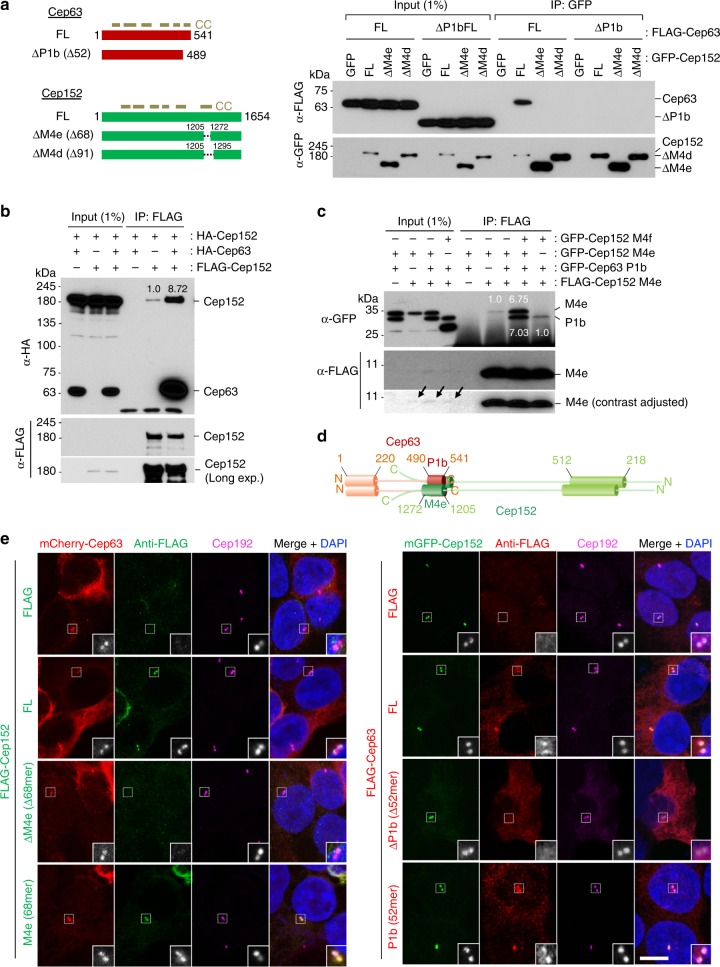
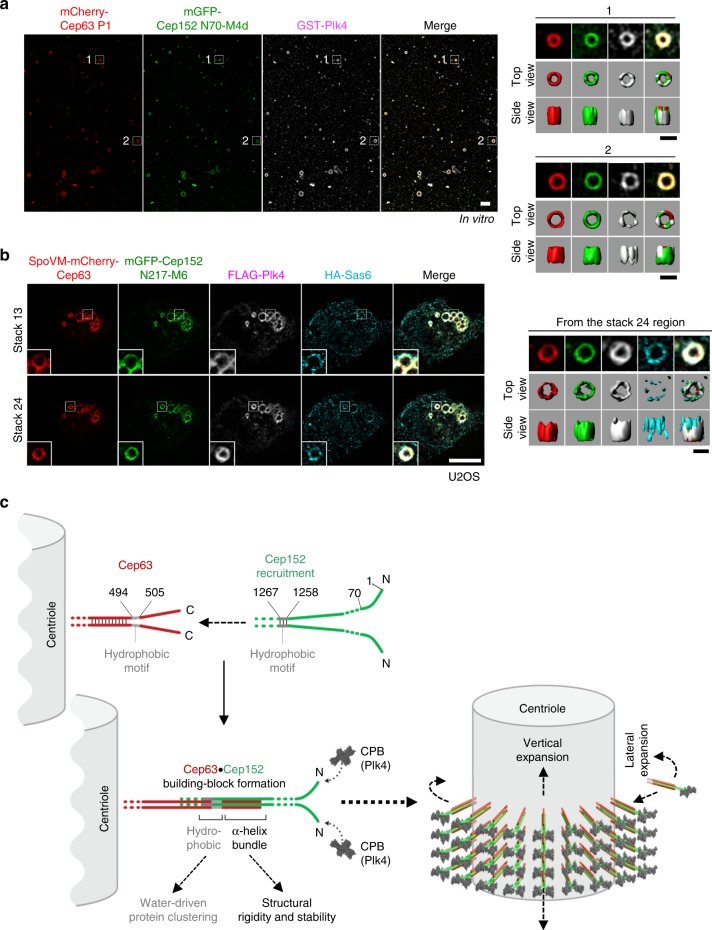
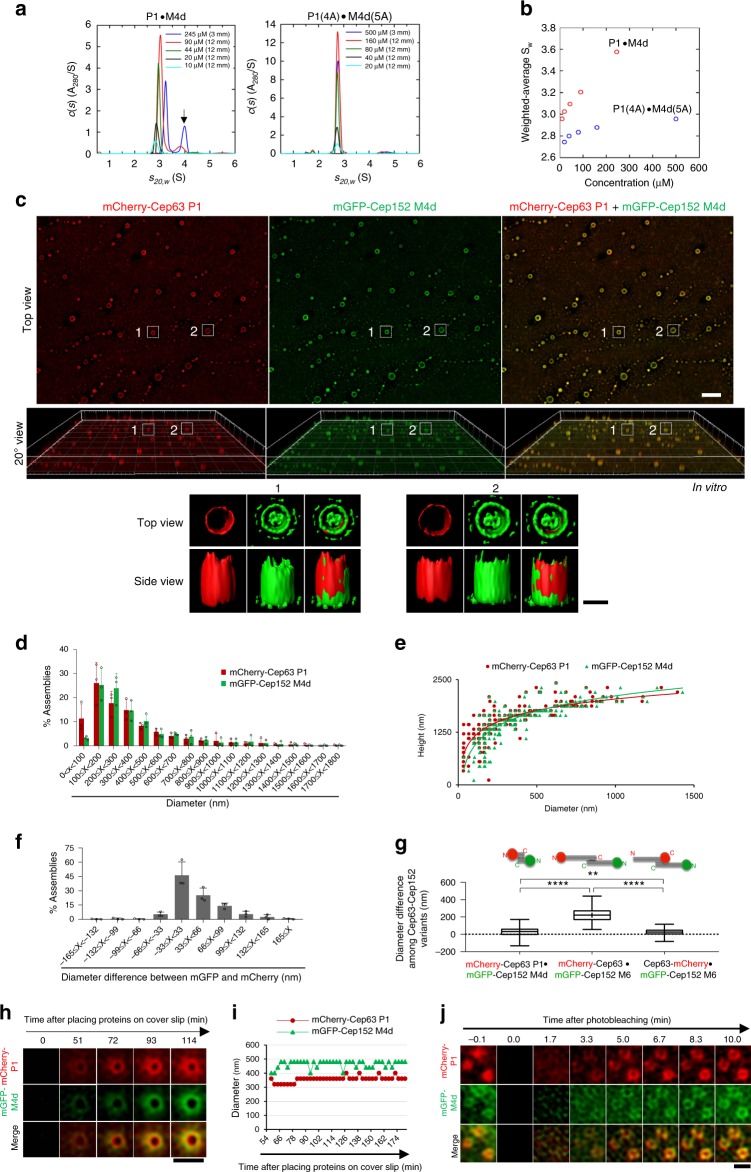
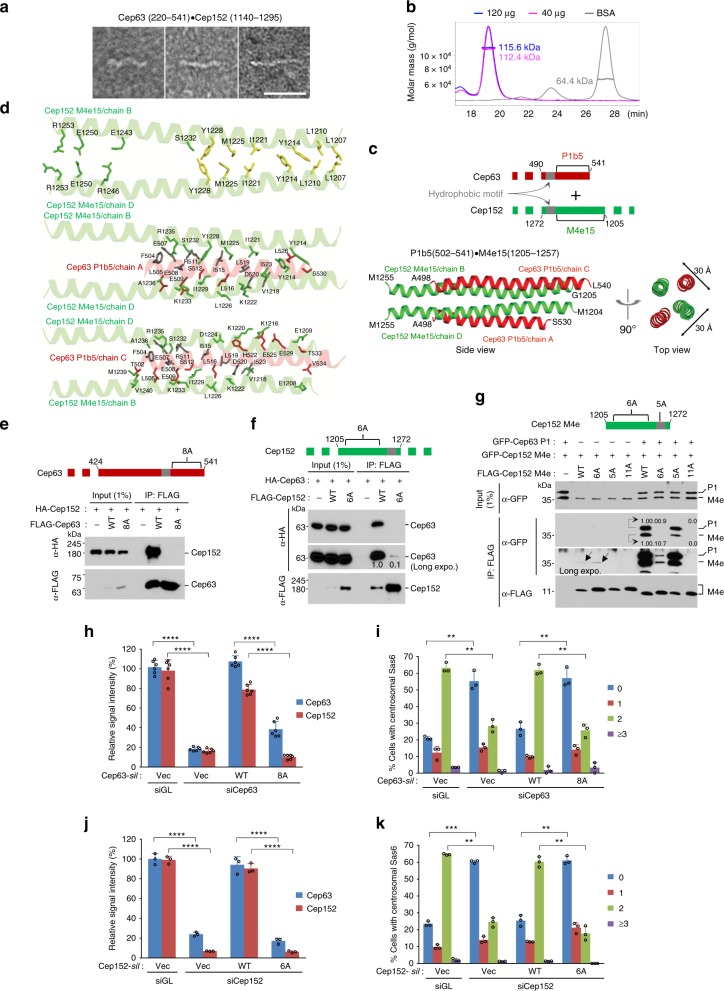
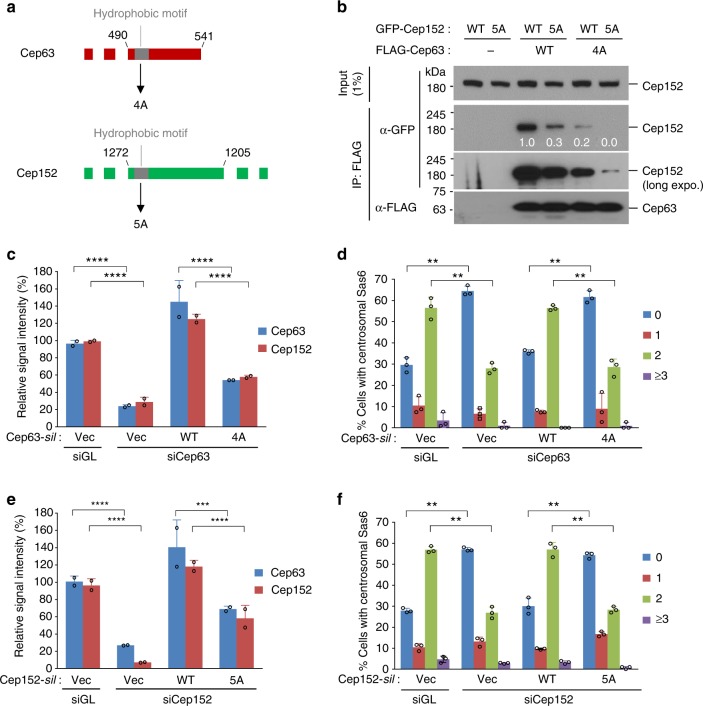
The cell is constructed by higher-order structures and organelles through complex interactions among distinct structural constituents. The centrosome is a membraneless organelle composed of two microtubule-derived structures called centrioles and an amorphous mass of pericentriolar material. Super-resolution microscopic analyses in various organisms revealed that diverse pericentriolar material proteins are concentrically localized around a centriole in a highly organized manner. However, the molecular nature underlying these organizations remains unknown. Here we show that two human pericentriolar material scaffolds, Cep63 and Cep152, cooperatively generate a heterotetrameric α-helical bundle that functions in conjunction with its neighboring hydrophobic motifs to self-assemble into a higher-order cylindrical architecture capable of recruiting downstream components, including Plk4, a key regulator for centriole duplication. Mutations disrupting the self-assembly abrogate Plk4-mediated centriole duplication. Because pericentriolar material organization is evolutionarily conserved, this work may offer a paradigm for investigating the assembly and function of centrosomal scaffolds in various organisms.
细胞通过不同结构成分之间的复杂相互作用构建而成,由高级结构和细胞器组成。中心体是一种无膜细胞器,由两个微管衍生结构称为中心粒和中心粒周围物质的无定形物质组成。在各种生物体中的超分辨率显微镜分析表明,不同的中心粒周围物质蛋白以高度组织的方式同心地定位于中心粒周围。然而,这些组织背后的分子性质仍然未知。在这里,我们表明,两种人类中心粒周围物质支架 Cep63 和 Cep152 协同产生异四聚体α-螺旋束,与相邻的疏水性基序共同作用,自组装成一种高级别的圆柱形结构,能够招募下游成分,包括 Plk4,这是中心体复制的关键调节剂。破坏自组装的突变会使 Plk4 介导的中心体复制失效。由于中心粒周围物质组织在进化上是保守的,这项工作可能为研究各种生物体中心粒支架的组装和功能提供了一个范例。