Section of Infectious Diseases, Department of Internal Medicine, School of Medicine, Yale University, New Haven, CT, USA.
Department of Neurology, School of Medicine, Yale University, New Haven, CT, USA.
Nat Microbiol. 2019 Jun;4(6):948-955. doi: 10.1038/s41564-019-0385-x. Epub 2019 Mar 11.
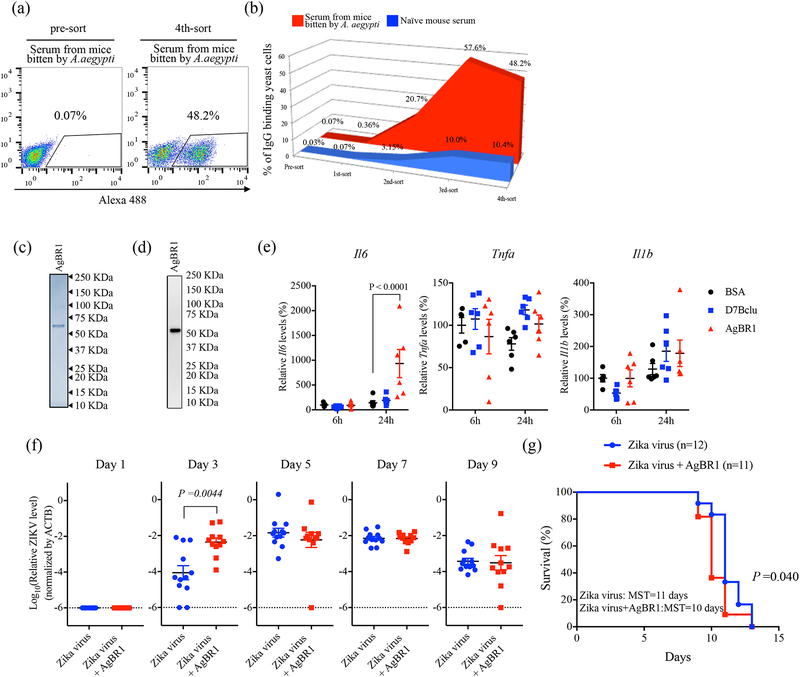
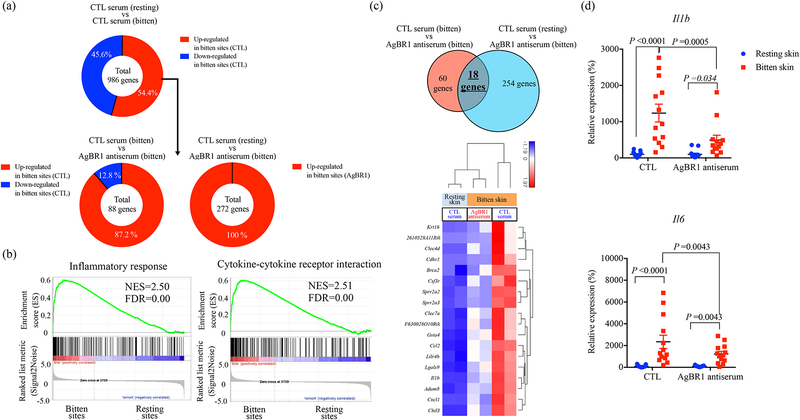
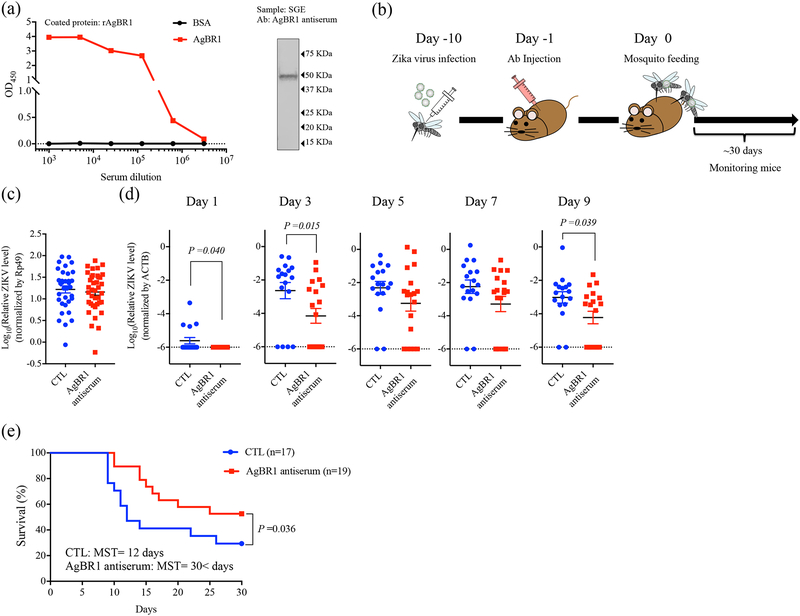
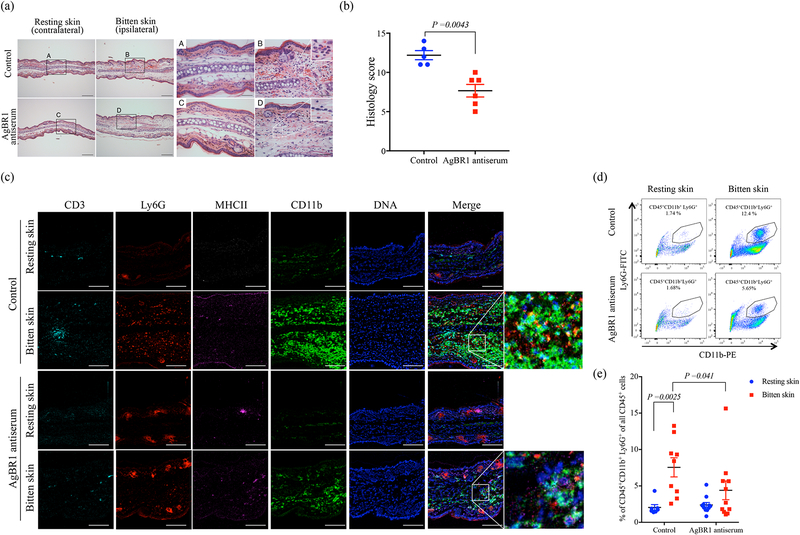
A recent epidemic of Zika virus in the Americas, affecting well over a million people, caused substantial mortality and morbidity, including Guillain-Barre syndrome, microcephaly and other fetal developmental defects. Preventive and therapeutic measures that specifically target the virus are not readily available. The transmission of Zika virus is predominantly mosquito-borne, and Aedes aegypti mosquitoes serve as a key vector for Zika virus. Here, to identify salivary factors that modulate mosquito-borne Zika virus infection, we focused on antigenic proteins in mice that were repeatedly bitten by mosquitoes and developed antibodies against salivary proteins. Using a yeast surface display screen, we identified five antigenic A. aegypti salivary proteins in mice. Antiserum against one of these five proteins-A. aegypti bacteria-responsive protein 1 (AgBR1)-suppressed early inflammatory responses in the skin of mice bitten by Zika-virus-infected mosquitoes. AgBR1 antiserum also partially protected mice from lethal mosquito-borne-but not needle-injected-Zika virus infection. These data suggest that AgBR1 is a target for the prevention of mosquito-transmitted Zika virus infection.
近期美洲的寨卡病毒疫情影响了超过 100 万人,导致大量死亡和发病,包括格林-巴利综合征、小头畸形和其他胎儿发育缺陷。目前尚无专门针对该病毒的预防和治疗措施。寨卡病毒主要通过蚊子传播,埃及伊蚊是寨卡病毒的主要传播媒介。在这里,为了鉴定调节蚊媒寨卡病毒感染的唾液因子,我们专注于被蚊子反复叮咬并产生针对唾液蛋白抗体的小鼠中的抗原蛋白。使用酵母表面展示屏幕,我们在小鼠中鉴定出五种抗原性埃及伊蚊唾液蛋白。针对这五种蛋白之一——埃及伊蚊细菌反应蛋白 1(AgBR1)的抗血清抑制了被感染寨卡病毒的蚊子叮咬的小鼠皮肤中的早期炎症反应。AgBR1 抗血清还部分保护了小鼠免受致死性蚊媒传播但非针注射的寨卡病毒感染。这些数据表明,AgBR1 是预防蚊媒传播寨卡病毒感染的一个靶点。