Mücke Stefanie, Reschke Maik, Erkes Annett, Schwietzer Claudia-Alice, Becker Sebastian, Streubel Jana, Morgan Richard D, Wilson Geoffrey G, Grau Jan, Boch Jens
Department of Plant Biotechnology, Institute of Plant Genetics, Leibniz Universität Hannover, Hanover, Germany.
Institute of Computer Science, Martin Luther University Halle-Wittenberg, Halle, Germany.
Front Plant Sci. 2019 Feb 25;10:162. doi: 10.3389/fpls.2019.00162. eCollection 2019.
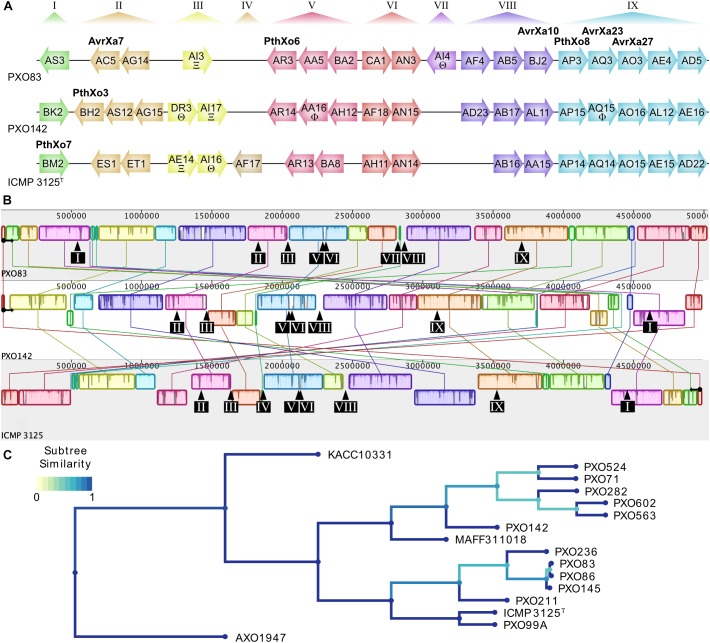
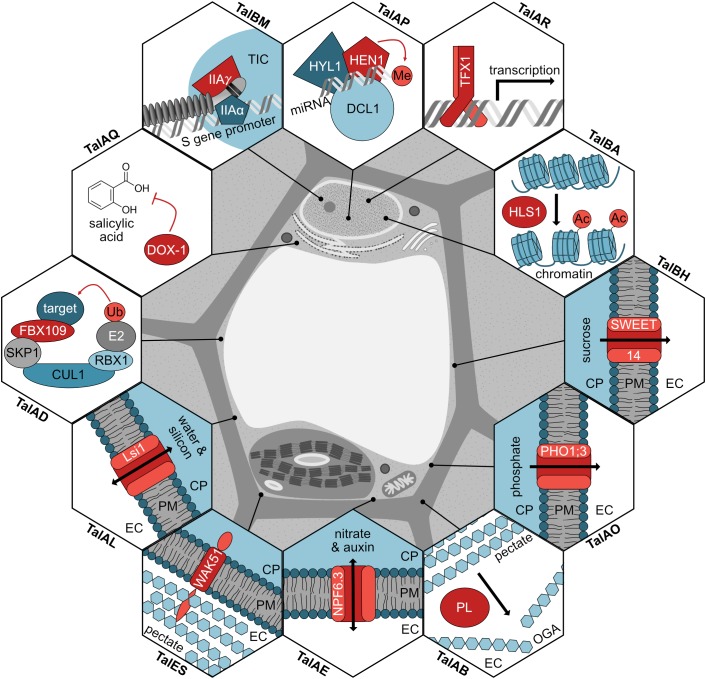
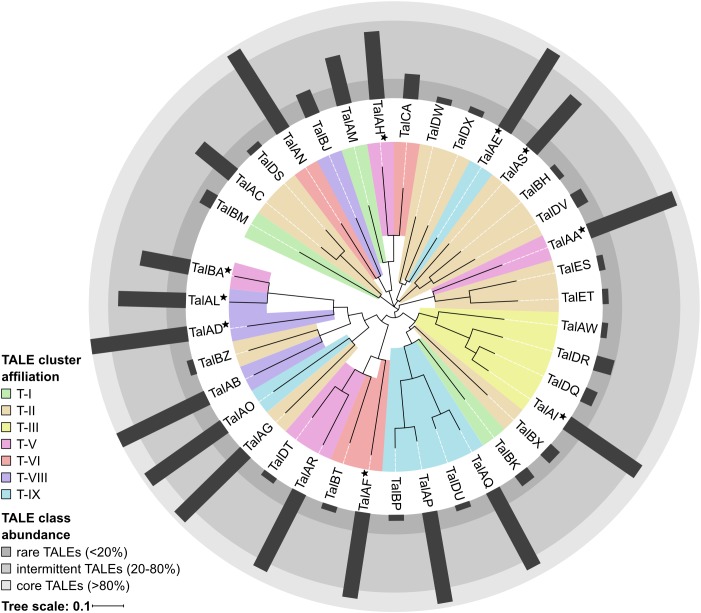
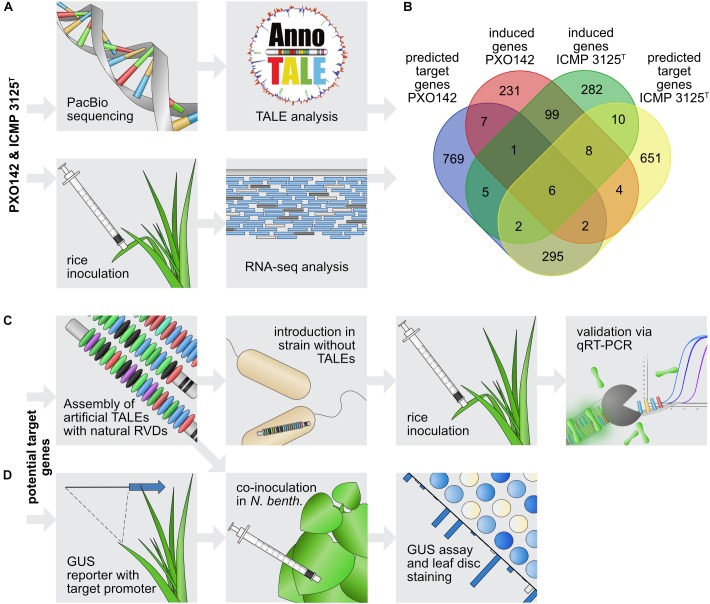
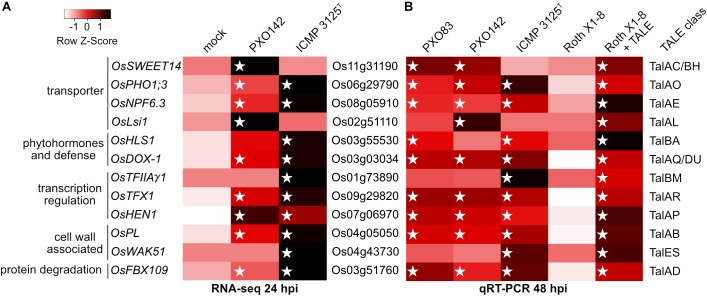
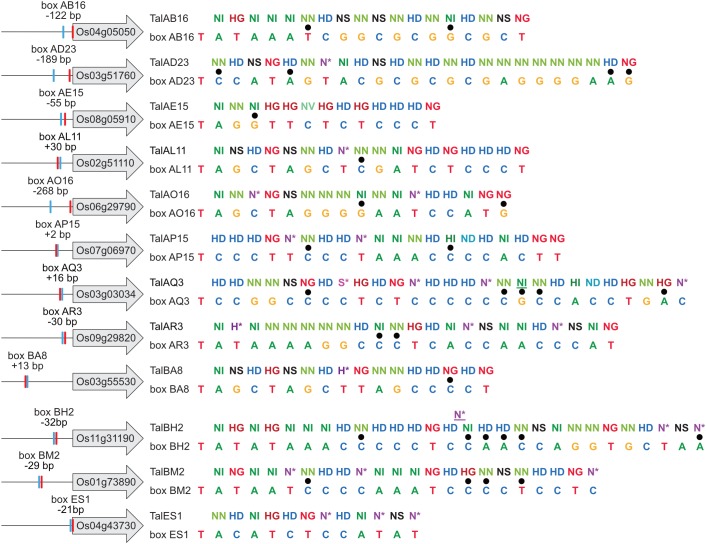
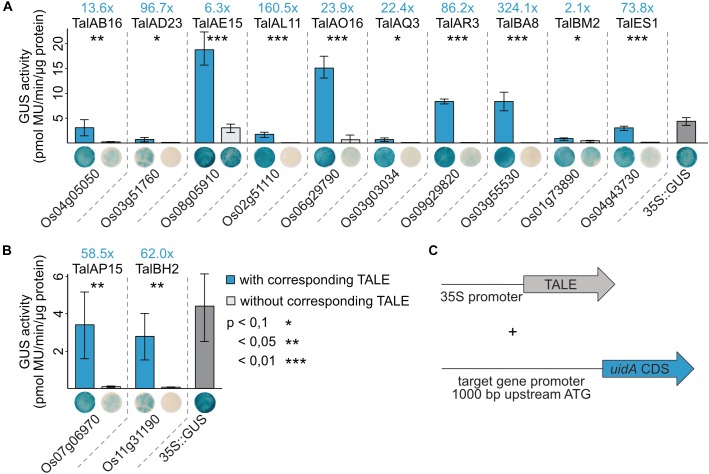
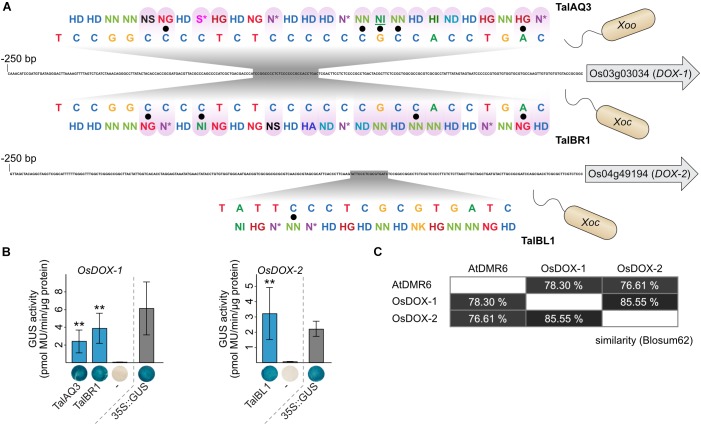
Rice-pathogenic bacteria cause severe harvest loss and challenge a stable food supply. The pathogen virulence relies strongly on bacterial TALE (transcription activator-like effector) proteins that function as transcriptional activators inside the plant cell. To understand the plant targets of TALEs, we determined the genome sequences of the Indian pv. () type strain ICMP 3125 and the strain PXO142 from the Philippines. Their complete TALE repertoire was analyzed and genome-wide TALE targets in rice were characterized. Integrating computational target predictions and rice transcriptomics data, we were able to verify 12 specifically induced target rice genes. The TALEs of the strains were reconstructed and expressed in a TALE-free strain to attribute specific induced genes to individual TALEs. Using reporter assays, we could show that individual TALEs act directly on their target promoters. In particular, we show that TALE classes assigned by AnnoTALE reflect common target genes, and that TALE classes of and the related pathogen pv. share more common target genes than previously believed. Taken together, we establish a detailed picture of TALE-induced plant processes that significantly expands our understanding of virulence strategies and will facilitate the development of novel resistances to overcome this important rice disease.
水稻致病细菌会导致严重的收成损失,并对稳定的粮食供应构成挑战。病原菌的毒力很大程度上依赖于细菌TALE(转录激活样效应因子)蛋白,这些蛋白在植物细胞内充当转录激活因子。为了了解TALE的植物靶点,我们测定了印度稻瘟病菌(Magnaporthe oryzae)pv.()型菌株ICMP 3125和来自菲律宾的菌株PXO142的基因组序列。分析了它们完整的TALE库,并对水稻全基因组的TALE靶点进行了表征。整合计算靶点预测和水稻转录组学数据,我们能够验证12个特异性诱导的水稻靶基因。对这些菌株的TALE进行了重构,并在无TALE的菌株中表达,以将特定诱导的基因归因于单个TALE。使用报告基因检测,我们可以证明单个TALE直接作用于其靶启动子。特别是,我们表明AnnoTALE分配的TALE类别反映了共同的靶基因,并且稻瘟病菌和相关病原菌稻梨孢(Pyricularia oryzae)的TALE类别共享的共同靶基因比以前认为的更多。综上所述,我们建立了TALE诱导的植物过程的详细图景,这显著扩展了我们对稻瘟病菌毒力策略的理解,并将有助于开发新的抗性以克服这种重要的水稻病害。