Laboratory of Neuro-Trauma and Neurodegenerative Disorders, Tianjin Geriatrics Institute, Tianjin Medical University General Hospital, Tianjin, China (mainland).
Department of Geriatrics, Tianjin Medical University General Hospital, Tianjin, China (mainland).
Med Sci Monit. 2019 Mar 12;25:1871-1885. doi: 10.12659/MSM.915727.
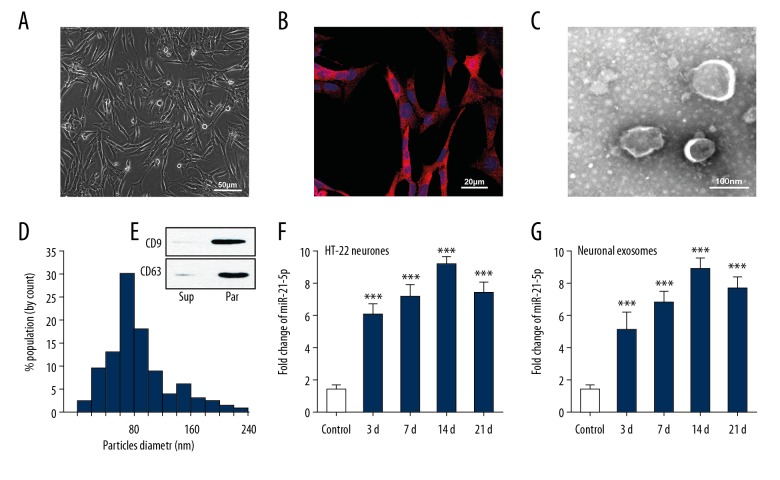
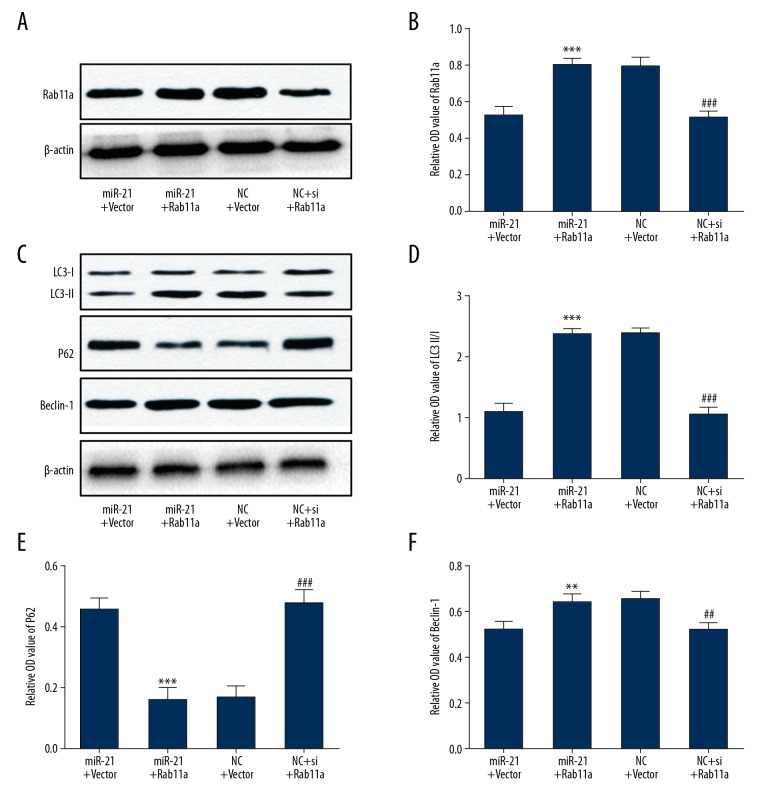
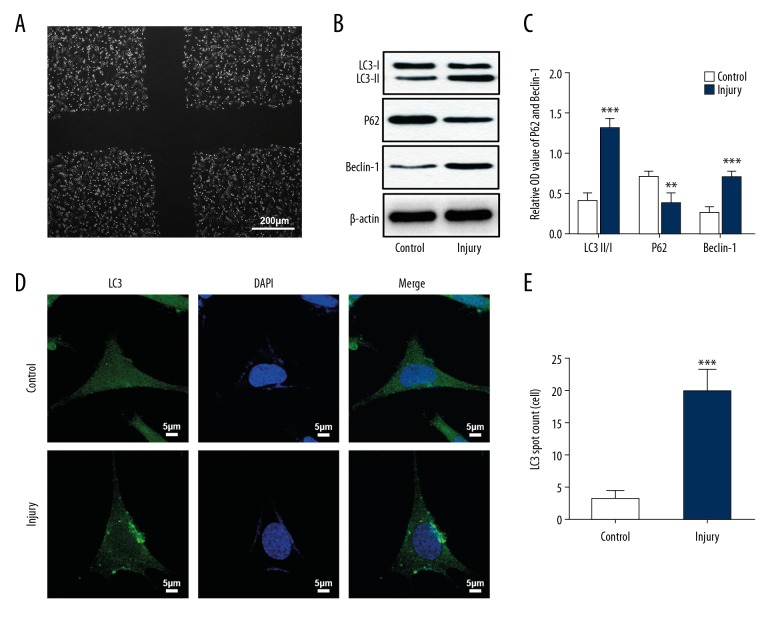
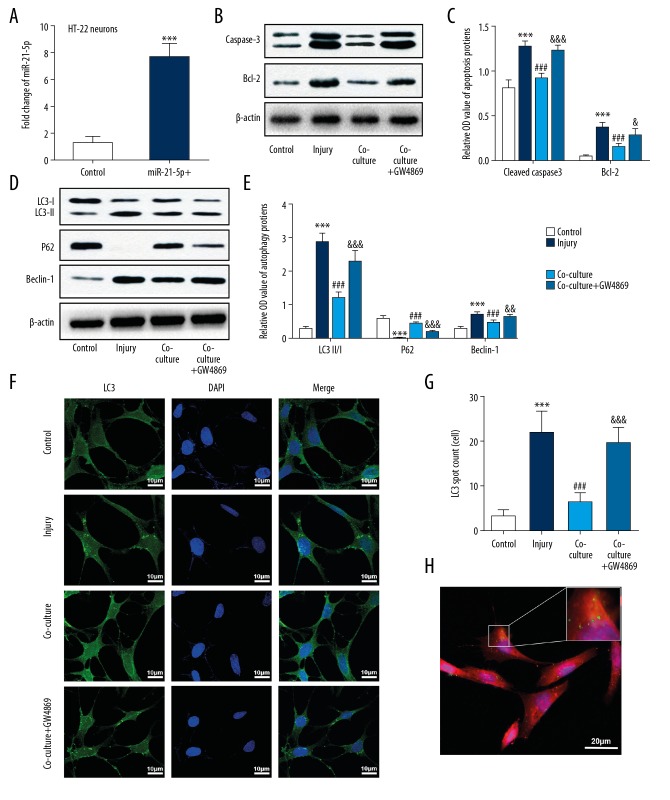
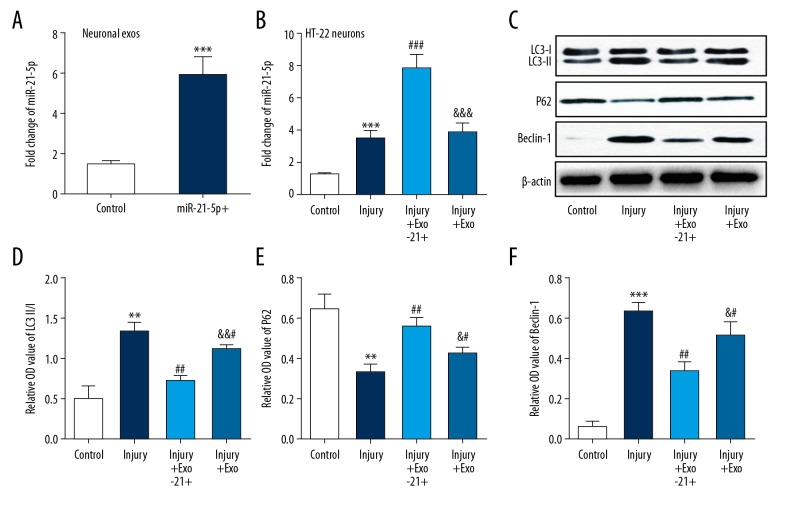
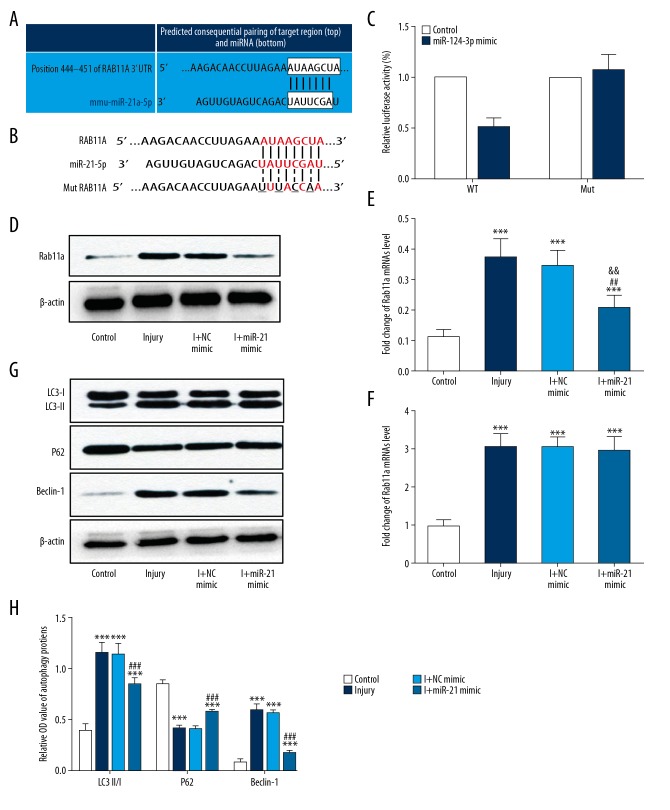
BACKGROUND Traumatic brain injury (TBI) produces a series of pathological processes. Recent studies have indicated that autophagy pathway is persistently activated after TBI, which may lead to deterioration of nerve injury. Our preliminary work found miR-21-5p was upregulated in both in vivo and in vitro TBI models. MicroRNAs (miRNAs) could be loaded into exosomes to perform cell-to-cell interactions. This research aimed to evaluate the therapeutic effect of neuron-derived exosomes enriched with miR-21-5p on the TBI in vitro and to further explore the possible mechanisms. MATERIAL AND METHODS Brain extracts harvested from an rTBI mouse model were added to cultured HT-22 neurons to imitate the microenvironment of injured brain on in vitro cultured cells. Ultracentrifugation was performed to isolate exosomes. Transmission electron microscopy and Nano sight technology were used to examine exosomes. An in vitro model of TBI was established to study the effect of exosomal miR-21-5p on nerve injury and on neuronal autophagy regulation. RESULTS The expression of miR-21-5p was increased in exosomes derived from HT-22 neurons after treatment with rTBI mouse brain extracts. Autophagy was activated in HT-22 neurons after scratch injury. Exosomal miR-21-5p produced a protective effect by suppressing autophagy in a TBI model in vitro. MiR-21-5p could directly target the Rab11a 3'UTR region to reduce its translation and further suppressed Rab11a-mediated neuronal autophagy. CONCLUSIONS The levels of miR-21-5p in neuronal exosomes increased from the acute to the chronic phase of TBI. Neuronal exosomes enriched with miR-21-5p can inhibit the activity of neuronal autophagy by targeting Rab11a, thus attenuating trauma-induced, autophagy-mediated nerve injury in vitro.
创伤性脑损伤(TBI)会产生一系列的病理过程。最近的研究表明,自噬途径在 TBI 后持续激活,这可能导致神经损伤恶化。我们的初步研究发现,miR-21-5p 在体内和体外 TBI 模型中均上调。microRNAs(miRNAs)可以被装载到外泌体中,以进行细胞间的相互作用。本研究旨在评估富含 miR-21-5p 的神经元衍生外泌体对体外 TBI 的治疗效果,并进一步探讨其可能的机制。
从 rTBI 小鼠模型中采集的脑提取物添加到培养的 HT-22 神经元中,以模拟体外培养细胞中受损大脑的微环境。超速离心分离外泌体。透射电子显微镜和纳米视野技术用于检查外泌体。建立体外 TBI 模型,研究外泌体 miR-21-5p 对神经损伤和神经元自噬调节的影响。
rTBI 小鼠脑提取物处理后的 HT-22 神经元衍生的外泌体中 miR-21-5p 的表达增加。划痕损伤后 HT-22 神经元中自噬被激活。外泌体 miR-21-5p 通过抑制体外 TBI 模型中的自噬产生保护作用。miR-21-5p 可以直接靶向 Rab11a 的 3'UTR 区域,减少其翻译,并进一步抑制 Rab11a 介导的神经元自噬。
TBI 急、慢性期神经元外泌体中的 miR-21-5p 水平增加。富含 miR-21-5p 的神经元外泌体可以通过靶向 Rab11a 抑制神经元自噬活性,从而减轻体外创伤诱导的自噬介导的神经损伤。