Department of Biomedical Engineering, University of Michigan, Ann Arbor, MI, 48109, USA.
Nat Commun. 2019 Mar 12;10(1):1186. doi: 10.1038/s41467-019-09121-0.
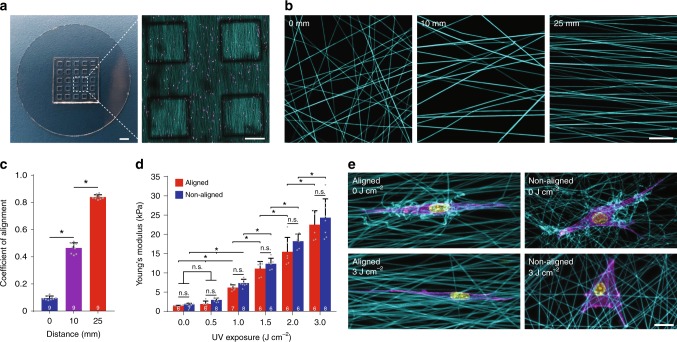
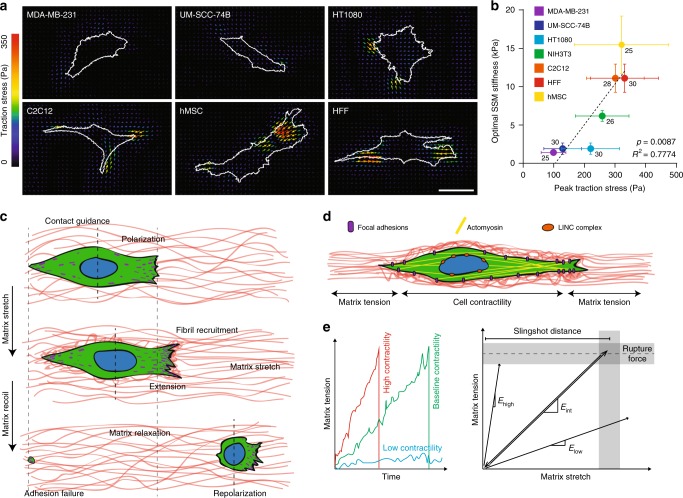
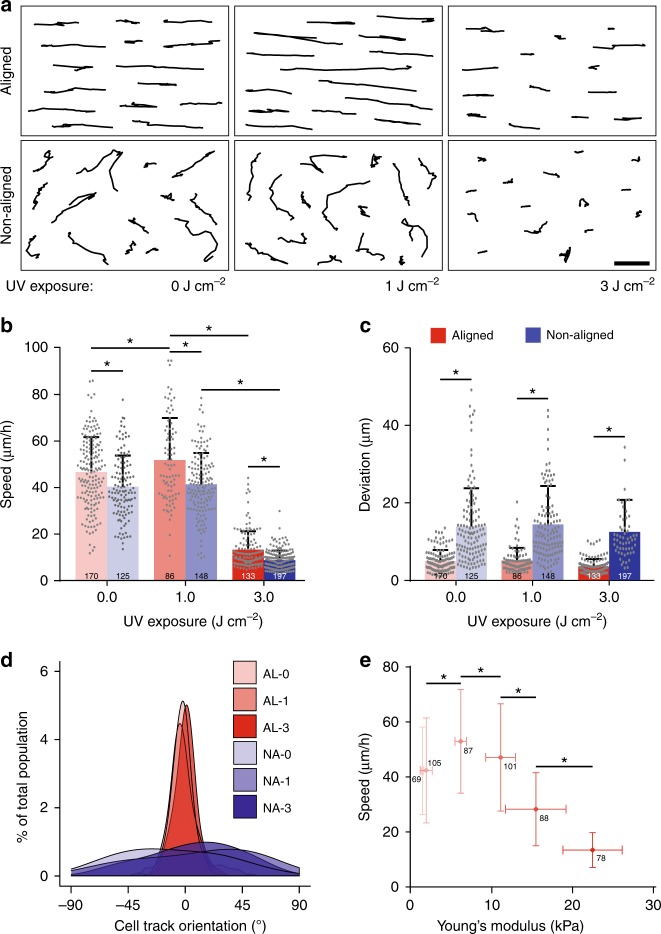
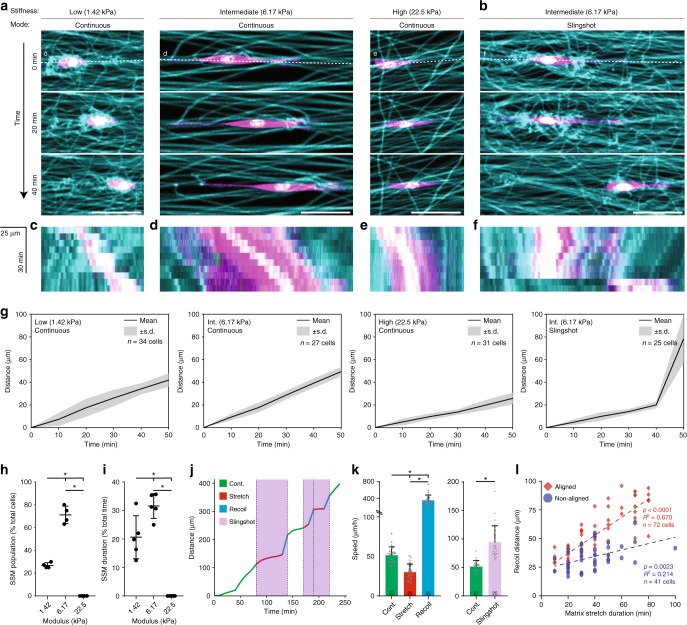
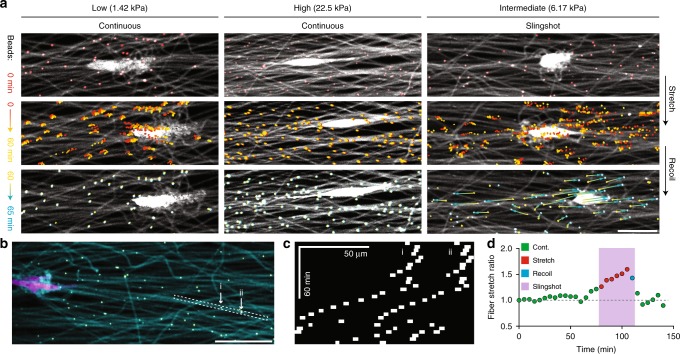
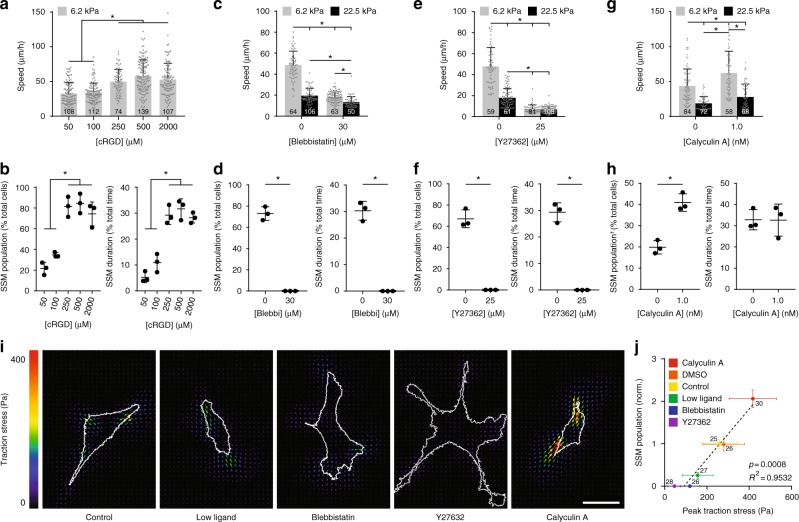
Cells select from a diverse repertoire of migration strategies. Recent developments in tunable biomaterials have helped identify how extracellular matrix properties influence migration, however, many settings lack the fibrous architecture characteristic of native tissues. To investigate migration in fibrous contexts, we independently varied the alignment and stiffness of synthetic 3D fiber matrices and identified two phenotypically distinct migration modes. In contrast to stiff matrices where cells migrated continuously in a traditional mesenchymal fashion, cells in deformable matrices stretched matrix fibers to store elastic energy; subsequent adhesion failure triggered sudden matrix recoil and rapid cell translocation. Across a variety of cell types, traction force measurements revealed a relationship between cell contractility and the matrix stiffness where this migration mode occurred optimally. Given the prevalence of fibrous tissues, an understanding of how matrix structure and mechanics influences migration could improve strategies to recruit repair cells to wound sites or inhibit cancer metastasis.
细胞从多样化的迁移策略中进行选择。可调谐生物材料的最新发展有助于确定细胞外基质特性如何影响迁移,然而,许多环境缺乏天然组织特有的纤维结构。为了在纤维环境中研究迁移,我们独立地改变了合成 3D 纤维基质的取向和刚度,并确定了两种表型上不同的迁移模式。与细胞以传统的间充质方式连续迁移的刚性基质相反,在可变形基质中,细胞拉伸基质纤维以储存弹性能量;随后的黏附失败触发基质的突然回弹和快速细胞迁移。在各种细胞类型中,牵引力测量揭示了细胞收缩性和基质刚度之间的关系,这种迁移模式在此处最佳发生。鉴于纤维组织的普遍性,了解基质结构和力学如何影响迁移可以改善招募修复细胞到伤口部位或抑制癌症转移的策略。