Huang Yan-Lin, Ning Gang, Chen Lu-Biao, Lian Yi-Fan, Gu Yu-Rong, Wang Jia-Liang, Chen Dong-Mei, Wei Huan, Huang Yue-Hua
Department of Infectious Diseases, The Third Affiliated Hospital of Sun Yat-sen University, Guangzhou, China,
Guangdong Provincial Key Laboratory of Liver Disease Research, The Third Affiliated Hospital of Sun Yat-sen University, Guangzhou, China,
Cancer Manag Res. 2019 Feb 19;11:1725-1740. doi: 10.2147/CMAR.S182001. eCollection 2019.
A growing body of evidence suggests that E2Fs, by regulating gene expression related to cell cycle progression and other cellular processes, play a pivotal role in human cancer. However, the distinct roles of each E2F in the development and treatment of hepatocellular carcinoma (HCC) remain unknown. In the present study, the mRNA expression and prognostic value of different E2Fs in HCC are analyzed.
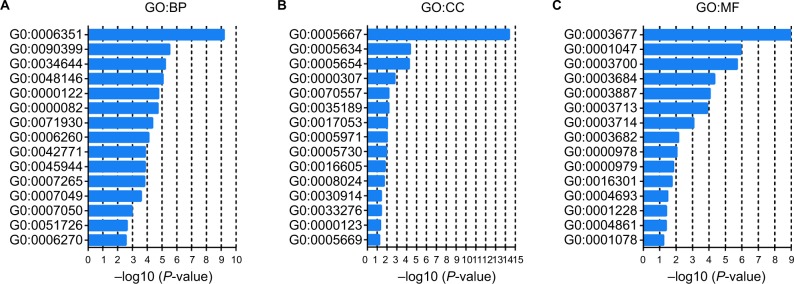
Transcriptional and survival data related to E2F expression in patients with HCC were obtained through ONCOMINE and UALCAN databases. Survival analysis plots were drawn with Kaplan-Meier Plotter. The sequence alteration data for E2Fs were obtained from The Cancer Genome Atlas and c-BioPortal. Gene functional enrichment analyses were performed in Database for Annotation, Visualization and Integrated Discovery.
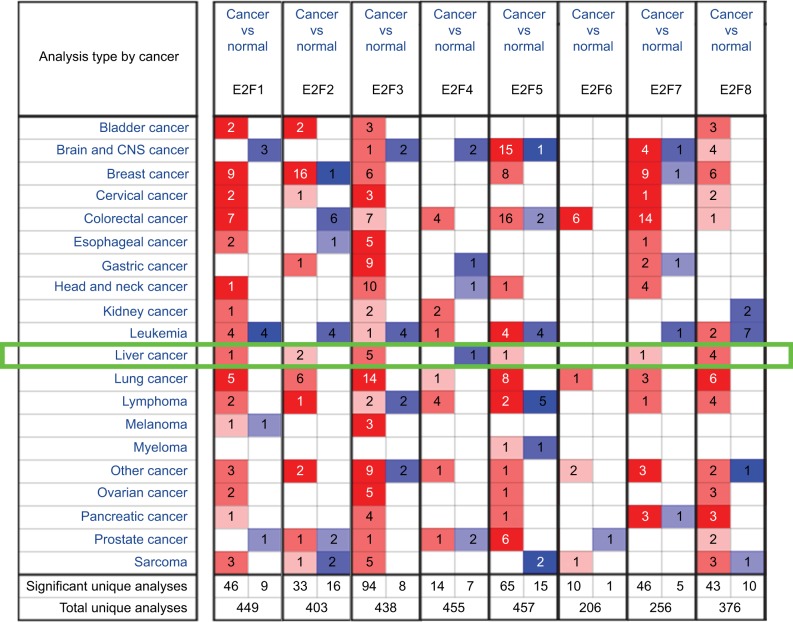
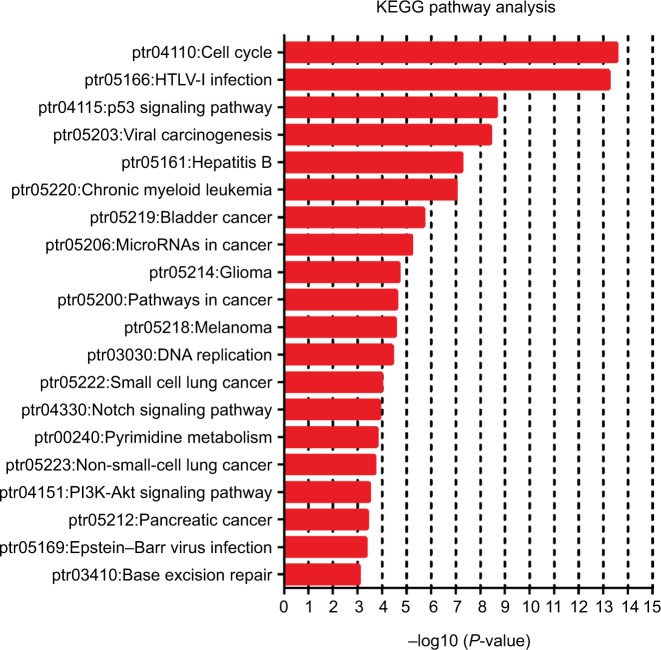
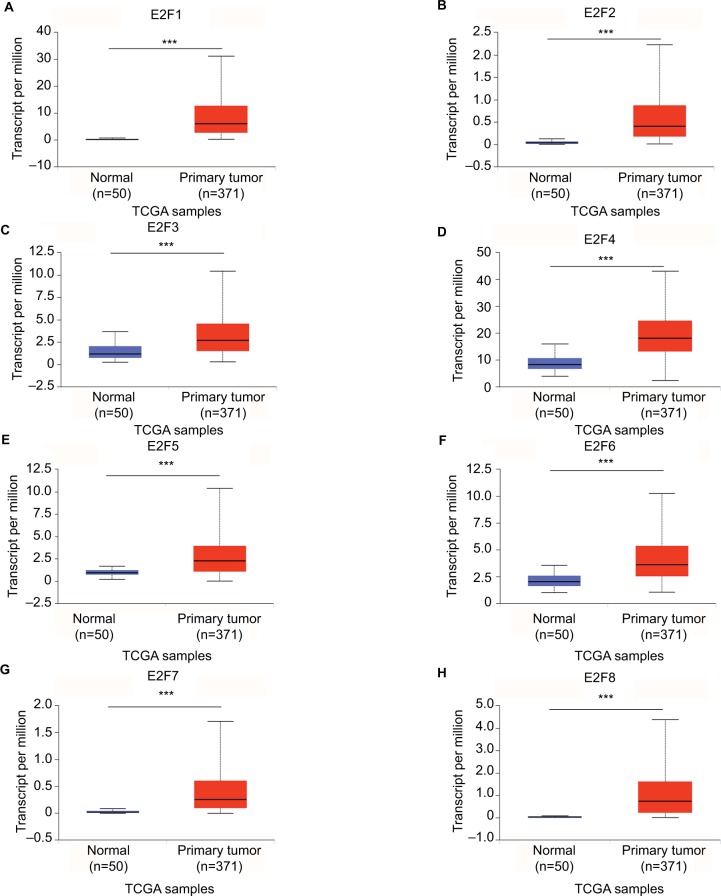
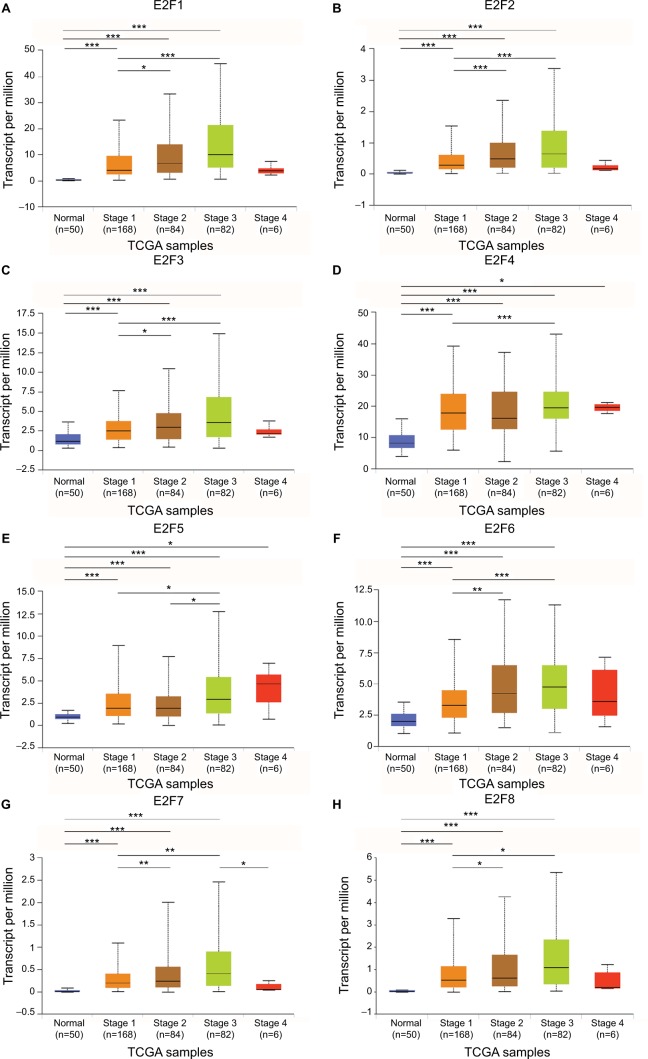
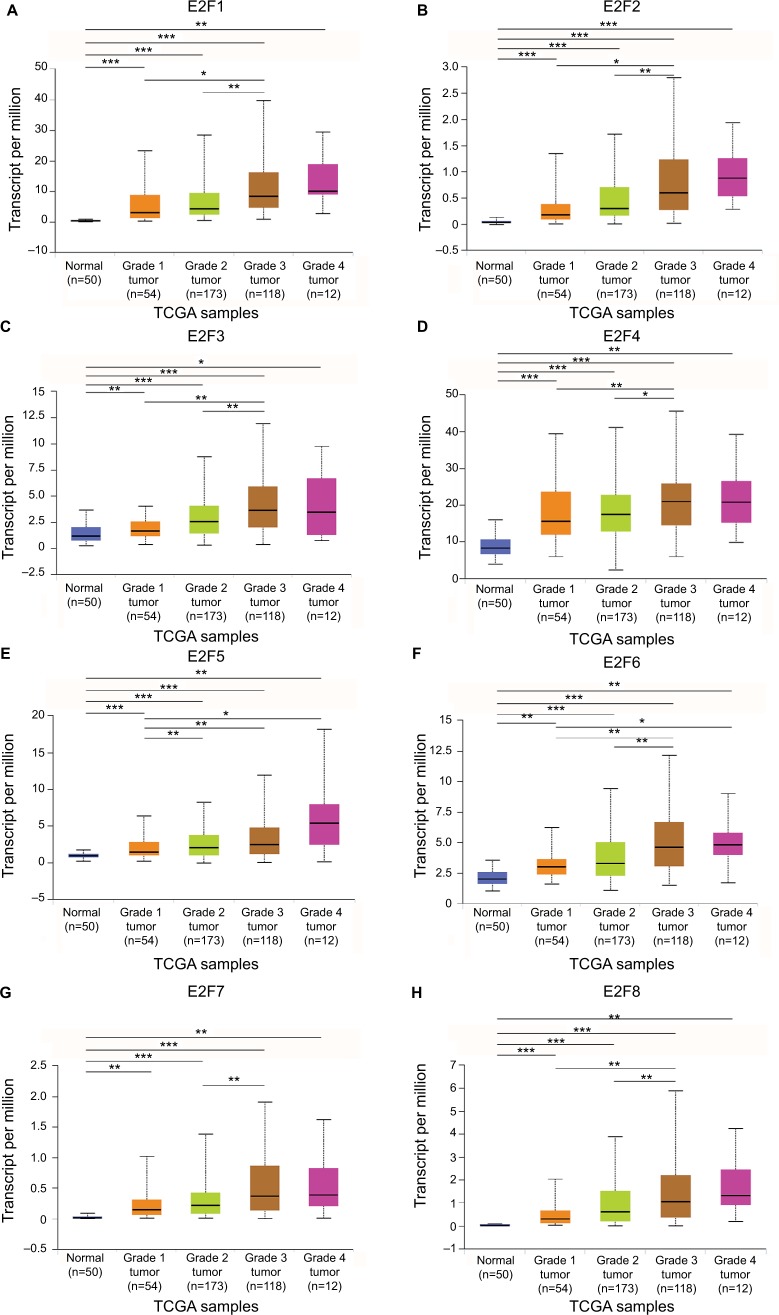
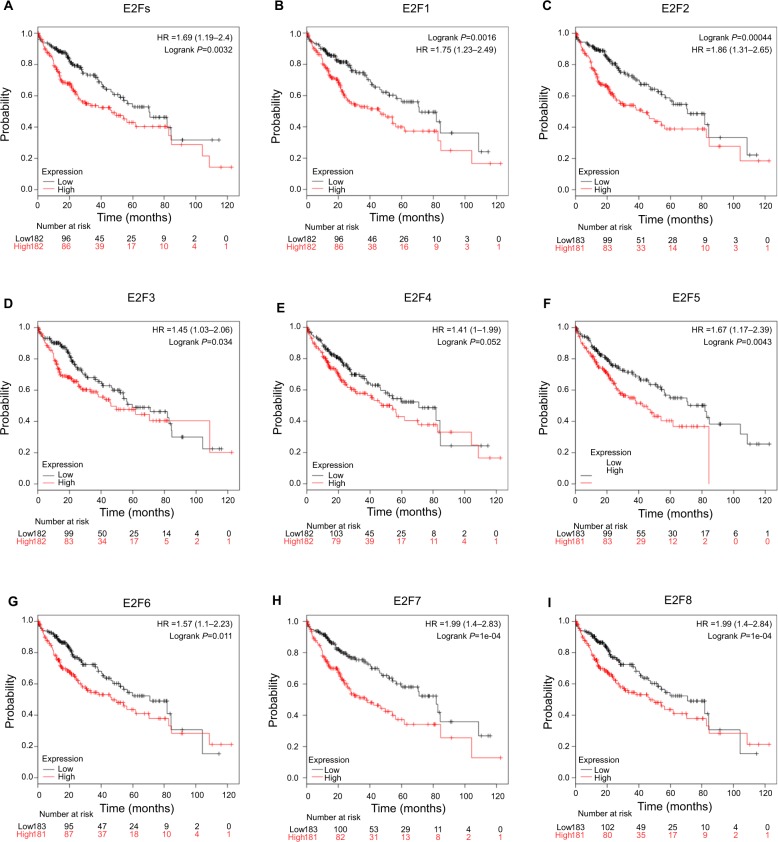
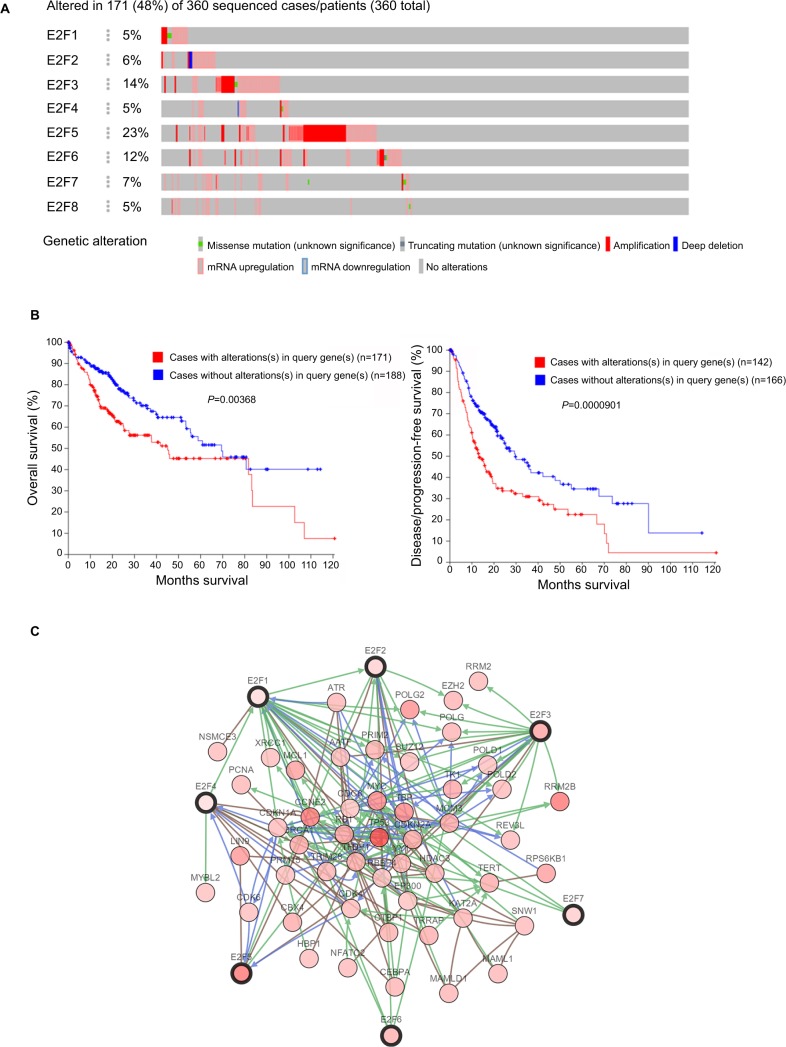
The mRNA expression levels of E2F1-E2F8 were all significantly upregulated in HCC patients, and high expression of each E2F was obviously related to poor prognosis. Similarly, the expression of E2Fs showed prognostic prediction value in HCC patients with different cancer stages and pathological grades. Moreover, the mutation rate of E2Fs was relatively high in HCC patients, and the DNA sequence alterations primarily occurred in E2F5, E2F3, and E2F6, which were associated with worse overall survival and disease-free survival in HCC patients. Network analysis confirmed that the expression levels of cell cycle-related genes were mostly affected by E2F mutations.
High expression of individual E2Fs was associated with poor prognosis in all liver cancer patients. E2Fs may be exploited as good prognostic targets for comprehensive management of HCC patients, but this notion should be further evaluated in clinical studies.
越来越多的证据表明,E2F 通过调节与细胞周期进程及其他细胞过程相关的基因表达,在人类癌症中发挥关键作用。然而,每种 E2F 在肝细胞癌(HCC)的发生发展及治疗中的独特作用仍不清楚。在本研究中,分析了不同 E2F 在 HCC 中的 mRNA 表达及预后价值。
通过 ONCOMINE 和 UALCAN 数据库获取与 HCC 患者 E2F 表达相关的转录和生存数据。用 Kaplan-Meier Plotter 绘制生存分析图。E2F 的序列改变数据来自癌症基因组图谱(The Cancer Genome Atlas)和 c-BioPortal。在注释、可视化与综合发现数据库(Database for Annotation, Visualization and Integrated Discovery)中进行基因功能富集分析。
HCC 患者中 E2F1 - E2F8 的 mRNA 表达水平均显著上调,且每种 E2F 的高表达均明显与不良预后相关。同样,E2F 的表达在不同癌症分期和病理分级的 HCC 患者中显示出预后预测价值。此外,HCC 患者中 E2F 的突变率相对较高,DNA 序列改变主要发生在 E2F5、E2F3 和 E2F6,这与 HCC 患者较差的总生存期和无病生存期相关。网络分析证实,细胞周期相关基因的表达水平大多受 E2F 突变影响。
单个 E2F 的高表达与所有肝癌患者的不良预后相关。E2F 可能作为 HCC 患者综合管理的良好预后靶点,但这一观点应在临床研究中进一步评估。