Perruchot Marie-Hélène, Gondret Florence, Robert Fabrice, Dupuis Emilien, Quesnel Hélène, Dessauge Frédéric
PEGASE, INRA, AGROCAMPUS OUEST, Rennes, France.
CCPA Group, Janzé, France.
PeerJ. 2019 Mar 5;7:e6565. doi: 10.7717/peerj.6565. eCollection 2019.
High-yielding dairy cows are prone to oxidative stress due to the high metabolic needs of homeostasis and milk production. Oxidative stress and inflammation are tightly linked; therefore, anti-inflammatory and/or natural antioxidant compounds may help improve mammary cell health. Baicalin, one of the major flavonoids in , has natural antioxidant and anti-inflammatory properties in various cell types, but its effects on bovine mammary epithelial cells (BMECs) have not been investigated.
Explants from bovine mammary glands were collected by biopsy at the peak of lactation (approximately 60 days after the start of lactation) ( = three animals) to isolate BMECs corresponding to mature secretory cells. Cell viability, apoptosis, proliferative capacity and reactive oxygen species (ROS) production by BMECs were measured after increasing doses of baicalin were added to the culture media in the absence or presence of HO, which was used as an in vitro model of oxidative stress.
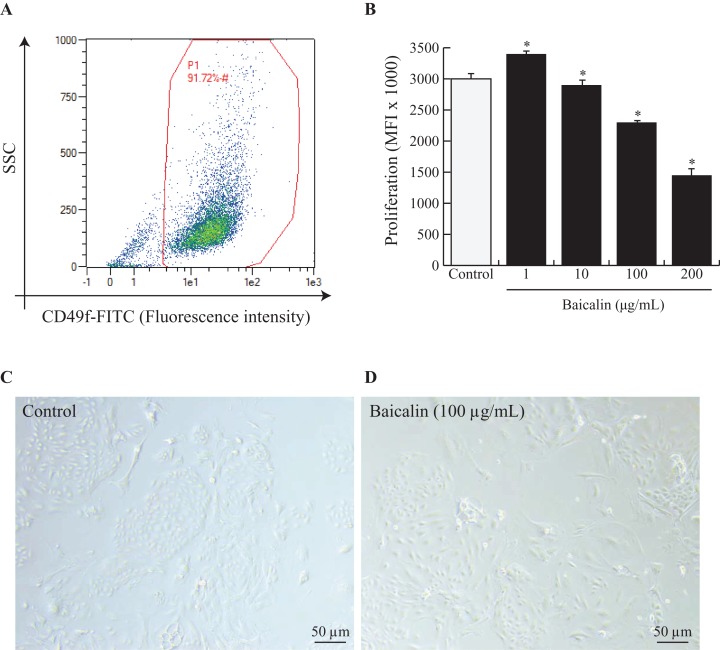
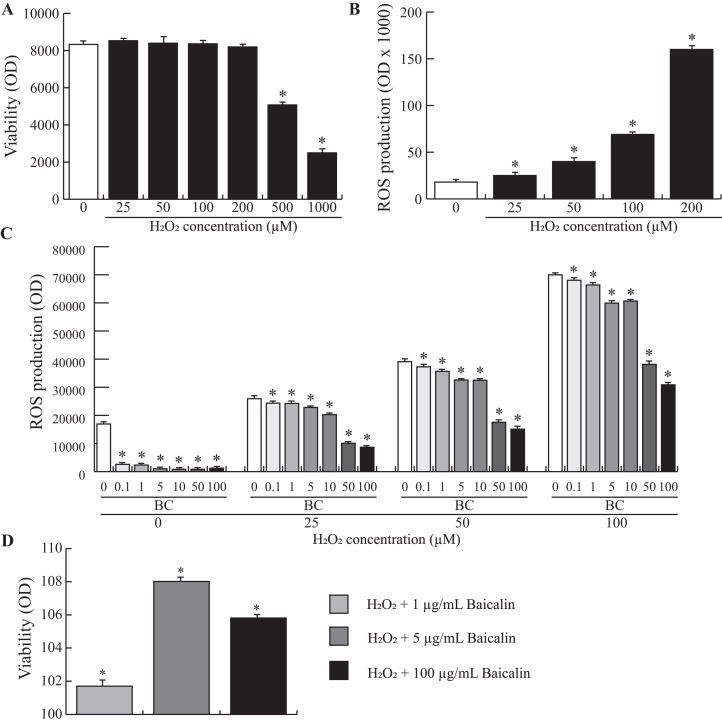
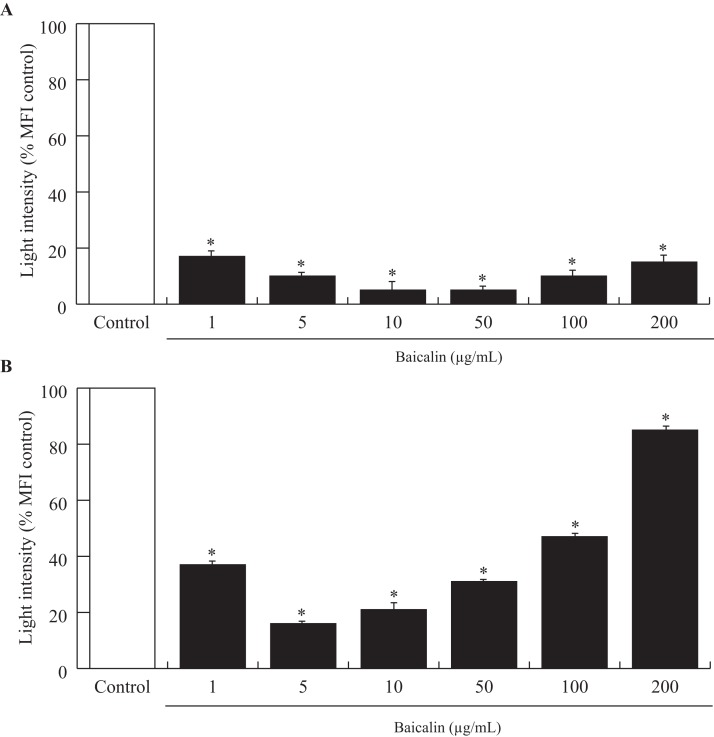
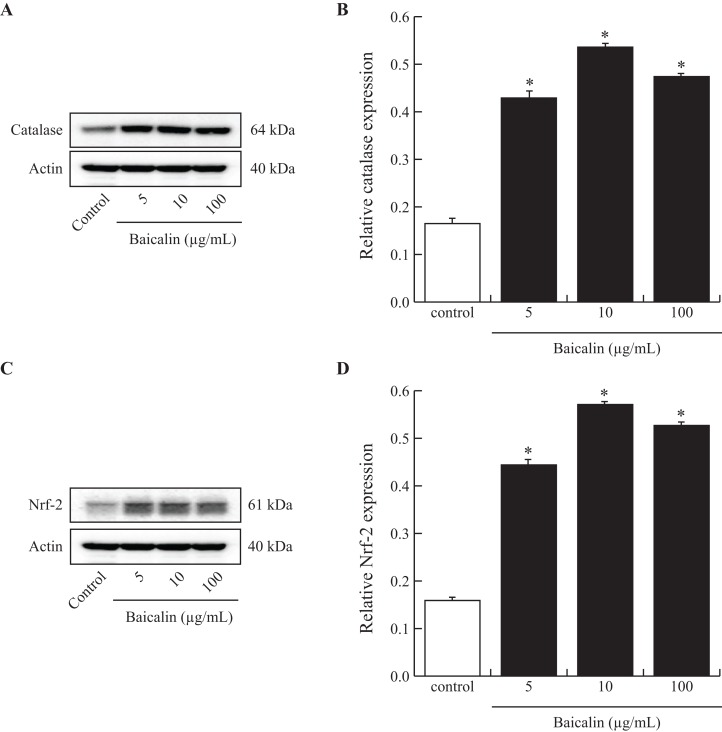
Low doses of baicalin (1-10 µg/mL) had no or only slightly positive effects on the proliferation and viability of BMECs, whereas higher doses (100 or 200 µg/mL) markedly decreased BMEC proliferation. Baicalin decreased apoptosis rate at low concentrations (10 µg/mL) but increased apoptosis at higher doses. ROS production was decreased in BMECs treated with increasing doses of baicalin compared with untreated cells, and this decreased production was associated with increased intracellular concentrations of catalase and NRF-2. Irrespective of the dose, baicalin pretreatment attenuated HO-induced ROS production.
These results indicate that baicalin exerts protective antioxidant effects on bovine mammary cells. This finding suggests that baicalin could be used to prevent oxidative metabolic disorders in dairy cows.
高产奶牛由于维持体内平衡和产奶的高代谢需求,容易出现氧化应激。氧化应激与炎症紧密相关;因此,抗炎和/或天然抗氧化化合物可能有助于改善乳腺细胞健康。黄芩苷是[植物名称未给出]中的主要黄酮类化合物之一,在多种细胞类型中具有天然抗氧化和抗炎特性,但其对牛乳腺上皮细胞(BMECs)的影响尚未得到研究。
在泌乳高峰期(泌乳开始后约60天)通过活检收集牛乳腺外植体(n = 3头动物),以分离对应于成熟分泌细胞的BMECs。在不存在或存在H₂O₂(用作氧化应激的体外模型)的情况下,向培养基中添加递增剂量的黄芩苷后,测量BMECs的细胞活力、凋亡、增殖能力和活性氧(ROS)产生。
低剂量的黄芩苷(1 - 10μg/mL)对BMECs的增殖和活力没有影响或仅有轻微的积极作用,而较高剂量(100或200μg/mL)则显著降低BMECs的增殖。黄芩苷在低浓度(10μg/mL)时降低凋亡率,但在较高剂量时增加凋亡。与未处理的细胞相比,用递增剂量的黄芩苷处理的BMECs中ROS产生减少,这种减少的产生与过氧化氢酶和NRF - 2细胞内浓度增加有关。无论剂量如何,黄芩苷预处理均可减轻H₂O₂诱导的ROS产生。
这些结果表明黄芩苷对牛乳腺细胞具有保护性抗氧化作用。这一发现表明黄芩苷可用于预防奶牛的氧化代谢紊乱。