Institute of Immunology, University Medical Center Rostock, Rostock, Germany.
PLoS One. 2019 Mar 13;14(3):e0210130. doi: 10.1371/journal.pone.0210130. eCollection 2019.
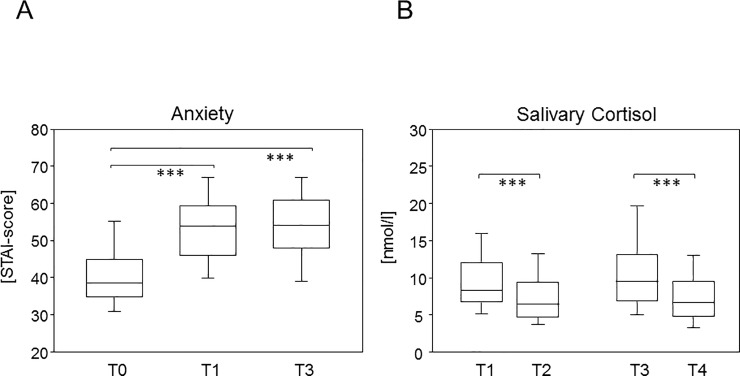
Undergraduate medical students experience a considerable amount of stress and anxiety due to frequent exams. The goal of the present study was to examine the development of exam related anxiety and to test for a correlation between anxiety and learning approaches.
A whole class of 212 medical students was invited to participate in the study. During their first term, trait anxiety and learning approaches were assessed by use of the state-trait-anxiety inventory (STAI-T) and the approaches-and-study-skills-inventory-for-students (ASSIST), respectively. Acute state anxiety was assessed twice in the course of the second term. To that extent, the STAI-S in combination with measuring salivary cortisol were employed immediately before two oral anatomy exams.
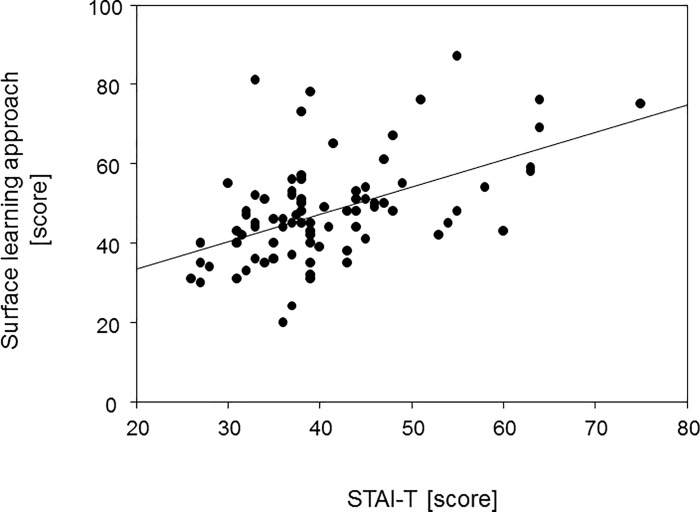
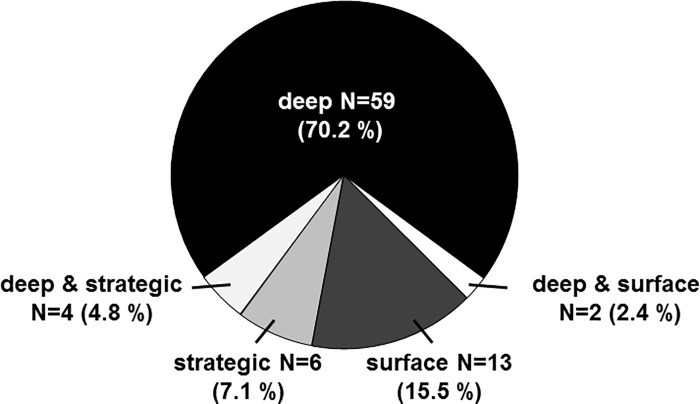
Our most important results were that a surface learning approach correlated significantly with anxiety as a trait and that students with a predominantly strategic approach to learning were the least anxious yet academically most successful.
As surface learners are at risk of being academically less successful and because anxiety is a prerequisite for burn-out, we suggest that medical faculties place particular emphasis on conveying strategies for both, coping with stress and successful learning.
由于频繁的考试,医学生承受着相当大的压力和焦虑。本研究的目的是研究考试相关焦虑的发展,并检验焦虑与学习方法之间的相关性。
邀请了一整个 212 人的医学班的学生参加研究。在他们的第一学期,使用状态-特质焦虑量表(STAI-T)和学习方法与技能调查问卷(ASSIST)分别评估特质焦虑和学习方法。在第二学期的课程中,两次评估急性状态焦虑。为此,在两次口腔解剖学考试前,使用 STAI-S 与唾液皮质醇测量相结合的方法进行评估。
我们最重要的结果是,表面学习方法与特质焦虑显著相关,而以策略性学习方法为主的学生焦虑程度最低,但学术上最成功。
由于表面学习者在学术上可能不太成功,而且焦虑是倦怠的前提,因此我们建议医学系特别强调传授应对压力和成功学习的策略。