a Department of Pathology , The University of Hong Kong , Hong Kong , Hong Kong SAR.
b HKU-Pasteur Research Pole , The University of Hong Kong , Hong Kong , Hong Kong SAR.
Emerg Microbes Infect. 2019;8(1):327-338. doi: 10.1080/22221751.2019.1581034.
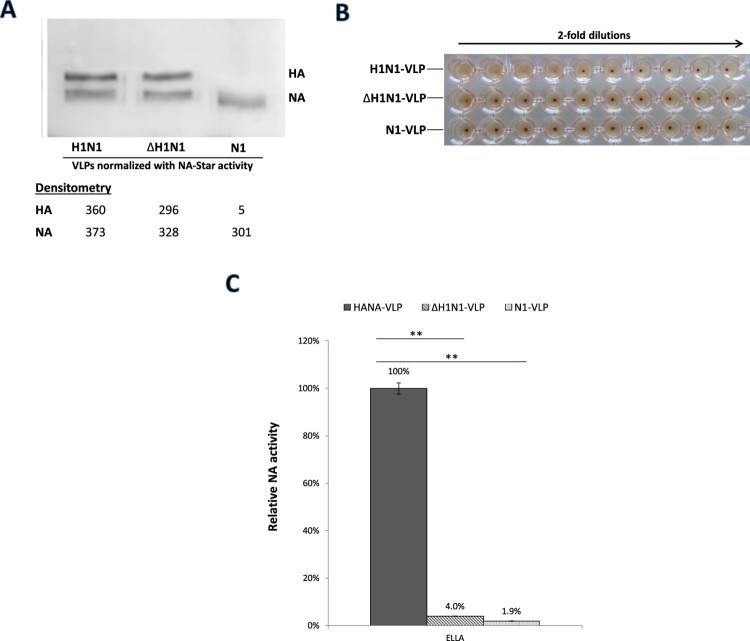
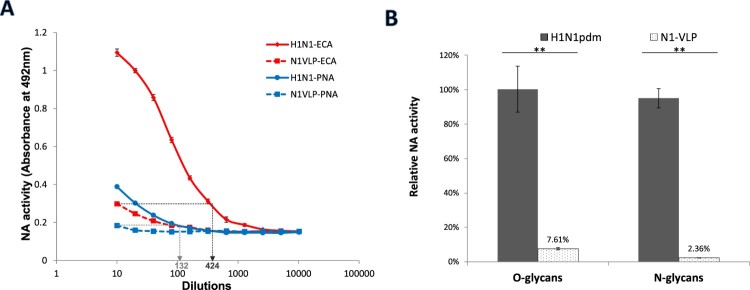
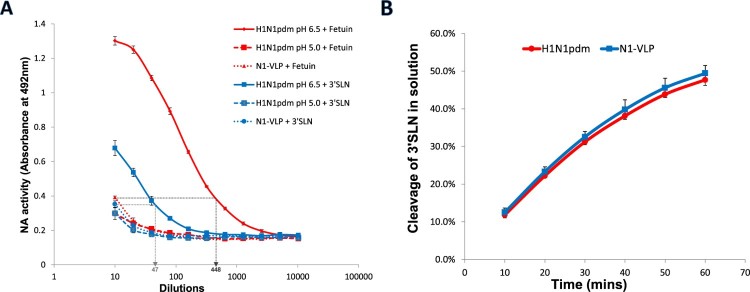
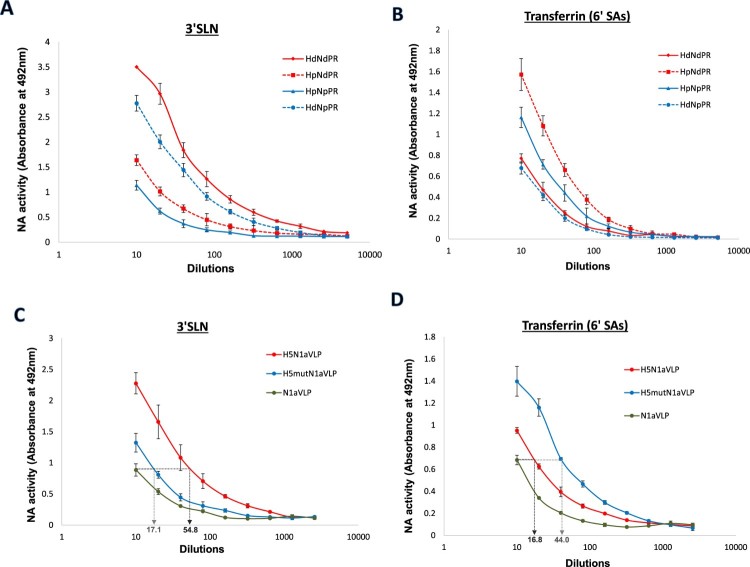
Influenza virus haemagglutinin (HA) and neuraminidase (NA) are involved in the recognition and modulation of sialic acids on the cell surface as the virus receptor. Although the balance between two proteins functions has been found to be crucial for viral fitness, the interplay between the proteins has not been well established. Herein we present evidence for interplay between influenza HA and NA, which may affect the balance between two glycoprotein functions. NA enzymatic activities against sialoglycans were promoted by the presence of HA, which is in accordance with the level of co-existing HA. Such activity enhancement was lost when the HA-receptor binding properties were abolished by low-pH treatment or by mutations at the HA receptor binding domain. Sialidase activities of NA-containing virus-like particles and native influenza viruses were detected using different NA-assays and sialic acid substrates. Most pronounced HA-mediated NA enhancement was found when intact virions were confronted with multivalent surface-anchored substrates, which mimics the physiological conditions on cell membranes. Using recombinant viruses with altered HA bindings preference between α2,3- and α2,6-linked sialic acids, we also found that NA function against different substrates is correlated with the HA-receptor specificity. The effect of HA-receptor specificities on NA functions, together with the HA-mediated NA enhancement, may play a role in virus evasion of the mucus barrier, as well as in cross-species adaptation. Our data also indicate the importance of using multivalent substrates in future studies of NA functions.
流感病毒的血凝素 (HA) 和神经氨酸酶 (NA) 参与了病毒受体上细胞表面唾液酸的识别和调节。虽然已经发现两种蛋白功能之间的平衡对于病毒适应性至关重要,但两种蛋白之间的相互作用尚未得到很好的证实。本文介绍了流感 HA 和 NA 之间相互作用的证据,这种相互作用可能会影响两种糖蛋白功能之间的平衡。HA 的存在促进了针对唾液糖蛋白的 NA 酶活性,这与同时存在的 HA 水平一致。当通过低 pH 值处理或 HA 受体结合域的突变来破坏 HA-受体结合特性时,这种活性增强就会丧失。使用不同的 NA 测定法和唾液酸底物检测了含有 NA 的病毒样颗粒和天然流感病毒的唾液酸酶活性。当完整的病毒颗粒与多价表面锚定的底物接触时,会发现最明显的 HA 介导的 NA 增强,这模拟了细胞膜上的生理条件。使用改变了对α2,3-和α2,6 连接的唾液酸的 HA 结合偏好的重组病毒,我们还发现针对不同底物的 NA 功能与 HA-受体特异性相关。HA-受体特异性对 NA 功能的影响,以及 HA 介导的 NA 增强,可能在病毒逃避黏液屏障以及种间适应方面发挥作用。我们的数据还表明,在未来的 NA 功能研究中,使用多价底物的重要性。