Vector Genetics Laboratory, Department of Pathology, Microbiology and Immunology, School of Veterinary Medicine, University of California Davis, Davis, CA, 95616, USA.
Daniel K. Inouye US Pacific Basin Agricultural Research Center (PBARC), United States Department of Agriculture, Agricultural Research Service, Hilo, Hawaii, USA.
BMC Genomics. 2019 Mar 12;20(1):204. doi: 10.1186/s12864-019-5586-4.
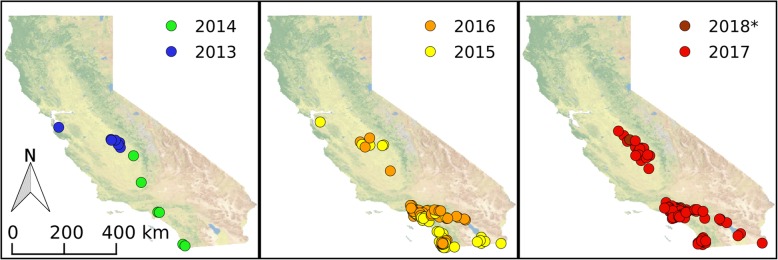
In the summer of 2013, Aedes aegypti Linnaeus was first detected in three cities in central California (Clovis, Madera and Menlo Park). It has now been detected in multiple locations in central and southern CA as far south as San Diego and Imperial Counties. A number of published reports suggest that CA populations have been established from multiple independent introductions.
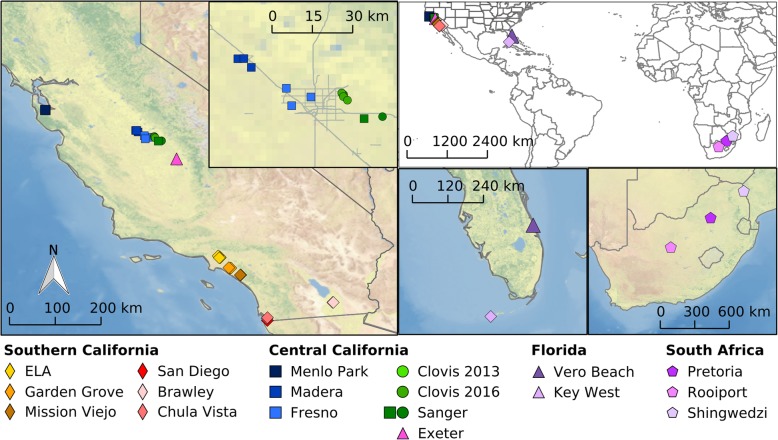
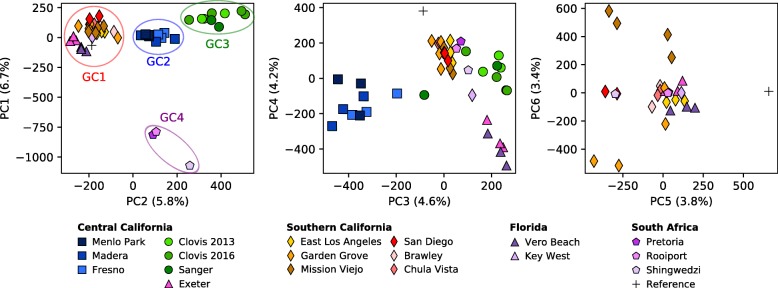
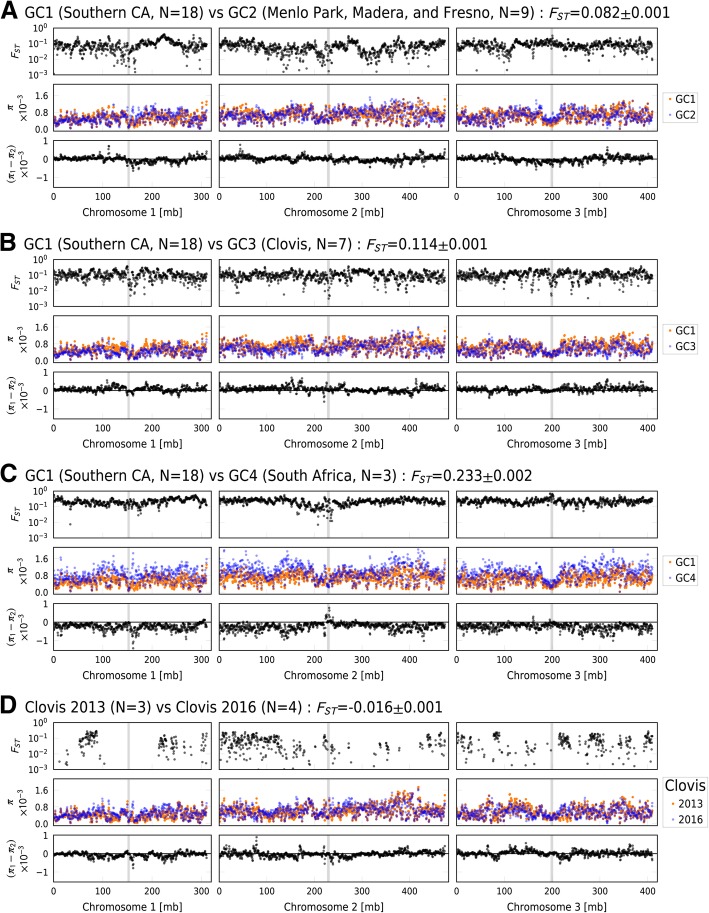
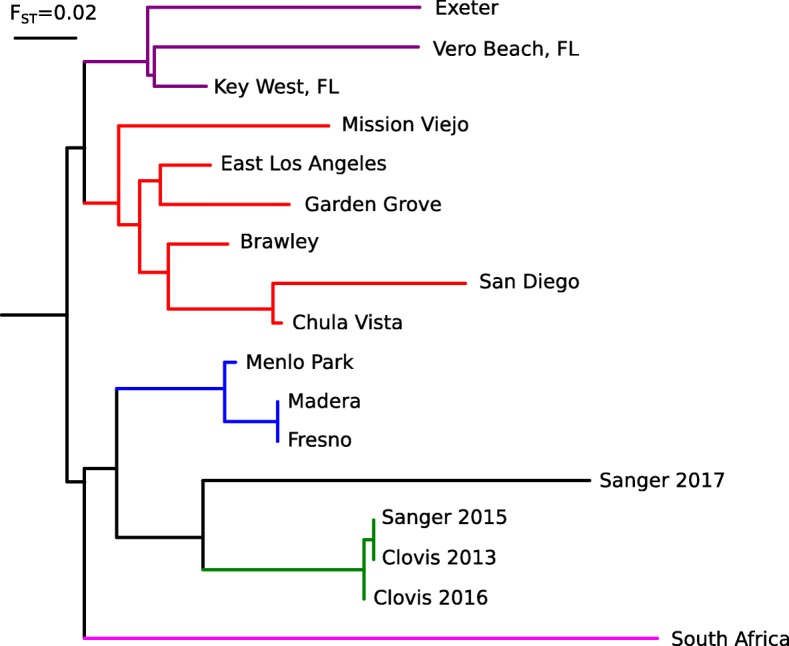
Here we report the first population genomics analyses of Ae. aegypti based on individual, field collected whole genome sequences. We analyzed 46 Ae. aegypti genomes to establish genetic relationships among populations from sites in California, Florida and South Africa. Based on 4.65 million high quality biallelic SNPs, we identified 3 major genetic clusters within California; one that includes all sample sites in the southern part of the state (South of Tehachapi mountain range) plus the town of Exeter in central California and two additional clusters in central California.
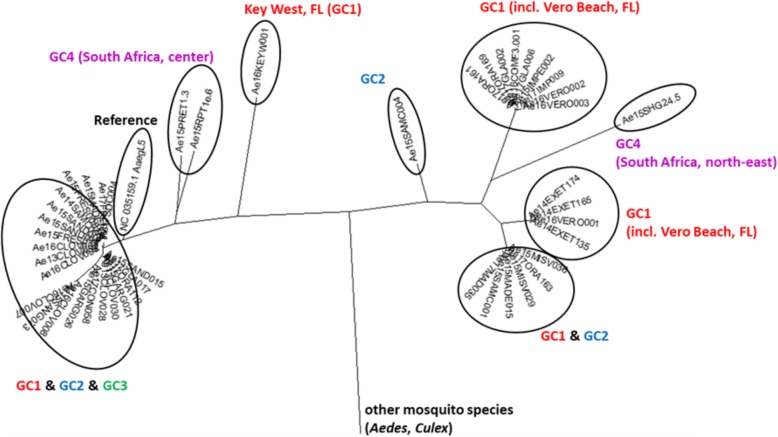
A lack of concordance between mitochondrial and nuclear genealogies suggests that the three founding populations were polymorphic for two main mitochondrial haplotypes prior to being introduced to California. One of these has been lost in the Clovis populations, possibly by a founder effect. Genome-wide comparisons indicate extensive differentiation between genetic clusters. Our observations support recent introductions of Ae. aegypti into California from multiple, genetically diverged source populations. Our data reveal signs of hybridization among diverged populations within CA. Genetic markers identified in this study will be of great value in pursuing classical population genetic studies which require larger sample sizes.
2013 年夏,埃及伊蚊在加利福尼亚州中部的三个城市(克洛维斯、马德拉和门洛帕克)首次被发现。此后,该蚊已在加利福尼亚州中部和南部的多个地点被发现,最南达圣地亚哥和帝国县。一些已发表的报告表明,加利福尼亚州的蚊群是由多个独立传入建立的。
本研究首次基于个体、现场采集的全基因组序列对埃及伊蚊进行了种群基因组学分析。我们分析了 46 个埃及伊蚊基因组,以确定来自加利福尼亚州、佛罗里达州和南非的种群之间的遗传关系。基于 465 万个高质量的双等位基因 SNPs,我们在加利福尼亚州内确定了 3 个主要遗传群;其中一个群包括该州南部(特哈查比山脉以南)的所有采样点以及加利福尼亚州中部的埃克塞特镇,还有另外两个群在加利福尼亚州中部。
线粒体和核基因谱系之间缺乏一致性表明,在引入加利福尼亚州之前,这三个奠基种群在两个主要的线粒体单倍型上是多态的。其中一个在克洛维斯种群中丢失了,可能是由于奠基者效应。全基因组比较表明遗传群之间存在广泛的分化。我们的观察结果支持埃及伊蚊最近从多个遗传分化的来源种群传入加利福尼亚州。我们的数据显示,加利福尼亚州内分化种群之间存在杂交的迹象。本研究中鉴定的遗传标记将在需要更大样本量的经典种群遗传学研究中具有重要价值。