Program in Individualized Medicine, Department of Veterinary Clinical Sciences, College of Veterinary Medicine, Washington State University, Pullman, 99164, WA, United States.
Department of Veterinary Clinical Sciences, College of Veterinary Medicine, Washington State University, Pullman, 99164, WA, United States.
Sci Rep. 2019 Mar 13;9(1):4303. doi: 10.1038/s41598-019-40686-4.
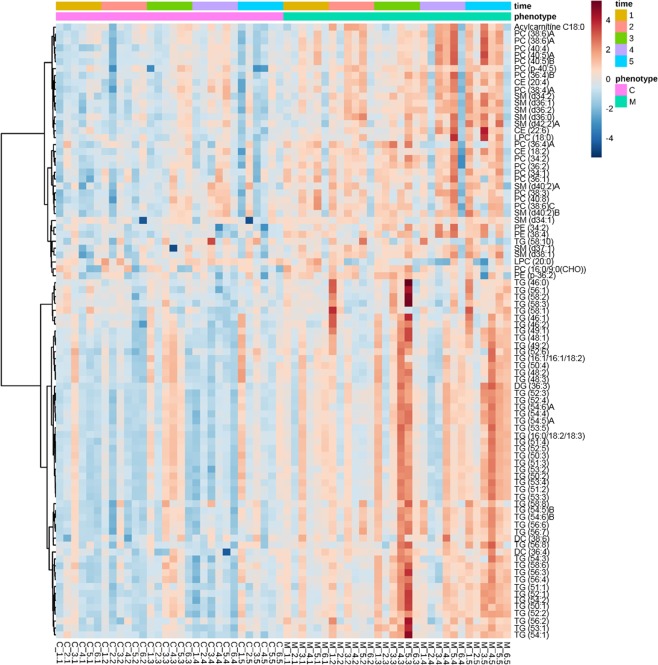
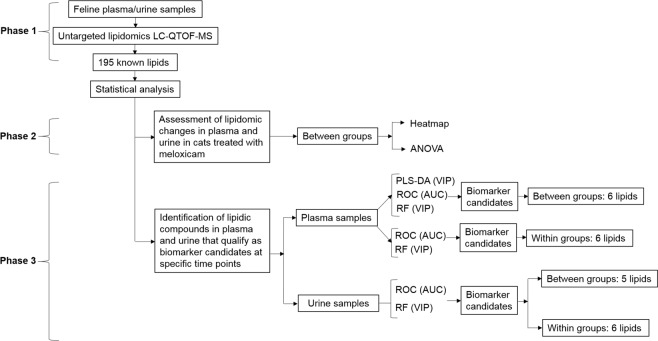
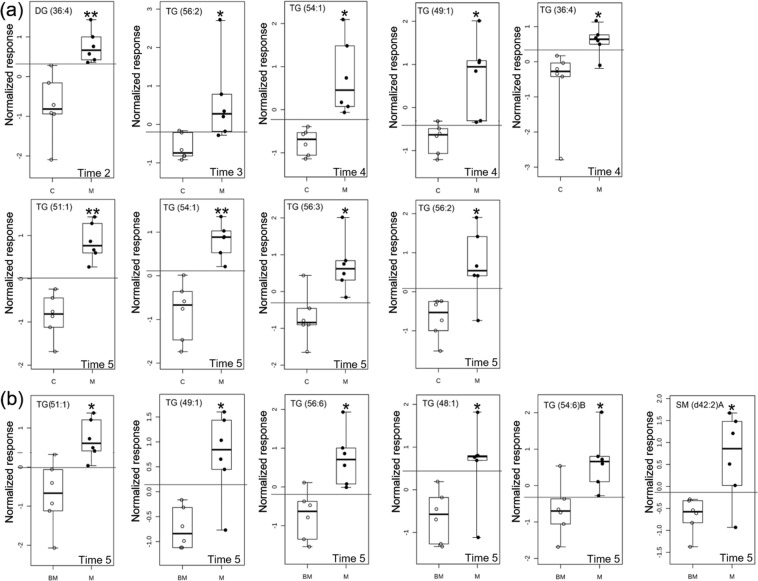
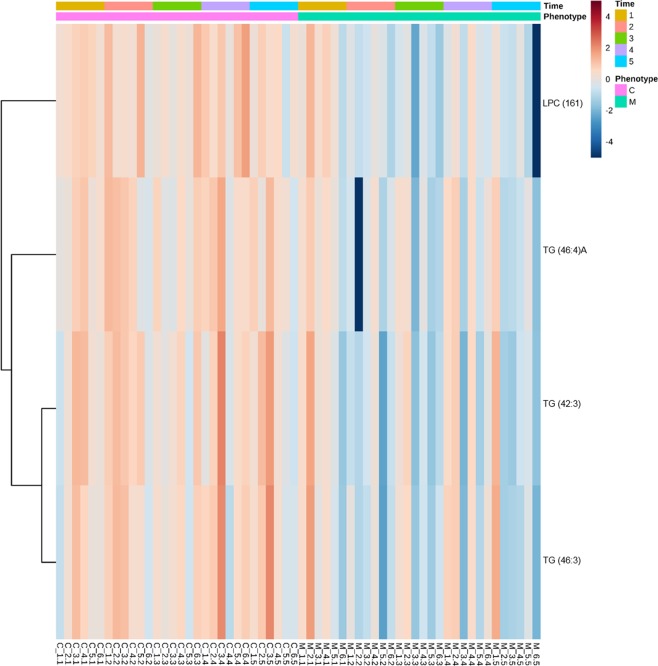
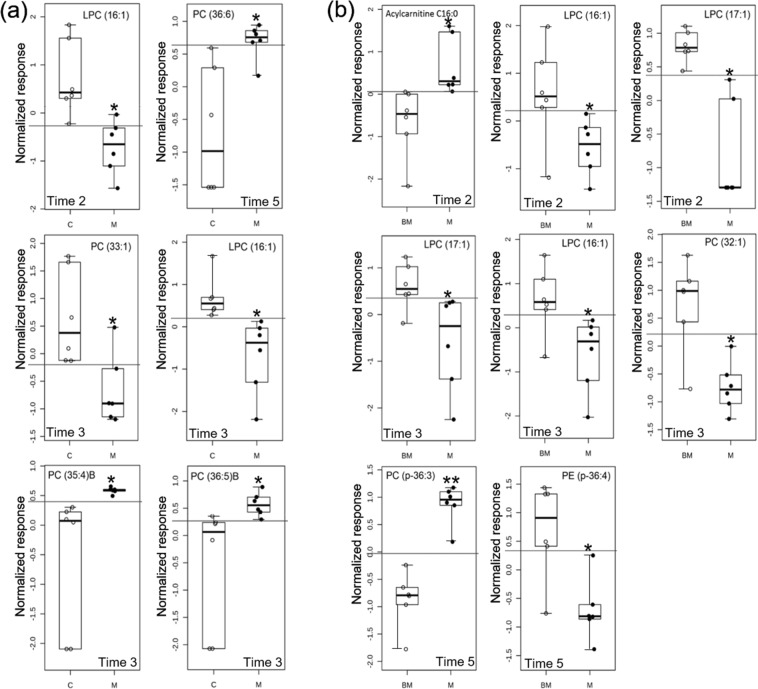
Non-steroidal anti-inflammatories (NSAIDs), such as meloxicam, are the mainstay for treating painful and inflammatory conditions in animals and humans; however, the repeated administration of NSAIDs can cause adverse effects, limiting the long-term administration of these drugs to some patients. The primary aim of this study was to determine the effects of repeated meloxicam administration on the feline plasma and urine lipidome. Cats (n = 12) were treated subcutaneously with either saline solution or 0.3 mg/kg body weight of meloxicam daily for up to 31 days. Plasma and urine lipidome were determined by LC-MS before the first treatment and at 4, 9 and 13 and 17 days after the first administration of meloxicam. The repeated administration of meloxicam altered the feline plasma and urine lipidome as demonstrated by multivariate statistical analysis. The intensities of 94 out of 195 plasma lipids were altered by the repeated administration of meloxicam to cats (p < 0.05). Furthermore, we identified 12 lipids in plasma and 10 lipids in urine that could serve as biomarker candidates for discriminating animals receiving NSAIDs from healthy controls. Expanding our understanding about the effects of NSAIDs in the body could lead to the discovery of mechanism(s) associated with intolerance to NSAIDs.
非甾体抗炎药(NSAIDs),如美洛昔康,是治疗动物和人类疼痛和炎症的主要药物;然而,重复使用 NSAIDs 可能会引起不良反应,限制了这些药物在某些患者中的长期使用。本研究的主要目的是确定重复给予美洛昔康对猫血浆和尿液脂质组的影响。将猫(n=12)皮下给予生理盐水或 0.3mg/kg 体重的美洛昔康,每天一次,最多持续 31 天。在第一次给予美洛昔康之前和第一次给药后 4、9、13 和 17 天,通过 LC-MS 测定血浆和尿液脂质组。重复给予美洛昔康改变了猫的血浆和尿液脂质组,这一点通过多变量统计分析得到了证明。重复给予美洛昔康使 195 种血浆脂质中的 94 种的强度发生了改变(p<0.05)。此外,我们在血浆中鉴定出 12 种脂质和尿液中鉴定出 10 种脂质,它们可能作为区分接受 NSAIDs 治疗的动物和健康对照的生物标志物候选物。扩大我们对 NSAIDs 在体内作用的理解可能会发现与 NSAIDs 不耐受相关的机制。