Program in Individualized Medicine, Department of Veterinary Clinical Sciences, College of Veterinary Medicine, Washington State University, Pullman, WA, United States of America.
Department of Veterinary Clinical Sciences, College of Veterinary Medicine, Washington State University, Pullman, WA, United States of America.
PLoS One. 2020 Feb 13;15(2):e0228989. doi: 10.1371/journal.pone.0228989. eCollection 2020.
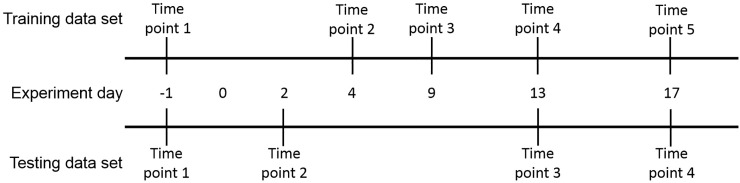
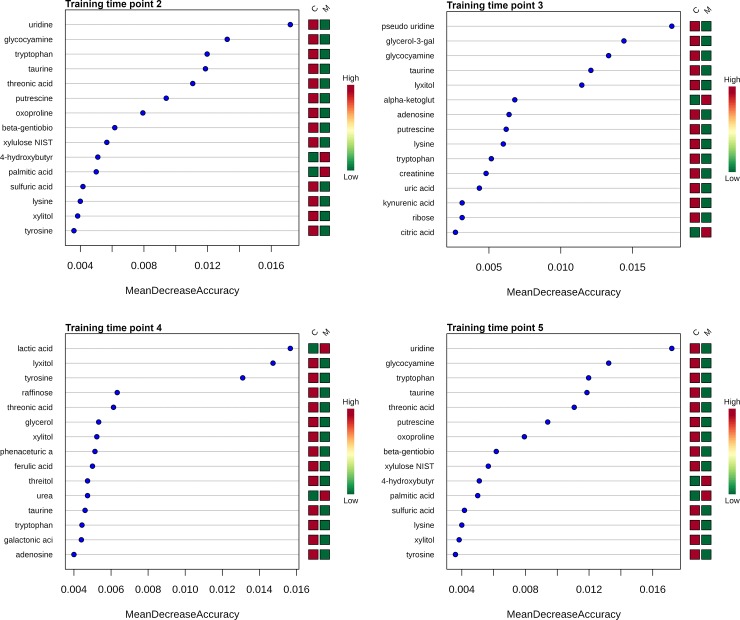
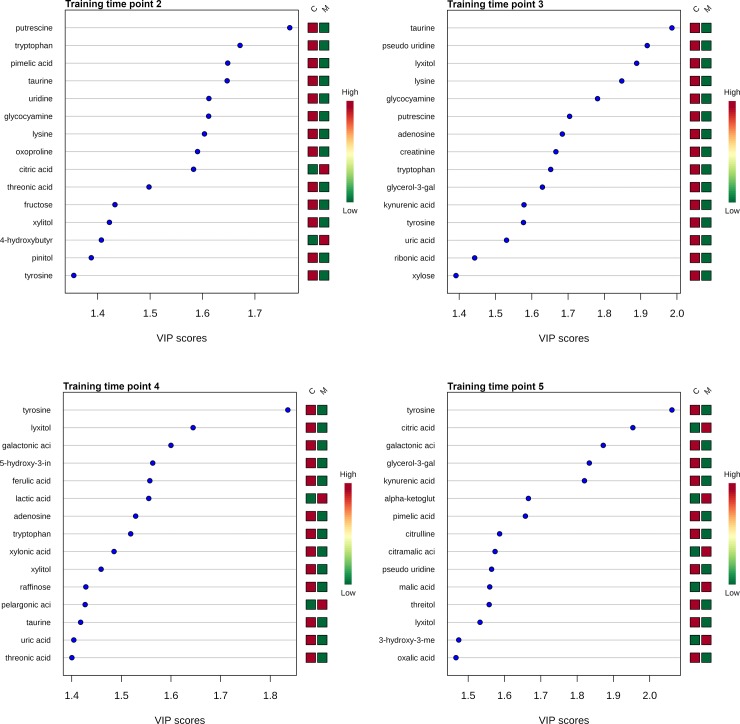
Prediction and early detection of kidney damage induced by nonsteroidal anti-inflammatories (NSAIDs) would provide the best chances of maximizing the anti-inflammatory effects while minimizing the risk of kidney damage. Unfortunately, biomarkers for detecting NSAID-induced kidney damage in cats remain to be discovered. To identify potential urinary biomarkers for monitoring NSAID-based treatments, we applied an untargeted metabolomics approach to urine collected from cats treated repeatedly with meloxicam or saline for up to 17 days. Applying multivariate analysis, this study identified a panel of seven metabolites that discriminate meloxicam treated from saline treated cats. Combining artificial intelligence machine learning algorithms and an independent testing urinary metabolome data set from cats with meloxicam-induced kidney damage, a panel of metabolites was identified and validated. The panel of metabolites including tryptophan, tyrosine, taurine, threonic acid, pseudouridine, xylitol and lyxitol, successfully distinguish meloxicam-treated and saline-treated cats with up to 75-100% sensitivity and specificity. This panel of urinary metabolites may prove a useful and non-invasive diagnostic tool for monitoring potential NSAID induced kidney injury in feline patients and may act as the framework for identifying urine biomarkers of NSAID induced injury in other species.
预测和早期发现非甾体抗炎药(NSAIDs)引起的肾损伤将提供最大程度发挥抗炎作用同时最小化肾损伤风险的最佳机会。不幸的是,用于检测猫 NSAID 诱导肾损伤的生物标志物仍有待发现。为了确定用于监测基于 NSAID 的治疗的潜在尿生物标志物,我们应用非靶向代谢组学方法对接受美洛昔康或生理盐水治疗长达 17 天的猫的尿液进行了分析。通过多变量分析,本研究确定了一组可区分美洛昔康治疗与生理盐水治疗猫的七种代谢物。通过将人工智能机器学习算法与来自美洛昔康诱导肾损伤猫的独立测试尿液代谢组数据集相结合,确定并验证了一组代谢物。包括色氨酸、酪氨酸、牛磺酸、苏糖醇、假尿嘧啶核苷、木糖醇和山梨醇在内的这组代谢物可成功区分美洛昔康治疗和生理盐水治疗的猫,其敏感性和特异性高达 75-100%。这组尿代谢物可能成为监测猫类患者潜在 NSAID 诱导肾损伤的有用且非侵入性诊断工具,并可能成为鉴定其他物种 NSAID 诱导损伤尿液生物标志物的框架。