Department of Flight Simulator Innovations, Military Institute of Aviation Medicine, ul. Krasińskiego 54/56, 01-755, Warszawa, Poland.
Department of Aviation Psychology, Military Institute of Aviation Medicine, ul. Krasińskiego 54/56, 01-755, Warszawa, Poland.
Sci Rep. 2019 Mar 13;9(1):4341. doi: 10.1038/s41598-019-40737-w.
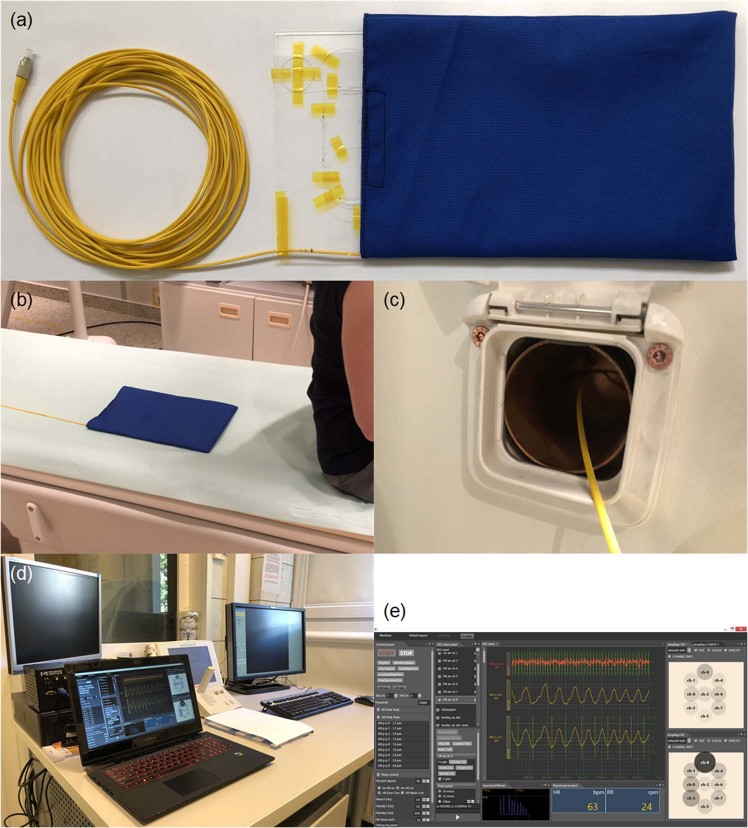
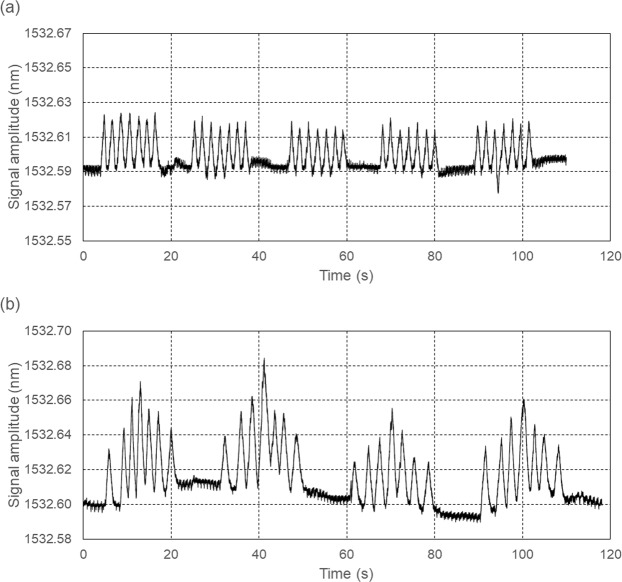
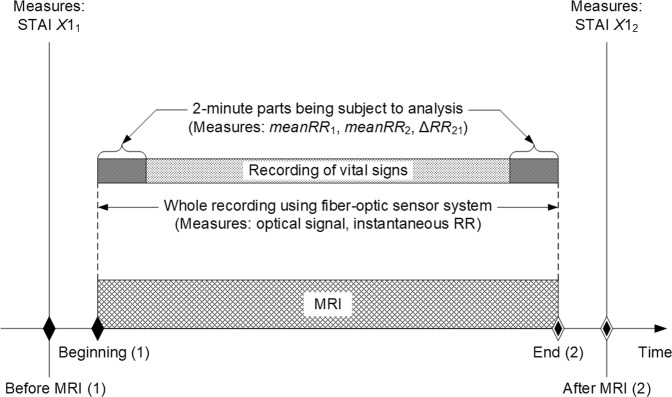
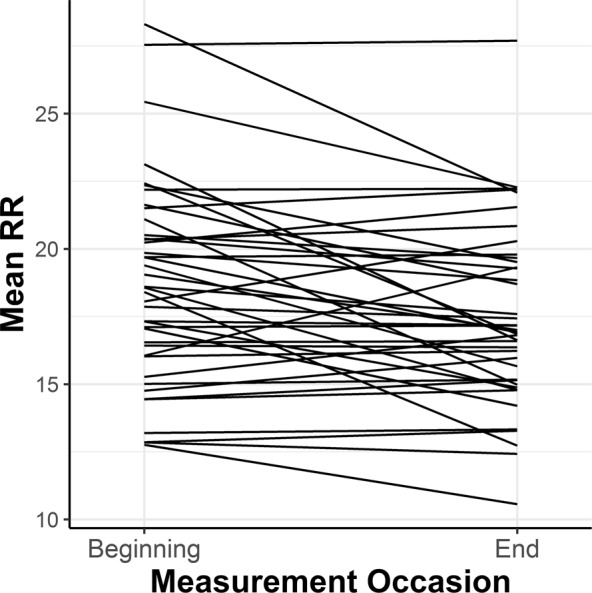
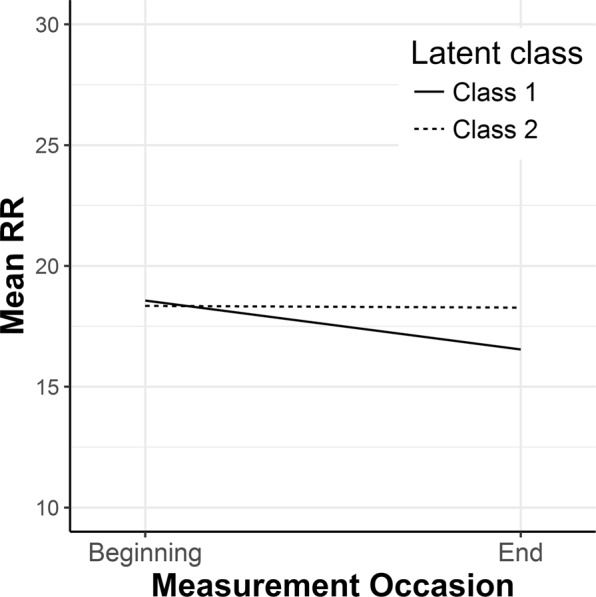
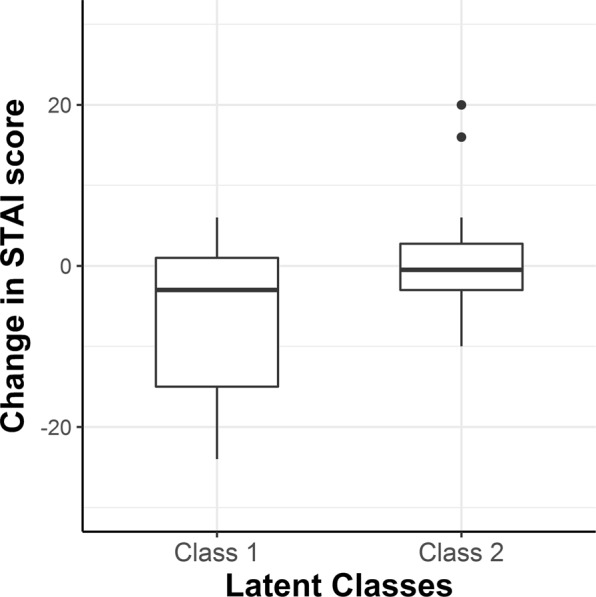
Magnetic resonance imaging (MRI) patients often experience anxiety-related respiratory disorders, including hyperventilation, but their respiratory indicators are not routinely monitored during scanning. Free from metal parts and immune to electromagnetic radiation, fibre-optic sensors have the potential to better control the patient's condition by providing continuous non-invasive monitoring of the respiratory rate (RR). The study was purposed to assess the relationship between anxiety in MRI patients and their RR acquired by a fibre-optic sensor system. Forty-four subjects were involved in the study. The mean RR values recorded for 2 minutes immediately after the beginning and immediately before the end of the scanning were assessed relative to the State-Trait Anxiety Inventory (STAI) X-1 scores obtained immediately before and immediately after the scanning, respectively. A growth mixture model analysis was performed to statistically differentiate two groups of subjects according to the trends in repeated measures of RR. A significant lowering of the anxiety state was observed in the group characterised by a decrease in RR, whereas essentially no change in anxiety level was observed in the group with a stable RR. The t-test showed significant differences in changes in anxiety between these groups (t = -2.349, p = 0.012, Cohen's d = 2.13).
磁共振成像(MRI)患者常经历与焦虑相关的呼吸紊乱,包括过度通气,但在扫描过程中通常不会监测其呼吸指标。光纤传感器没有金属部件且不受电磁辐射影响,有望通过连续提供无创的呼吸频率(RR)监测来更好地控制患者病情。本研究旨在评估 MRI 患者的焦虑状态与其通过光纤传感器系统获得的 RR 之间的关系。共有 44 名受试者参与了该研究。评估了扫描开始后和结束前各 2 分钟内记录的平均 RR 值与扫描前后分别获得的状态-特质焦虑量表(STAI)X-1 评分之间的关系。采用增长混合物模型分析,根据 RR 的重复测量趋势,对两组受试者进行了统计学区分。RR 下降的组中观察到焦虑状态明显降低,而 RR 稳定的组中焦虑水平基本没有变化。t 检验显示这两组之间的焦虑变化存在显著差异(t=-2.349,p=0.012,Cohen's d=2.13)。