IEEE Trans Biomed Eng. 2019 Dec;66(12):3346-3359. doi: 10.1109/TBME.2019.2904301. Epub 2019 Mar 13.
Multi-modal functional magnetic resonance imaging has been widely used for brain research. Conventional data-fusion methods cannot capture complex relationship (e.g., nonlinear predictive relationship) between multiple data. This paper aims to develop a neural network framework to extract phenotype related cross-data relationships and use it to study the brain development.
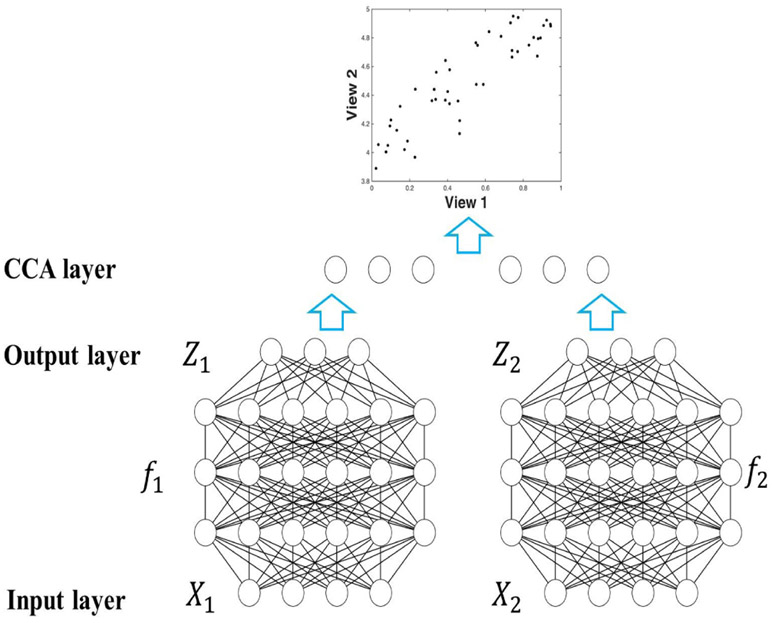
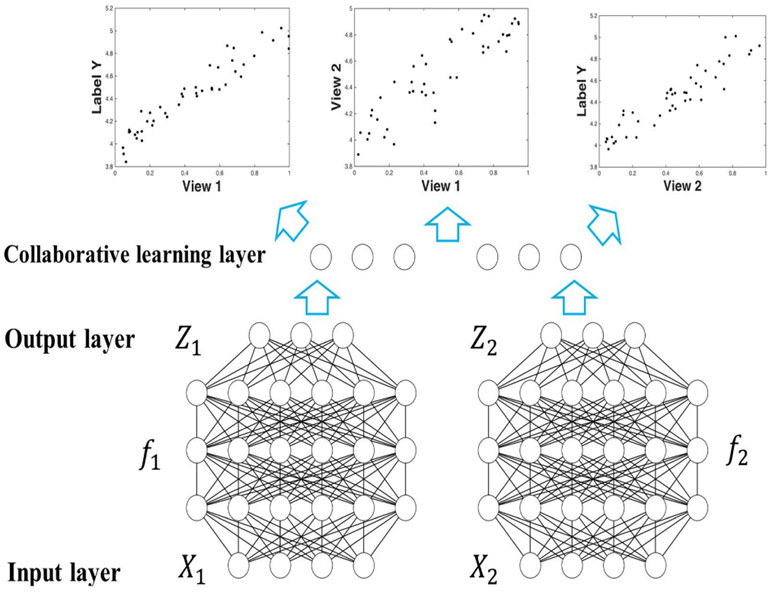
We propose a novel method, deep collaborative learning (DCL), to address the limitation of existing methods. DCL first uses a deep network to represent original data and then seeks their correlations, while also linking the data representation with phenotypical information.
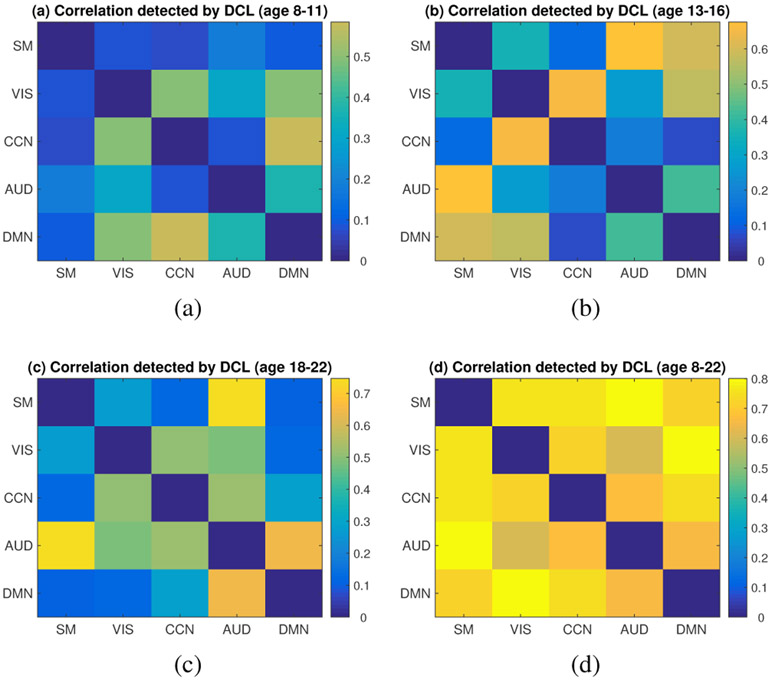
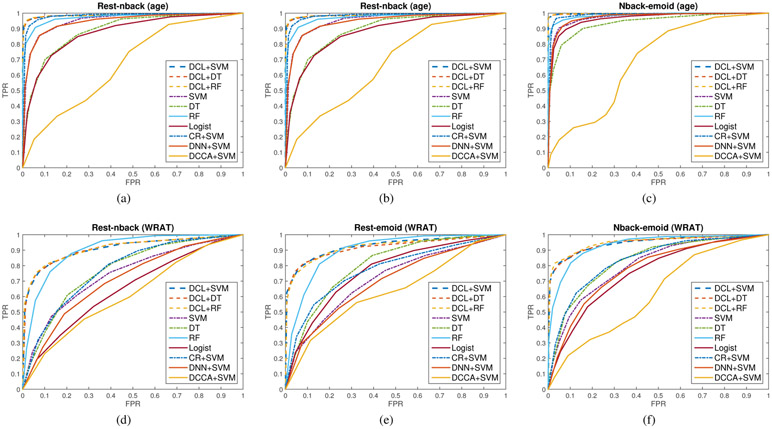
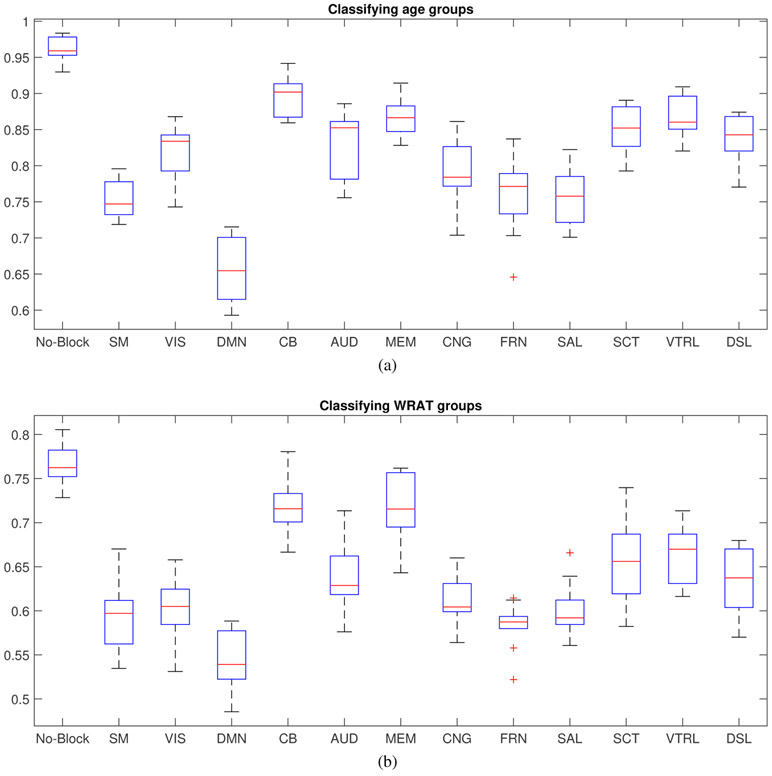
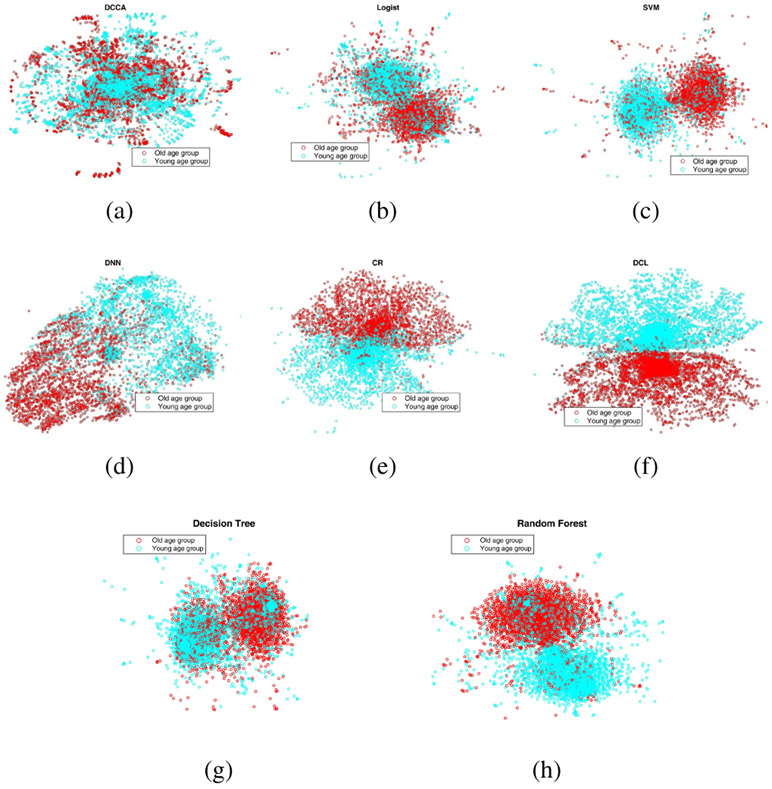
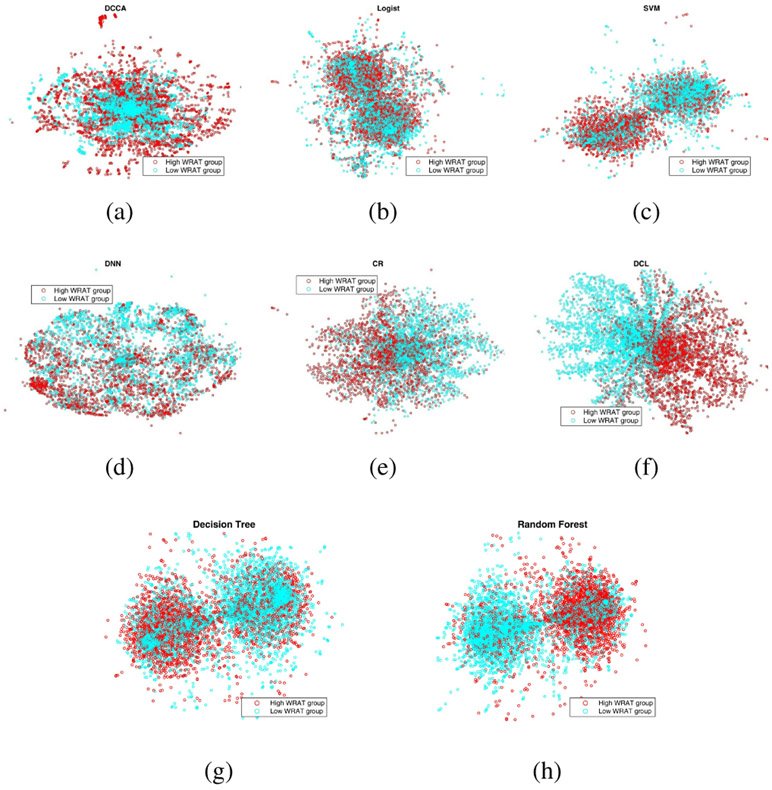
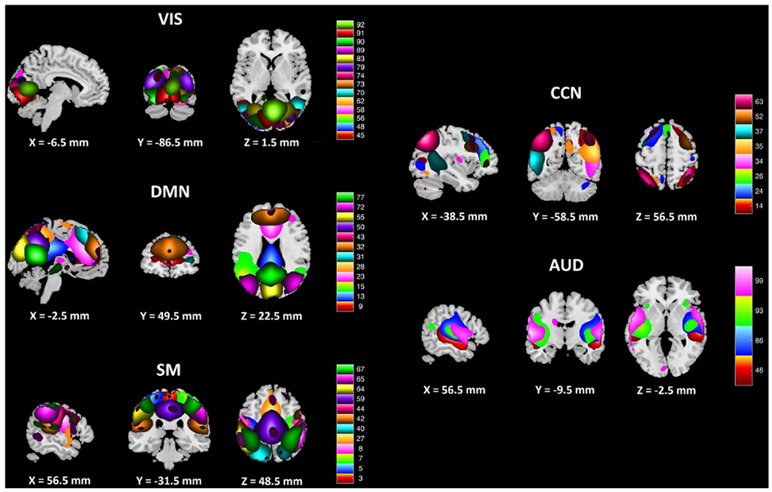
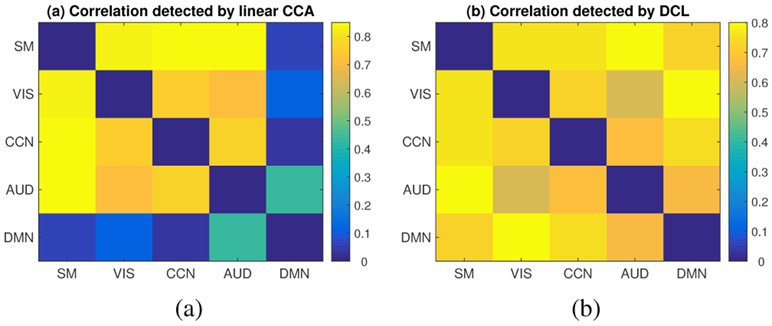
We studied the difference of functional connectivity (FCs) between different age groups and also use FCs as a fingerprint to predict cognitive abilities. Our experiments demonstrated higher accuracy of using DCL over other conventional models when classifying populations of different ages and cognitive scores. Moreover, DCL revealed that brain connections became stronger at adolescence stage. Furthermore, DCL detected strong correlations between default mode network and other networks which were overlooked by linear canonical correlation analysis, demonstrating DCL's ability of detecting nonlinear correlations.
The results verified the superiority of DCL over conventional data-fusion methods. In addition, the stronger brain connection demonstrated the importance of adolescence stage for brain development.
DCL can better combine complex correlations between multiple data sets in addition to their fitting to phenotypes, with the potential to overcome the limitations of several current data-fusion models.
多模态功能磁共振成像已广泛应用于脑研究。传统的数据融合方法无法捕捉到多个数据之间复杂的关系(例如非线性预测关系)。本文旨在开发一种神经网络框架,以提取与表型相关的跨数据关系,并将其用于研究大脑发育。
我们提出了一种新的方法,深度协作学习(DCL),以解决现有方法的局限性。DCL 首先使用深度网络来表示原始数据,然后寻求它们之间的相关性,同时将数据表示与表型信息联系起来。
我们研究了不同年龄组之间功能连接(FC)的差异,并使用 FC 作为指纹来预测认知能力。我们的实验表明,在对不同年龄和认知分数的人群进行分类时,DCL 比其他传统模型具有更高的准确性。此外,DCL 揭示了大脑连接在青春期阶段变得更强。此外,DCL 检测到默认模式网络与其他网络之间的强相关性,这是线性典型相关分析所忽略的,表明了 DCL 检测非线性相关性的能力。
结果验证了 DCL 优于传统的数据融合方法。此外,更强的大脑连接证明了青春期对大脑发育的重要性。
DCL 可以更好地结合多个数据集之间的复杂相关性及其对表型的拟合,有可能克服当前几种数据融合模型的局限性。