Joint TB, HIV and Viral Hepatitis Programme, WHO Regional Office for Europe, Copenhagen, Denmark
Joint TB, HIV and Viral Hepatitis Programme, WHO Regional Office for Europe, Copenhagen, Denmark.
Eur Respir Rev. 2019 Mar 14;28(151). doi: 10.1183/16000617.0106-2018. Print 2019 Mar 31.
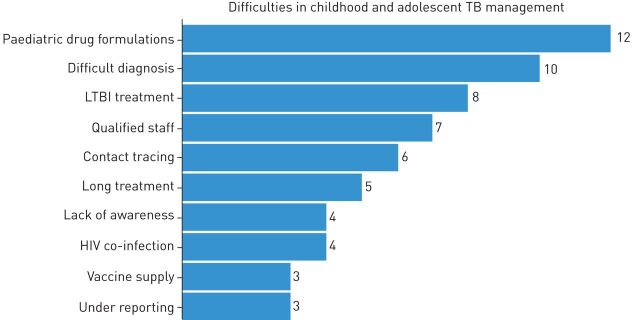
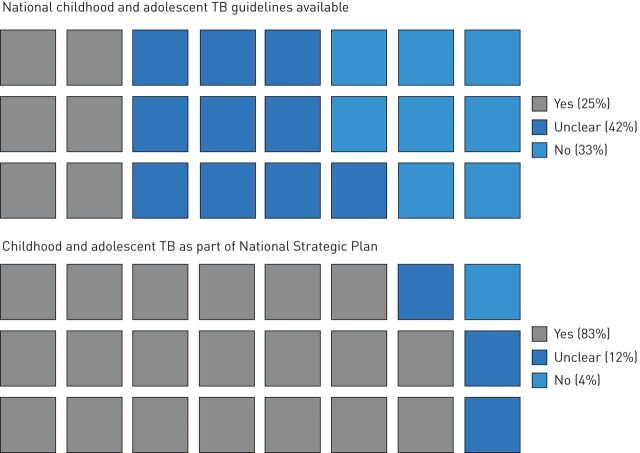
In 2017, in recognition of the challenges faced by Member States in managing childhood and adolescent tuberculosis (TB) at a country level, the WHO Regional Office for Europe held a Regional Consultation. In total, 35 countries participated in the consultations representing both high- and low-incidence Member States. Here, we provide an overview of the existing World Health Organization (WHO) documents and guidelines on childhood and adolescent TB and describe the outcomes of this regional meeting. National childhood and adolescent TB guidelines are available in 25% of Member States, while 33% reported that no such guidelines are at hand. In the majority of countries (83%), childhood and adolescent TB is part of the National Strategic Plan. The most pressing challenges in managing paediatric TB comprise the lack of adequate drug formulations, the difficult diagnosis, and treatment of presumed latent TB infection. Investments into childhood and adolescent TB need to be further advocated to achieve the End TB goals set by WHO to eliminate TB by 2030.
2017 年,鉴于会员国在国家层面管理儿童和青少年结核病(TB)方面面临的挑战,世卫组织欧洲区域办事处举行了一次区域磋商。共有 35 个国家参加了磋商,其中包括高发病率和低发病率的会员国。在此,我们概述了世卫组织现有的关于儿童和青少年结核病的文件和指南,并描述了这次区域会议的结果。25%的会员国提供了国家儿童和青少年结核病指南,而 33%的会员国报告称没有此类指南。在大多数国家(83%),儿童和青少年结核病是国家战略计划的一部分。管理儿科结核病最紧迫的挑战包括缺乏足够的药物制剂、疑似潜伏性结核病感染的诊断和治疗困难。需要进一步倡导对儿童和青少年结核病的投资,以实现世卫组织到 2030 年消除结核病的目标。