Department of Thoracic Surgery, Tongji Hospital, Tongji Medical College, Huazhong University of Science and Technology, Wuhan, Hubei, 430030, People's Republic of China.
Department of Thoracic Surgery, Union Hospital, Tongji Medical College, Huazhong University of Science and Technology, Wuhan, Hubei, 430022, People's Republic of China.
J Exp Clin Cancer Res. 2019 Mar 15;38(1):129. doi: 10.1186/s13046-019-1120-4.
Non-small cell lung cancer (NSCLC) patients with sensitive epidermal growth factor receptor (EGFR) mutations are successfully treated with EGFR tyrosine kinase inhibitors (EGFR-TKIs); however, resistance to treatment inevitably occurs. Given lipid metabolic reprogramming is widely known as a hallmark of cancer and intimately linked with EGFR-stimulated cancer growth. Activation of EGFR signal pathway increased monounsaturated fatty acids (MUFA) and lipid metabolism key enzyme Stearoyl-CoA Desaturase 1 (SCD1) expression. However the correlation between EGFR-TKI resistance and lipid metabolism remains to be determined.
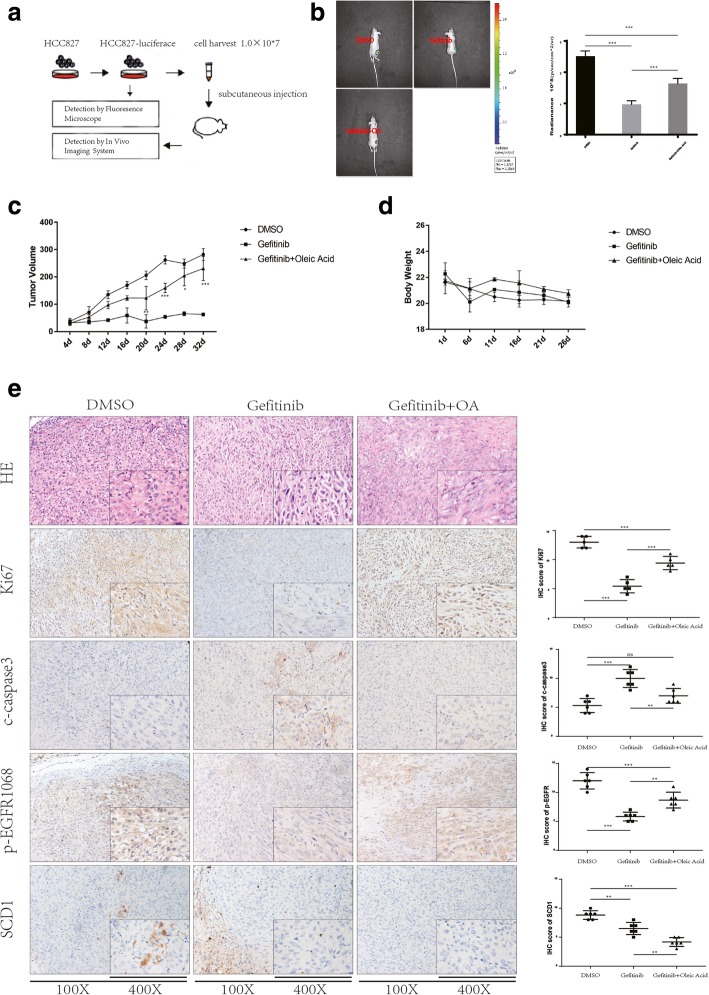
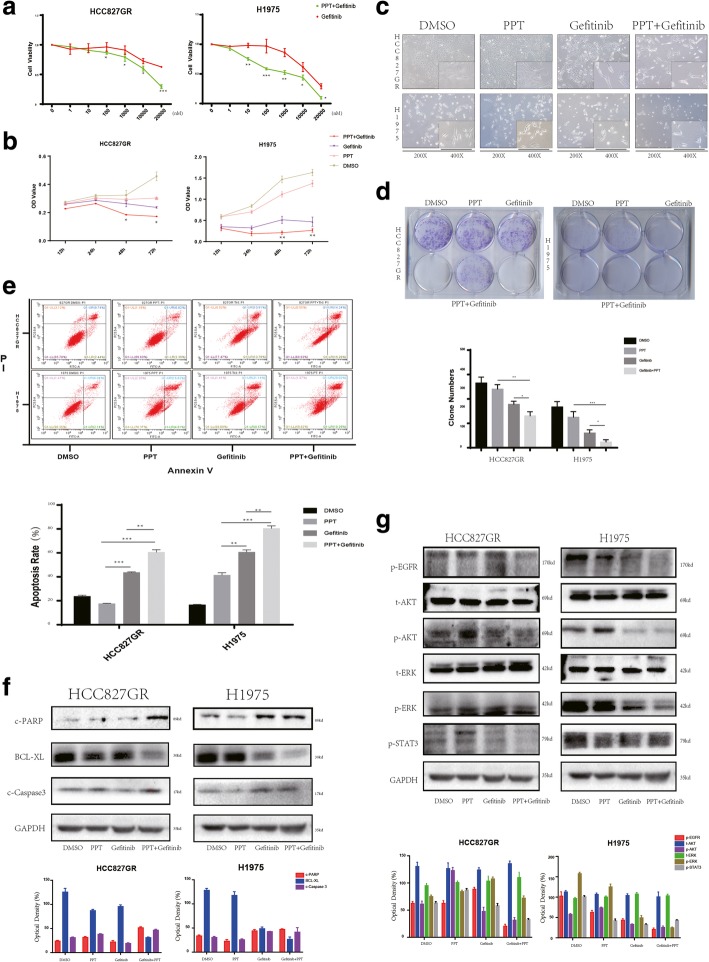
In this study the differences in lipid synthesis between paired TKI-sensitive and TKI-resistant patient tissues and NSCLC cell lines were explored. Oleic acid (OA, a kind of MUFA, the SCD1 enzymatic product) was used to simulate a high lipid metabolic environment and detected the affection on the cytotoxic effect of TKIs (Gefitinib and osimertinib) in cell lines with EGFR-activating mutations. (20S)-Protopanaxatriol (g-PPT), an aglycone of ginsenosides, has been reported to be an effective lipid metabolism inhibitor, was used to inhibit lipid metabolism. Additionally, synergism in cytotoxic effects and signal pathway activation were evaluated using CCK-8 assays, Western blotting, flow cytometry, Edu assays, plate clone formation assays and immunofluorescence. Furthermore, two xenograft mouse models were used to verify the in vitro results.
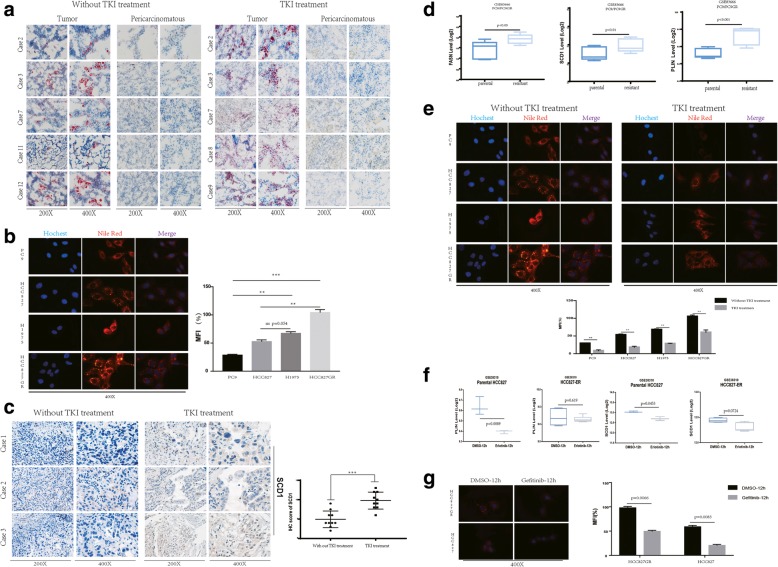
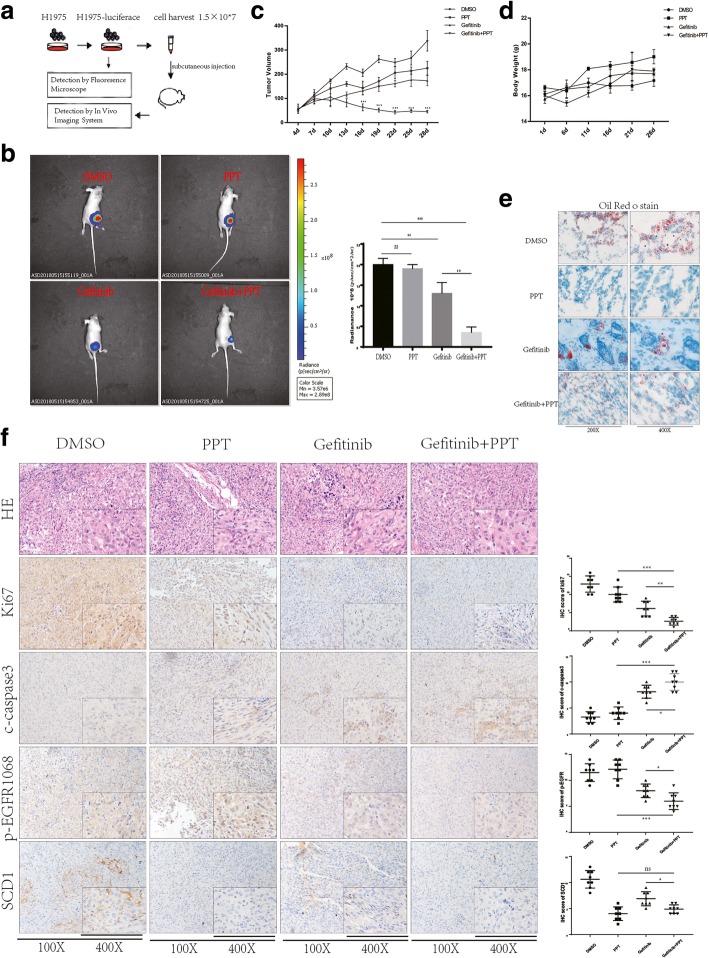
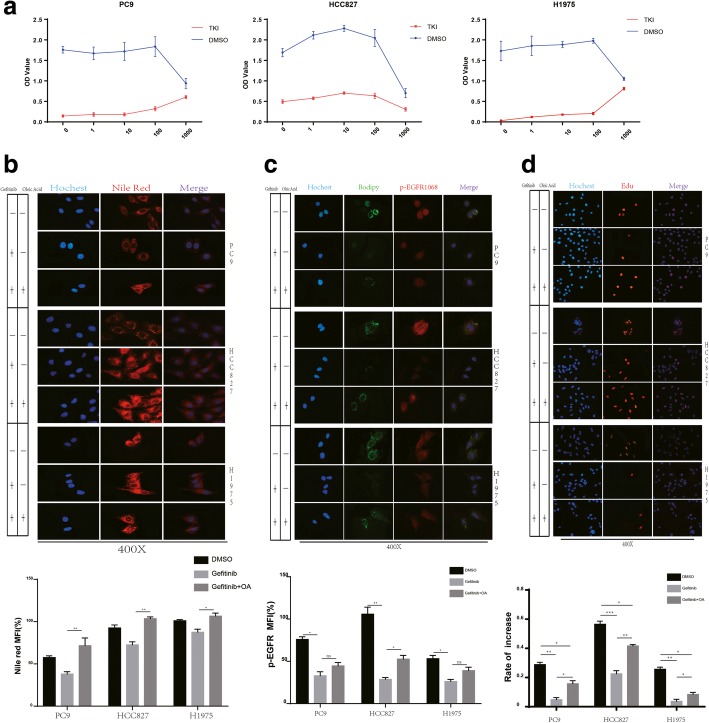
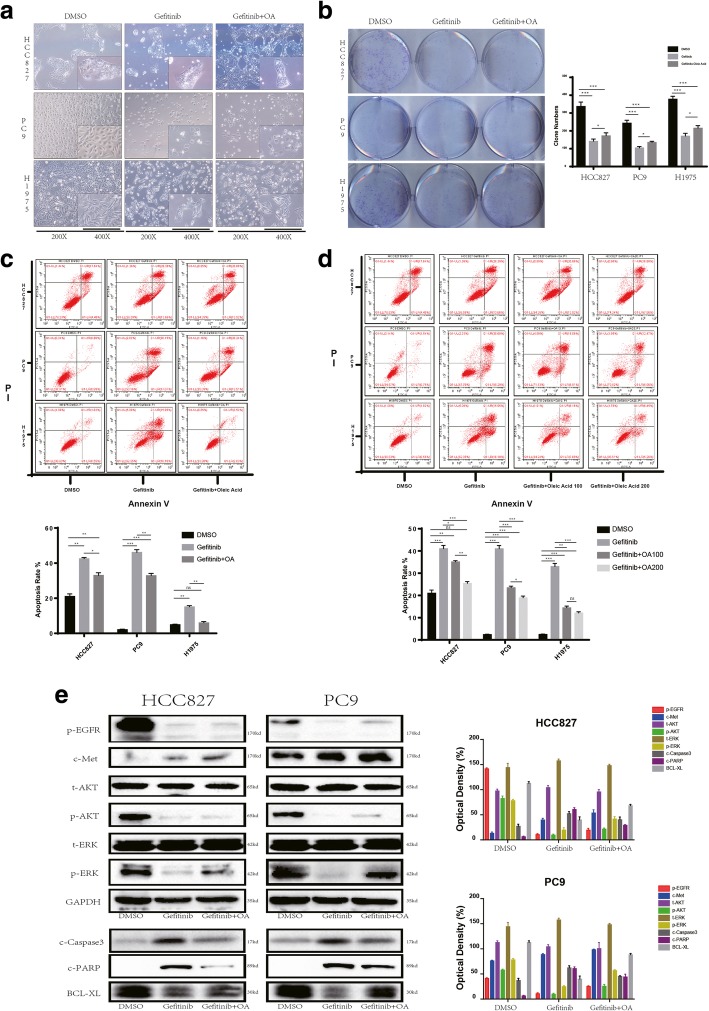
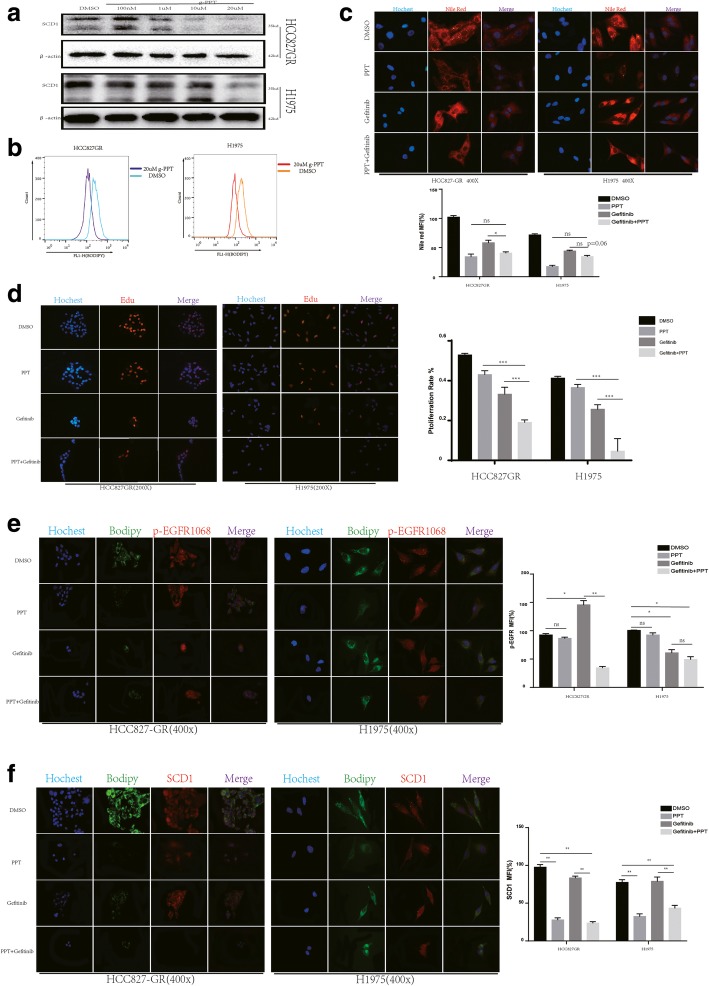
Gefitinib-resistant cells have higher lipid droplet content and SCD1 expression than Gefitinib-sensitive cells in both NSCLC cell lines and patient tissues. Additionally oleic acid (OA, a kind of MUFA, the SCD1 enzymatic product) abrogates the cytotoxic effect of both Gefitinib and osimertinib in cell lines with EGFR-activating mutations. As a reported effective lipid metabolism inhibitor, g-PPT significantly inhibited the expression of SCD1 in lung adenocarcinoma cells, and then down-regulated the content of intracellular lipid droplets. Combined treatment with Gefitinib and g-PPT reverses the resistance to Gefitinib and inhibits the activation of p-EGFR and the downstream signaling pathways.
Our findings uncover a link between lipid metabolic reprogramming and EGFR-TKI resistance, confirmed that combination target both EGFR and abnormal lipid metabolism maybe a promising therapy for EGFR-TKI resistance and highlighting the possibility of monitoring lipid accumulation in tumors for predicting drug resistance.
表皮生长因子受体(EGFR)突变敏感的非小细胞肺癌(NSCLC)患者使用 EGFR 酪氨酸激酶抑制剂(EGFR-TKIs)治疗效果显著,但治疗耐药不可避免。鉴于脂质代谢重编程是癌症的一个显著特征,并与 EGFR 刺激的肿瘤生长密切相关。EGFR 信号通路的激活增加了单不饱和脂肪酸(MUFA)和脂质代谢关键酶硬脂酰辅酶 A 去饱和酶 1(SCD1)的表达。然而,EGFR-TKI 耐药与脂质代谢之间的相关性仍有待确定。
本研究探讨了配对的 TKI 敏感和 TKI 耐药患者组织和 NSCLC 细胞系之间脂质合成的差异。油酸(OA,一种 MUFA,SCD1 的酶产物)用于模拟高脂质代谢环境,并检测其对具有 EGFR 激活突变的细胞系中 TKIs(吉非替尼和奥希替尼)细胞毒性的影响。(20S)-原人参三醇(g-PPT),一种人参皂苷的苷元,已被报道为一种有效的脂质代谢抑制剂,用于抑制脂质代谢。此外,通过 CCK-8 测定、Western blot、流式细胞术、Edu 测定、平板克隆形成测定和免疫荧光测定评估细胞毒性效应和信号通路激活的协同作用。此外,使用两种异种移植小鼠模型验证体外结果。
在 NSCLC 细胞系和患者组织中,吉非替尼耐药细胞的脂滴含量和 SCD1 表达均高于吉非替尼敏感细胞。此外,油酸(OA,一种 MUFA,SCD1 的酶产物)可消除具有 EGFR 激活突变的细胞系中吉非替尼和奥希替尼的细胞毒性作用。作为一种报道有效的脂质代谢抑制剂,g-PPT 显著抑制肺腺癌细胞中 SCD1 的表达,进而下调细胞内脂滴的含量。吉非替尼和 g-PPT 联合治疗可逆转吉非替尼耐药,并抑制 p-EGFR 及其下游信号通路的激活。
我们的研究结果揭示了脂质代谢重编程与 EGFR-TKI 耐药之间的联系,证实了靶向 EGFR 和异常脂质代谢的联合治疗可能是治疗 EGFR-TKI 耐药的一种有前途的方法,并强调了监测肿瘤中脂质积累以预测耐药的可能性。