Alkhateeb Abedalrhman, Rezaeian Iman, Singireddy Siva, Cavallo-Medved Dora, Porter Lisa A, Rueda Luis
School of Computer Science, University of Windsor, Windsor, ON, Canada.
Department of Biological Sciences, University of Windsor, Windsor, ON, Canada.
Cancer Inform. 2019 Mar 13;18:1176935119835522. doi: 10.1177/1176935119835522. eCollection 2019.
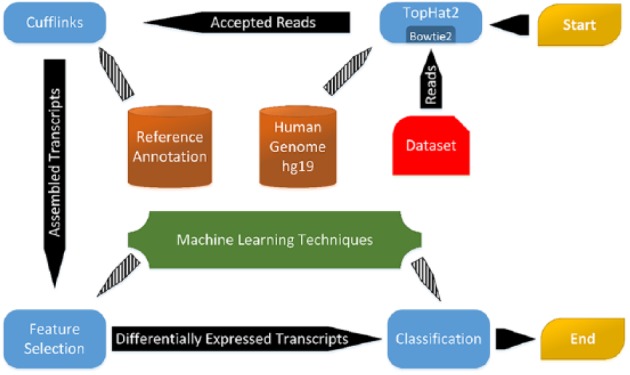
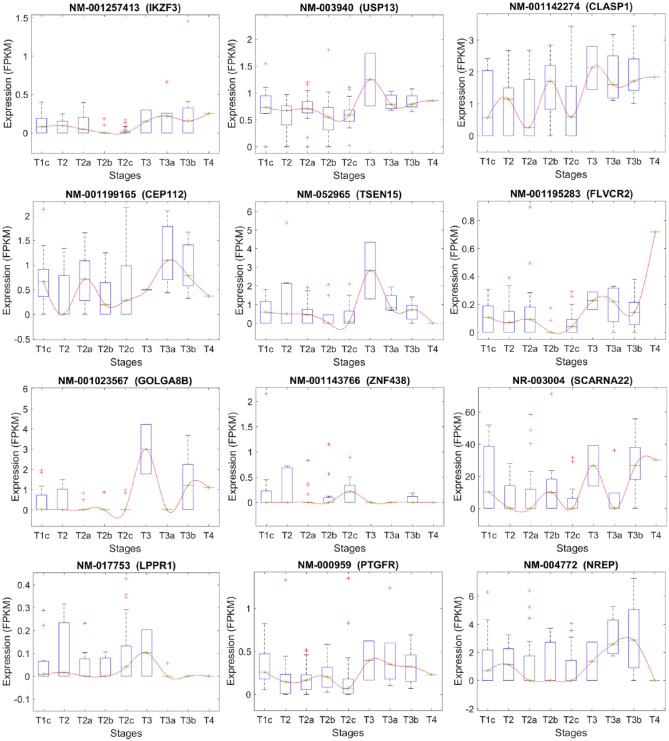
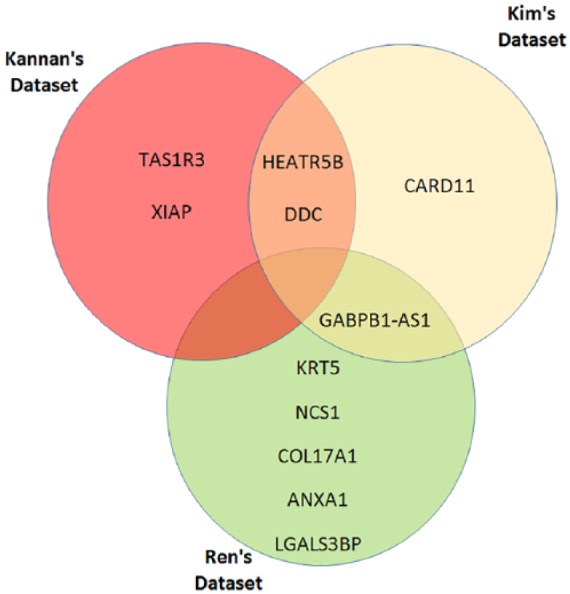
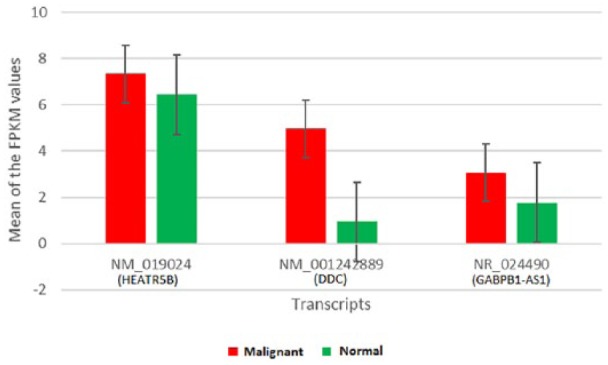
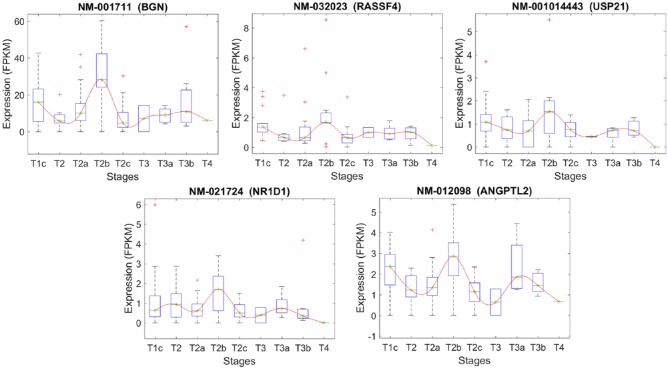
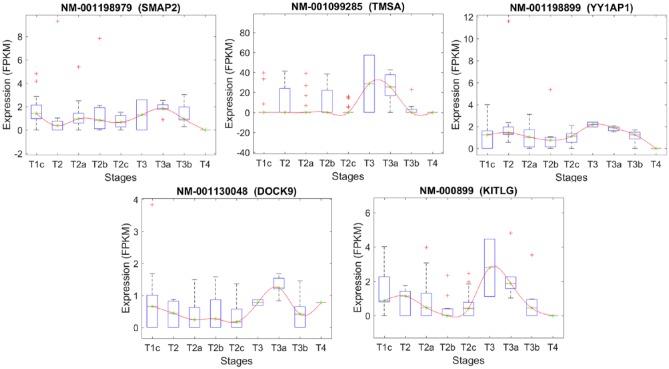
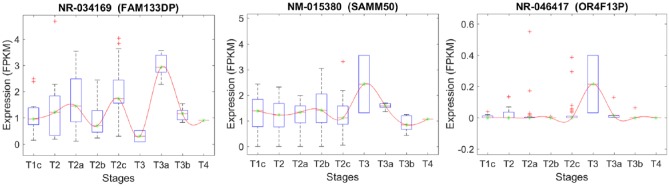
Prostate cancer is one of the most common types of cancer among Canadian men. Next-generation sequencing using RNA-Seq provides large amounts of data that may reveal novel and informative biomarkers. We introduce a method that uses machine learning techniques to identify transcripts that correlate with prostate cancer development and progression. We have isolated transcripts that have the potential to serve as prognostic indicators and may have tremendous value in guiding treatment decisions. Analysis of normal versus malignant prostate cancer data sets indicates differential expression of the genes HEATR5B, DDC, and GABPB1-AS1 as potential prostate cancer biomarkers. Our study also supports PTGFR, NREP, SCARNA22, DOCK9, FLVCR2, IK2F3, USP13, and CLASP1 as potential biomarkers to predict prostate cancer progression, especially between stage II and subsequent stages of the disease.
前列腺癌是加拿大男性中最常见的癌症类型之一。使用RNA测序的下一代测序技术提供了大量数据,这些数据可能揭示新的和有信息价值的生物标志物。我们介绍一种使用机器学习技术来识别与前列腺癌发生和进展相关转录本的方法。我们已经分离出有潜力作为预后指标的转录本,这些转录本在指导治疗决策方面可能具有巨大价值。对正常与恶性前列腺癌数据集的分析表明,基因HEATR5B、DDC和GABPB1-AS1的差异表达作为潜在的前列腺癌生物标志物。我们的研究还支持PTGFR、NREP、SCARNA22、DOCK9、FLVCR2、IK2F3、USP13和CLASP1作为预测前列腺癌进展的潜在生物标志物,特别是在疾病的II期与后续阶段之间。