Eguizabal C, Aran B, Chuva de Sousa Lopes S M, Geens M, Heindryckx B, Panula S, Popovic M, Vassena R, Veiga A
Cell Therapy and Stem Cell Group, Basque Center for Blood Transfusion and Human Tissues, Barrio Labeaga S/N, Galdakao, Spain.
Barcelona Stem Cell Bank, Centre of Regenerative Medicine in Barcelona, Barcelona, Spain.
Hum Reprod Open. 2019 Jan 29;2019(1):hoy024. doi: 10.1093/hropen/hoy024. eCollection 2019.
How did the field of stem cell research develop in the years following the derivation of the first human embryonic stem cell (hESC) line?
Supported by the increasing number of clinical trials to date, significant technological advances in the past two decades have brought us ever closer to clinical therapies derived from pluripotent cells.
Since their discovery 20 years ago, the use of human pluripotent stem cells has progressed tremendously from bench to bedside. Here, we provide a concise review of the main keystones of this journey and focus on ongoing clinical trials, while indicating the most relevant future research directions.
This is a historical narrative, including relevant publications in the field of pluripotent stem cells (PSC) derivation and differentiation, recounted both through scholarly research of published evidence and interviews of six pioneers who participated in some of the most relevant discoveries in the field.
PARTICIPANTS/MATERIALS SETTING METHODS: The authors all contributed by researching the literature and agreed upon body of works. Portions of the interviews of the field pioneers have been integrated into the review and have also been included in full for advanced reader interest.
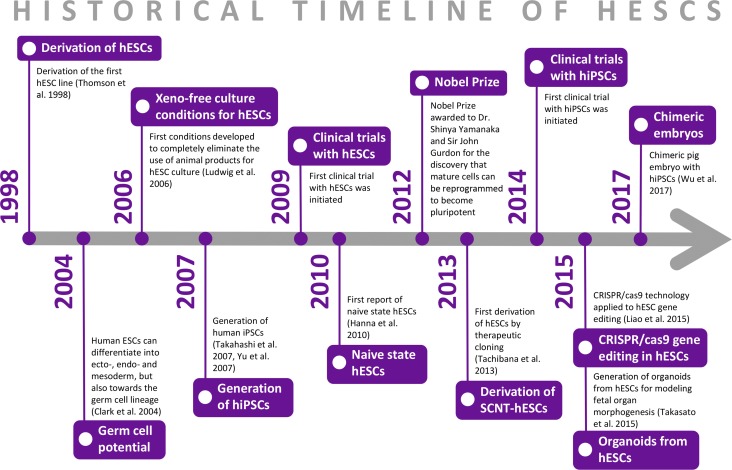
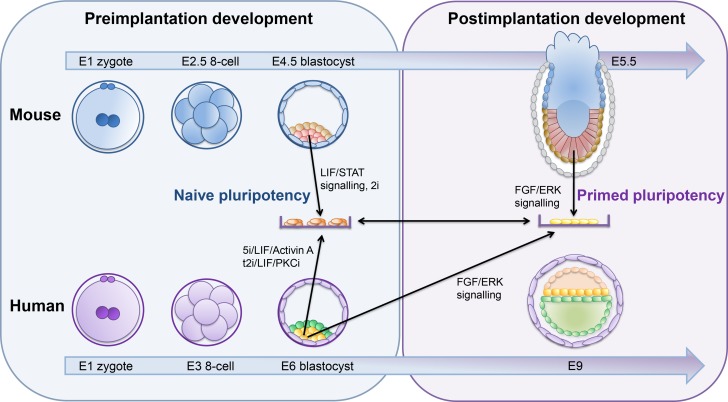
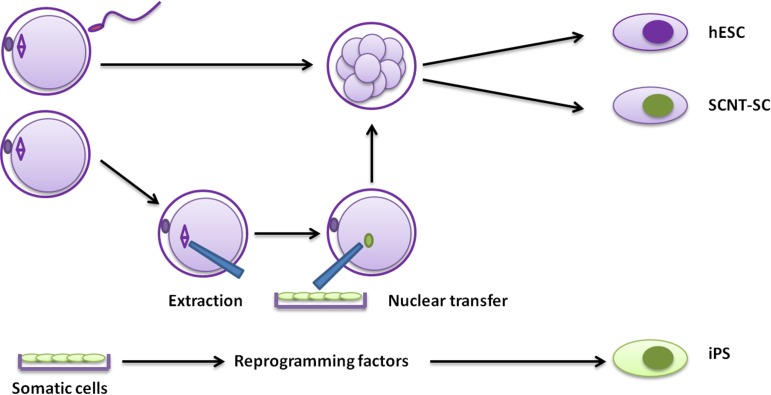
The stem cell field is ever expanding. We find that in the 20 years since the derivation of the first hESC lines, several relevant developments have shaped the pluripotent cell field, from the discovery of different states of pluripotency, the derivation of induced PSC, the refinement of differentiation protocols with several clinical trials underway, as well as the recent development of organoids. The challenge for the years to come will be to validate and refine PSCs for clinical use, from the production of highly defined cell populations in clinical grade conditions to the possibility of creating replacement organoids for functional, if not anatomical, function restoration.
This is a non-systematic review of current literature. Some references may have escaped the experts' analysis due to the exceedingly diverse nature of the field. As the field of regenerative medicine is rapidly advancing, some of the most recent developments may have not been captured entirely.
The multi-disciplinary nature and tremendous potential of the stem cell field has important implications for basic as well as translational research. Recounting these activities will serve to provide an in-depth overview of the field, fostering a further understanding of human stem cell and developmental biology. The comprehensive overview of clinical trials and expert opinions included in this narrative may serve as a valuable scientific resource, supporting future efforts in translational approaches.
STUDY FUNDING/COMPETING INTERESTS: ESHRE provided funding for the authors' on-site meeting and discussion during the preparation of this manuscript. S.M.C.S.L. is funded by the European Research Council Consolidator (ERC-CoG-725722-OVOGROWTH). M.P. is supported by the Special Research Fund, Bijzonder Onderzoeksfonds (BOF01D08114). M.G. is supported by the Methusalem grant of Vrije Universiteit Brussel, in the name of Prof. Karen Sermon and by Innovation by Science and Technology in Flanders (IWT, Project Number: 150042). A.V. and B.A. are supported by the Plataforma de Proteomica, Genotipado y Líneas Celulares (PT1770019/0015) (PRB3), Instituto de Salud Carlos III. Research grant to B.H. by the Research Foundation-Flanders (FWO) (FWO.KAN.2016.0005.01 and FWO.Project G051516N). There are no conflicts of interest to declare.
Not applicable.ESHRE Pages are not externally peer reviewed. This article has been approved by the Executive Committee of ESHRE.
在首个人类胚胎干细胞(hESC)系问世后的数年里,干细胞研究领域是如何发展的?
迄今为止,在越来越多临床试验的支持下,过去二十年里显著的技术进步使我们在源自多能细胞的临床治疗方面不断迈进。
自二十年前被发现以来,人类多能干细胞的应用已从实验室大幅推进到临床应用阶段。在此,我们简要回顾这一历程的主要关键点,并聚焦正在进行的临床试验,同时指出最相关的未来研究方向。
研究设计、规模、持续时间:这是一篇历史叙述文章,包括多能干细胞(PSC)衍生和分化领域的相关出版物,通过对已发表证据的学术研究以及对六位参与该领域一些最相关发现的先驱者的访谈来讲述。
参与者/材料、环境、方法:作者们都通过文献研究做出了贡献,并就相关著作达成共识。对该领域先驱者的部分访谈内容已融入综述,也完整收录以供有兴趣的读者深入了解。
干细胞领域在不断扩展。我们发现,自首个hESC系问世的二十年来,多项相关进展塑造了多能细胞领域,从多能性不同状态的发现、诱导性PSC的衍生、随着多项临床试验开展而不断完善的分化方案,到类器官的最新发展。未来几年的挑战将是验证和完善PSC用于临床,从在临床级条件下生产高度明确的细胞群体,到有可能制造用于功能(即便不是解剖结构)恢复的替代类器官。
局限性、谨慎理由:这是对当前文献的非系统性综述。由于该领域性质极为多样,一些参考文献可能未被专家分析到。随着再生医学领域迅速发展,一些最新进展可能未被完全涵盖。
干细胞领域的多学科性质和巨大潜力对基础研究及转化研究都具有重要意义。讲述这些活动将有助于深入概述该领域,增进对人类干细胞和发育生物学的进一步理解。本叙述中包含的临床试验和专家意见的全面概述可能是一份有价值的科学资源,为未来转化研究的努力提供支持。
研究资金/利益冲突:欧洲人类生殖与胚胎学会(ESHRE)为作者在撰写本文期间的现场会议和讨论提供了资金。S.M.C.S.L.由欧洲研究理事会巩固基金(ERC-CoG-725722-OVOGROWTH)资助。M.P.由特别研究基金Bijzonder Onderzoeksfonds(BOF01D08114)支持。M.G.由布鲁塞尔自由大学的梅苏拉姆基金资助,以凯伦·塞尔蒙教授的名义,以及由弗拉芒地区的科学与技术创新局(IWT,项目编号:150042)资助。A.V.和B.A.由蛋白质组学、基因分型和细胞系平台(PT1770019/0015)(PRB3),卡洛斯三世健康研究所资助。弗拉芒研究基金会(FWO)向B.H.提供研究资助(FWO.KAN.2016.0005.01和FWO.Project G051516N)。不存在利益冲突需要声明。
不适用。ESHRE页面未经过外部同行评审。本文已获ESHRE执行委员会批准。