Department of Gastrointestinal Nutrition and Hernia Surgery, The Second Hospital of Jilin University, Changchun, Jilin 130041, P.R. China.
Int J Oncol. 2019 May;54(5):1511-1524. doi: 10.3892/ijo.2019.4751. Epub 2019 Mar 18.
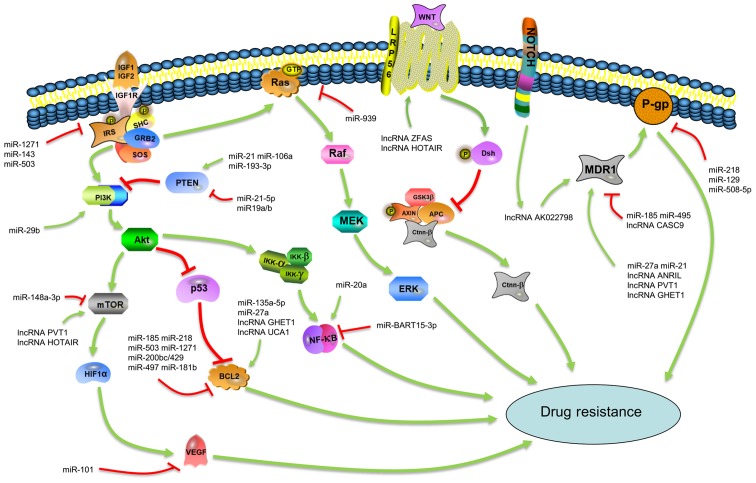
Gastric cancer (GC) is one of the most prevalent and malignant types of cancer worldwide. In China, it is the second most common type of cancer and the malignancy with the highest incidence and mortality rate. Chemotherapy for GC is not always effective due to the development of drug resistance. Drug resistance, which is frequently observed in GC, undermines the success rate of chemotherapy and the survival of patients with GC. The dysregulation of non‑coding RNAs (ncRNAs), primarily microRNAs (miRNAs or miRs) and long non‑coding RNAs (lncRNAs), is involved in the development of GC drug resistance via numerous mechanisms. These mechanisms contribute to the involvement of a large and complex network of ncRNAs in drug resistance. In this review, we focus on and summarize the latest research on the specific mechanisms of action of miRNAs and lncRNAs that modulate drug resistance in GC. In addition, we discuss future prospects and clinical applications of ncRNAs as potential targeted therapies against the chemoresistance of GC.
胃癌(GC)是全球最普遍和恶性的癌症类型之一。在中国,它是第二常见的癌症类型,也是发病率和死亡率最高的恶性肿瘤。由于耐药性的发展,GC 的化疗并不总是有效。耐药性经常发生在 GC 中,降低了化疗的成功率和 GC 患者的生存率。非编码 RNA(ncRNAs)的失调,主要是 microRNAs(miRNAs 或 miRs)和长非编码 RNA(lncRNAs),通过多种机制参与 GC 耐药性的发展。这些机制导致 ncRNAs 参与一个庞大而复杂的耐药性网络。在这篇综述中,我们重点总结了 miRNA 和 lncRNA 调节 GC 耐药性的具体作用机制的最新研究。此外,我们还讨论了 ncRNAs 作为针对 GC 化疗耐药性的潜在靶向治疗的未来前景和临床应用。