Alliance for Research in Exercise, Nutrition and Activity, School of Health Sciences, University of South Australia, Adelaide, South Australia, Australia.
College of Medicine & Public Health, Flinders University, Bedford Park, South Australia, Australia.
PLoS One. 2019 Mar 21;14(3):e0214058. doi: 10.1371/journal.pone.0214058. eCollection 2019.
This study explored whether, for people with chronic obstructive pulmonary disease (COPD), changes to the 24-hour composition of physical activity (PA), sedentary behaviour (SB) and sleep were associated with changes in symptoms and health-related quality of life (HRQoL); and how time re-allocations between these behaviours were associated with changes in outcomes.
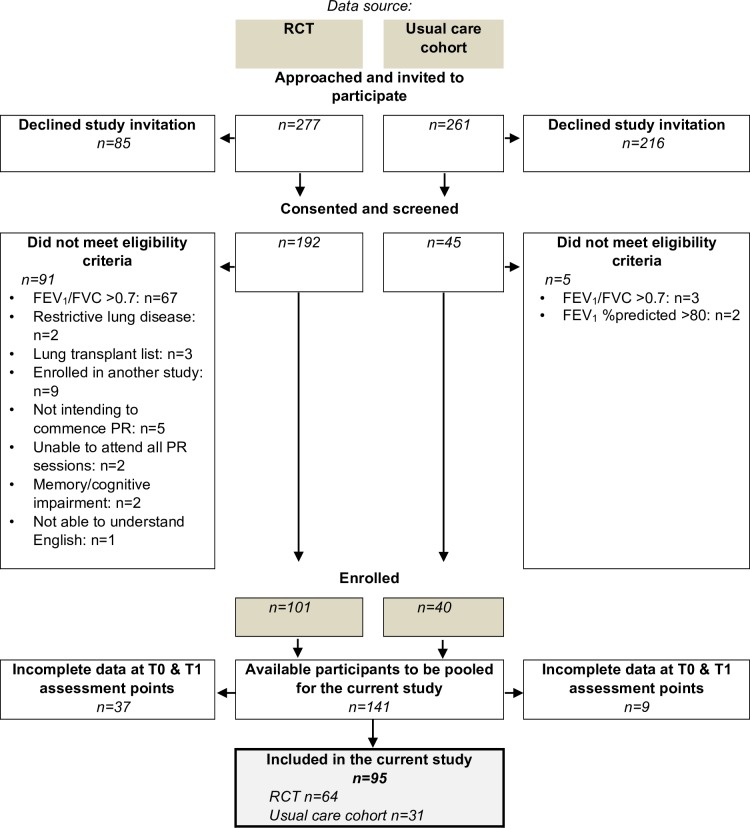
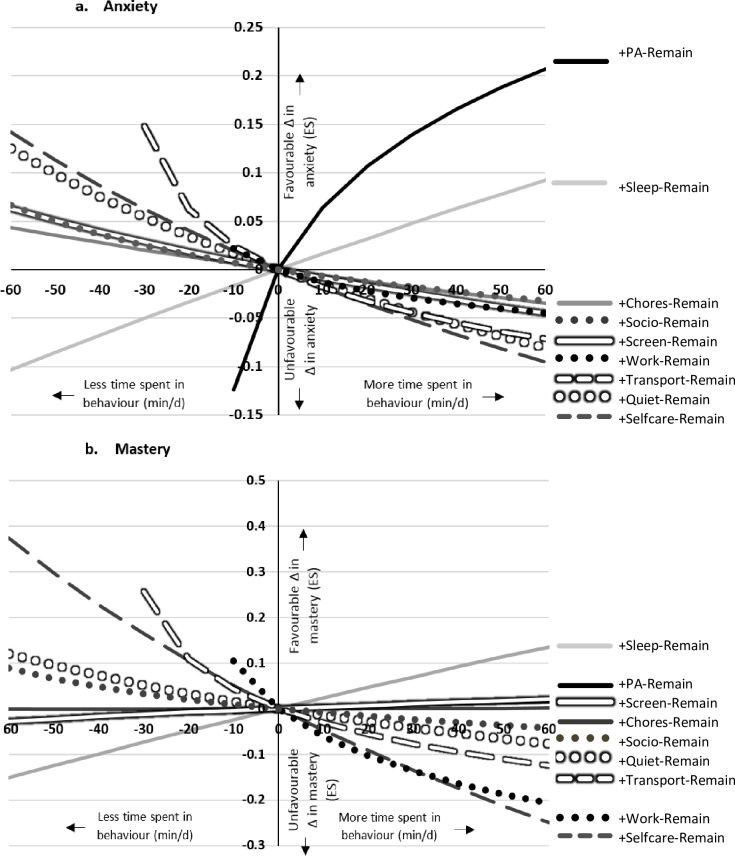
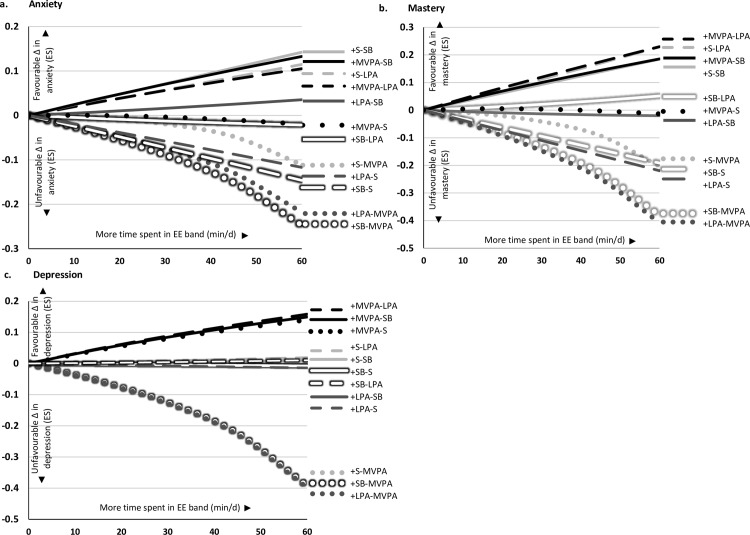
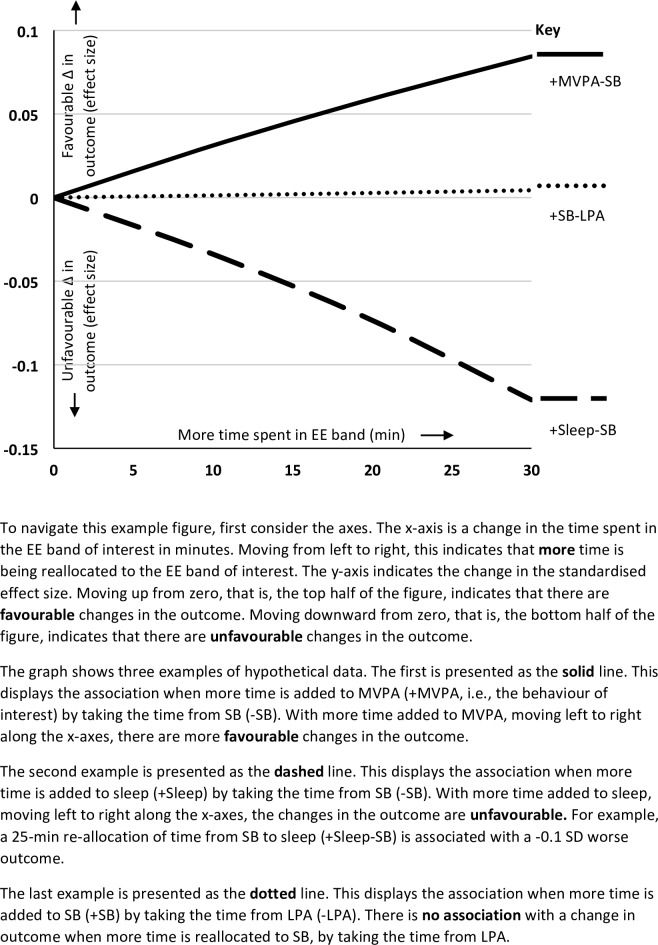
This study pools data on people with COPD drawn from two previous studies: a randomised controlled trial of cognitive behavioural therapy and pulmonary rehabilitation and a usual care cohort. Participants recalled behaviours and completed symptom and HRQoL assessments at baseline (T0) and four months (T1). Linear mixed-effects models (pooled control/intervention samples) predicted changes in outcomes from T0 to T1 with a change to the 24-hour behaviour composition; compositional isotemporal substitution predicted change in outcomes when re-allocating time between behaviours.
Valid data were obtained for 95 participants (forced expiratory volume in one second %predicted = 49.6±15.3) at T0 and T1. A change in the 24-hour behaviour composition was associated with a change in anxiety (p<0.01) and mastery (p<0.01), but not breathlessness, depression or fatigue. When modelling time re-allocation with compositional isotemporal substitution, more time re-allocated to higher intensity PA or sleep was associated with favourable changes in outcomes; re-allocating time to SB or light PA was associated with unfavourable changes in outcomes. The direction of association, however, could not be determined.
To improve the overall health and wellbeing of people with COPD, intervention approaches that optimise the composition of PA, SB and sleep may be beneficial.
本研究旨在探讨对于慢性阻塞性肺疾病(COPD)患者,24 小时内体力活动(PA)、久坐行为(SB)和睡眠的组成变化是否与症状和健康相关生活质量(HRQoL)的变化有关;以及这些行为之间的时间重新分配如何与结果的变化相关。
本研究汇集了两项先前研究中 COPD 患者的数据:一项认知行为疗法和肺康复的随机对照试验和一项常规护理队列。参与者在基线(T0)和四个月(T1)时回忆行为并完成症状和 HRQoL 评估。线性混合效应模型(汇总对照/干预样本)预测了从 T0 到 T1 的结果变化,方法是改变 24 小时行为组成;组成等时替代预测了在行为之间重新分配时间时结果的变化。
在 T0 和 T1 时,95 名参与者(预计用力呼气量 1 秒%=49.6±15.3)获得了有效数据。24 小时行为组成的变化与焦虑(p<0.01)和掌握(p<0.01)的变化有关,但与呼吸困难、抑郁或疲劳无关。当使用组成等时替代进行时间重新分配建模时,更多的时间重新分配到更高强度的 PA 或睡眠与结果的有利变化有关;将时间重新分配给 SB 或轻度 PA 与结果的不利变化有关。然而,关联的方向无法确定。
为了改善 COPD 患者的整体健康和幸福感,优化 PA、SB 和睡眠组成的干预方法可能是有益的。