
用于生物应用的纳米颗粒:水溶性CdSe(S)和CdSe(S)/ZnO量子点的细胞毒性研究
Nanoparticles for Bioapplications: Study of the Cytotoxicity of Water Dispersible CdSe(S) and CdSe(S)/ZnO Quantum Dots.
作者信息
Mirnajafizadeh Fatemeh, Ramsey Deborah, McAlpine Shelli, Wang Fan, Stride John Arron
机构信息
School of Chemistry, University of New South Wales, Sydney, NSW 2052, Australia.
School of Mathematical and Physical Sciences, University of Technology Sydney, Ultimo, Sydney, NSW 2007, Australia.
出版信息
Nanomaterials (Basel). 2019 Mar 20;9(3):465. doi: 10.3390/nano9030465.
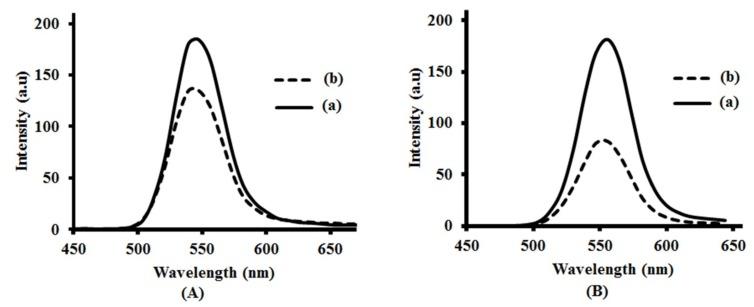
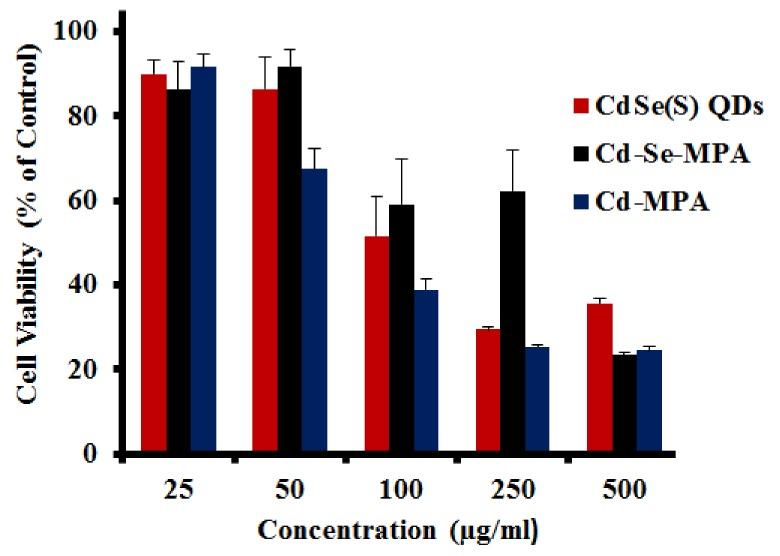
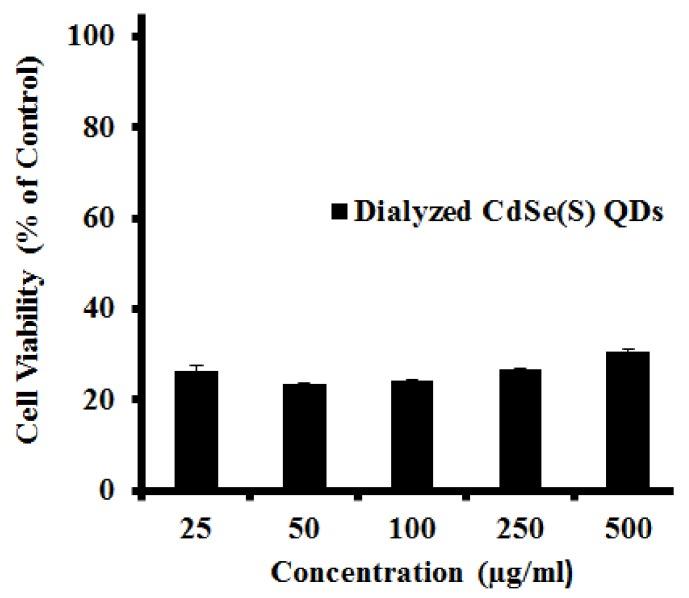
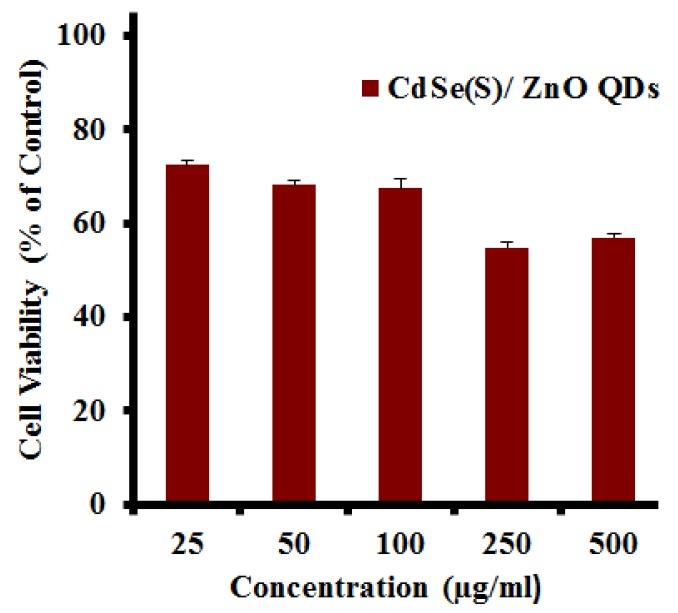
Semiconductor nanocrystals or quantum dots (QDs) have unique optical and physical properties that make them potential imaging tools in biological and medical applications. However, concerns over the aqueous dispersivity, toxicity to cells, and stability in biological environments may limit the use of QDs in such applications. Here, we report an investigation into the cytotoxicity of aqueously dispersed CdSe(S) and CdSe(S)/ZnO core/shell QDs in the presence of human colorectal carcinoma cells (HCT-116) and a human skin fibroblast cell line (WS1). The cytotoxicity of the precursor solutions used in the synthesis of the CdSe(S) QDs was also determined in the presence of HCT-116 cells. CdSe(S) QDs were found to have a low toxicity at concentrations up to 100 µg/mL, with a decreased cell viability at higher concentrations, indicating a highly dose-dependent response. Meanwhile, CdSe(S)/ZnO core/shell QDs exhibited lower toxicity than uncoated QDs at higher concentrations. Confocal microscopy images of HCT-116 cells after incubation with CdSe(S) and CdSe(S)/ZnO QDs showed that the cells were stable in aqueous concentrations of 100 µg of QDs per mL, with no sign of cell necrosis, confirming the cytotoxicity data.
半导体纳米晶体或量子点(QDs)具有独特的光学和物理性质,使其成为生物和医学应用中潜在的成像工具。然而,对其水分散性、细胞毒性以及在生物环境中的稳定性的担忧可能会限制量子点在此类应用中的使用。在此,我们报告了一项关于在人结肠癌细胞(HCT - 116)和人皮肤成纤维细胞系(WS1)存在的情况下,水分散的CdSe(S)和CdSe(S)/ZnO核壳量子点的细胞毒性的研究。还在HCT - 116细胞存在的情况下测定了用于合成CdSe(S)量子点的前体溶液的细胞毒性。发现CdSe(S)量子点在浓度高达100 µg/mL时具有低毒性,在更高浓度下细胞活力降低,表明存在高度剂量依赖性反应。同时,CdSe(S)/ZnO核壳量子点在较高浓度下表现出比未包覆量子点更低的毒性。用CdSe(S)和CdSe(S)/ZnO量子点孵育后的HCT - 116细胞的共聚焦显微镜图像显示,细胞在每毫升100 µg量子点的水浓度中稳定,没有细胞坏死的迹象,证实了细胞毒性数据。




 Zotero 插件