Genome Center of Wisconsin, University of Wisconsin-Madison, Madison, WI, 53706, USA.
Department of Chemistry, University of Wisconsin-Madison, Madison, WI, 53706, USA.
Nat Commun. 2019 Mar 21;10(1):1311. doi: 10.1038/s41467-019-09222-w.
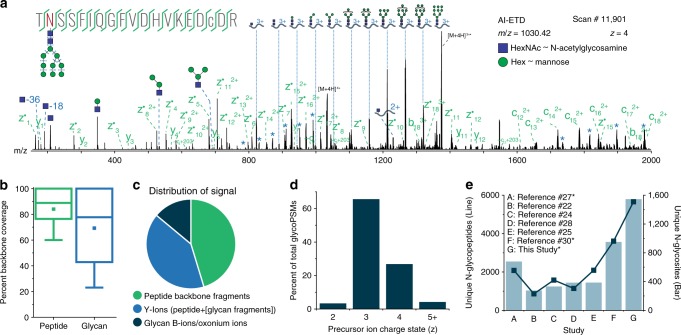
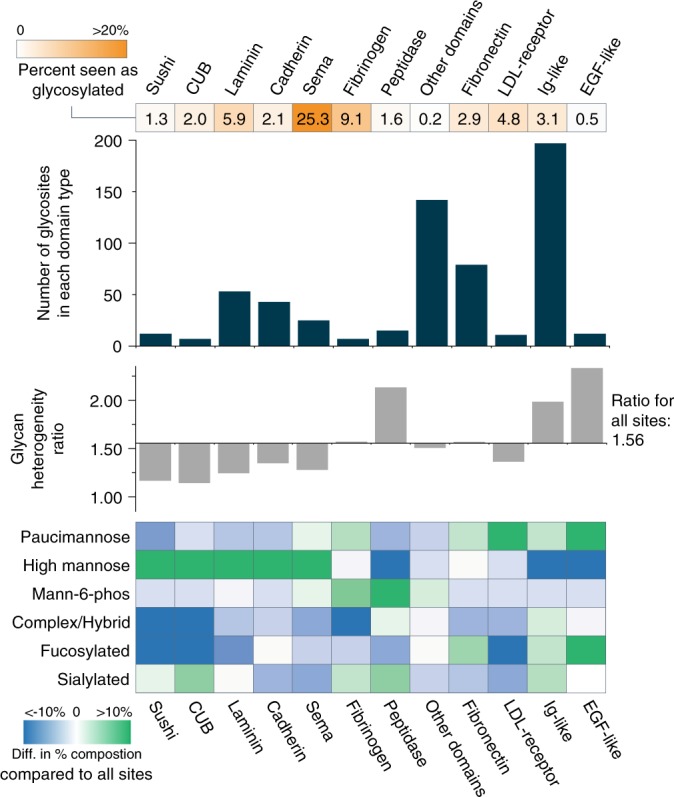
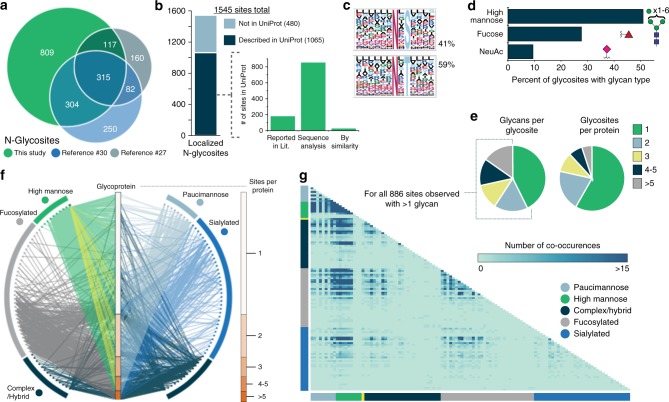
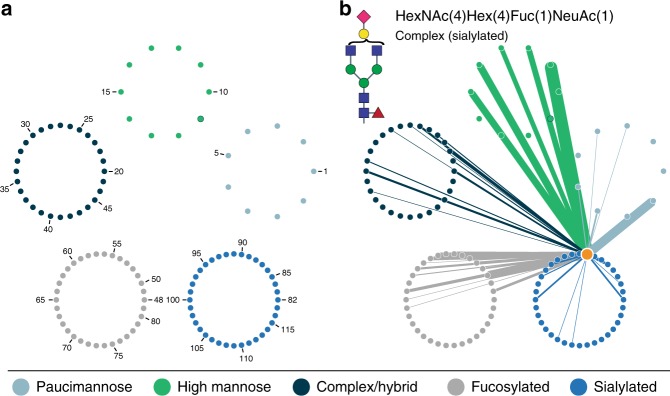
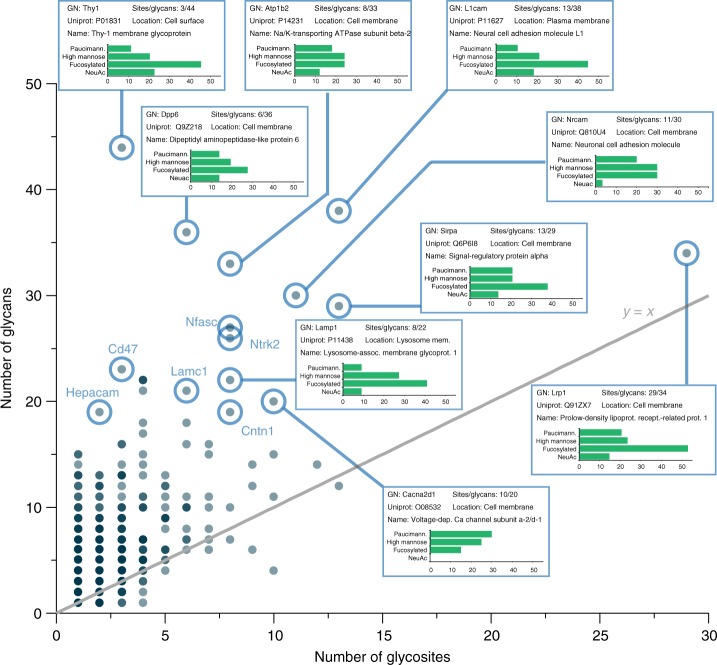
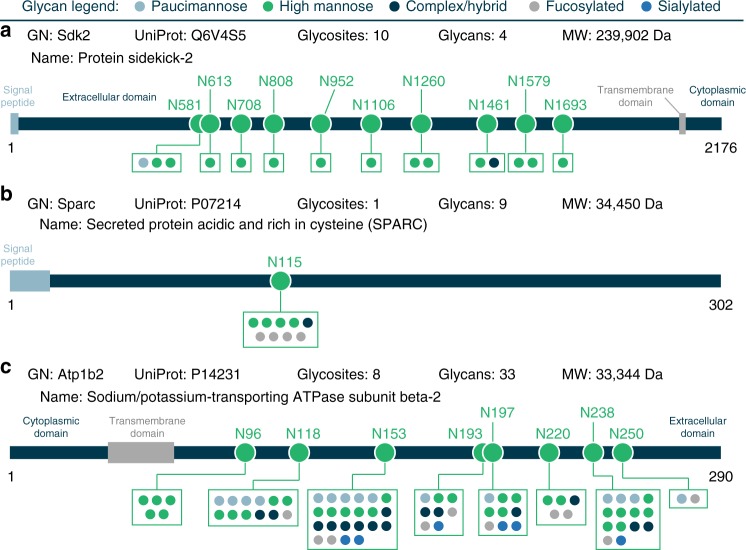
Protein glycosylation is a highly important, yet poorly understood protein post-translational modification. Thousands of possible glycan structures and compositions create potential for tremendous site heterogeneity. A lack of suitable analytical methods for large-scale analyses of intact glycopeptides has limited our abilities both to address the degree of heterogeneity across the glycoproteome and to understand how this contributes biologically to complex systems. Here we show that N-glycoproteome site-specific microheterogeneity can be captured via large-scale glycopeptide profiling methods enabled by activated ion electron transfer dissociation (AI-ETD), ultimately characterizing 1,545 N-glycosites (>5,600 unique N-glycopeptides) from mouse brain tissue. Our data reveal that N-glycosylation profiles can differ between subcellular regions and structural domains and that N-glycosite heterogeneity manifests in several different forms, including dramatic differences in glycosites on the same protein. Moreover, we use this large-scale glycoproteomic dataset to develop several visualizations that will prove useful for analyzing intact glycopeptides in future studies.
蛋白质糖基化是一种非常重要但尚未被充分了解的蛋白质翻译后修饰。数千种可能的聚糖结构和组成为巨大的位点异质性创造了潜力。缺乏用于大规模分析完整糖肽的合适分析方法,限制了我们既解决糖蛋白组中异质性程度,又理解这种异质性如何在生物学上对复杂系统产生影响的能力。在这里,我们展示了通过激活离子电子转移解离(AI-ETD)实现的大规模糖肽分析方法,可以捕获 N-糖肽的特定位点微异质性,最终从鼠脑组织中鉴定出 1545 个 N-糖基化位点(>5600 个独特的 N-糖肽)。我们的数据表明,N-糖基化谱可以在亚细胞区域和结构域之间存在差异,并且 N-糖基化位点的异质性表现为多种不同形式,包括同一蛋白质上糖基化位点的显著差异。此外,我们使用这个大规模糖蛋白质组数据集开发了几种可视化方法,这些方法将在未来的研究中分析完整糖肽时非常有用。