Institute for Biology/Genetics, Freie Universität Berlin, Takustr. 6, 14195, Berlin, Germany.
NeuroCure, Charité, Charitéplatz 1, 11007, Berlin, Germany.
Nat Commun. 2019 Mar 21;10(1):1318. doi: 10.1038/s41467-019-09262-2.
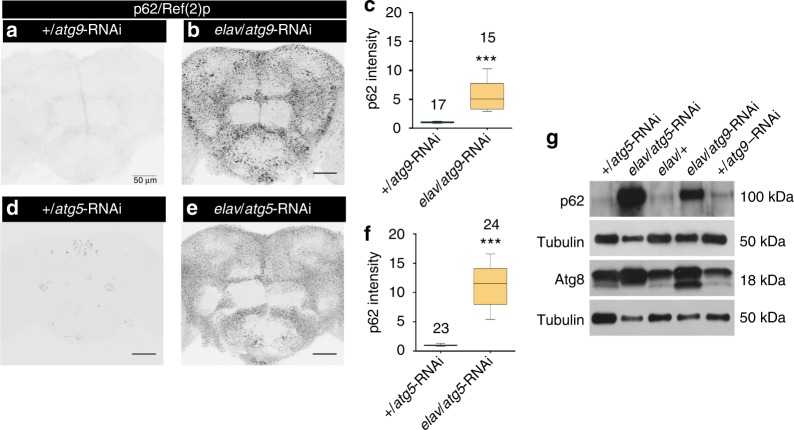
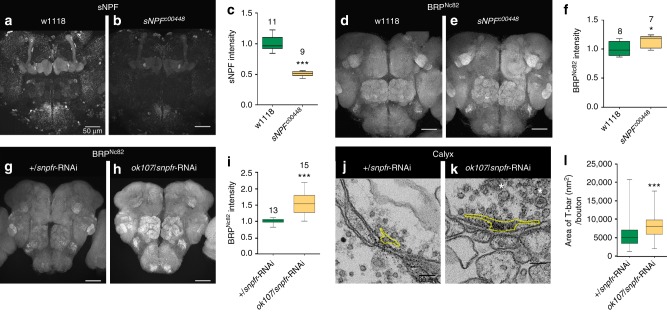
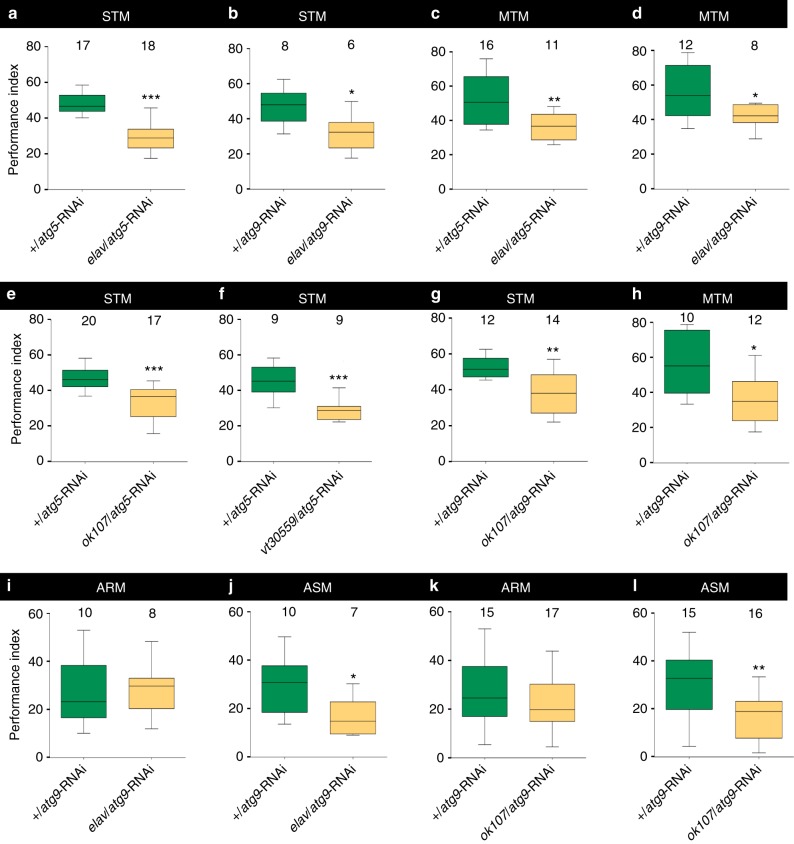
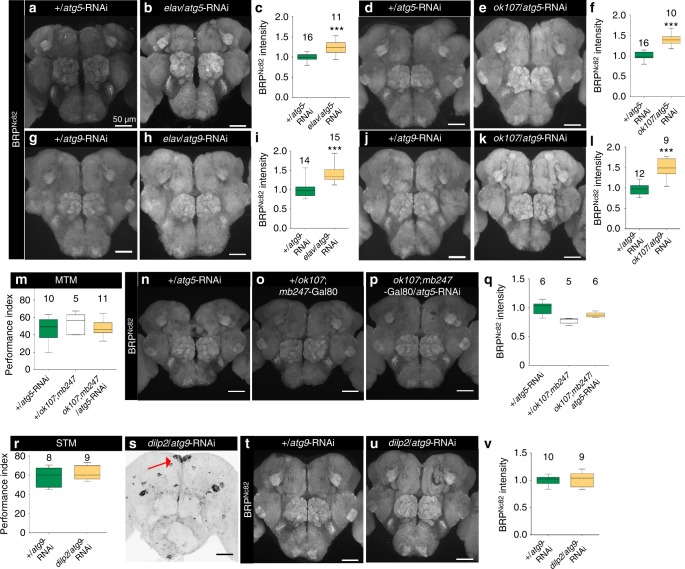
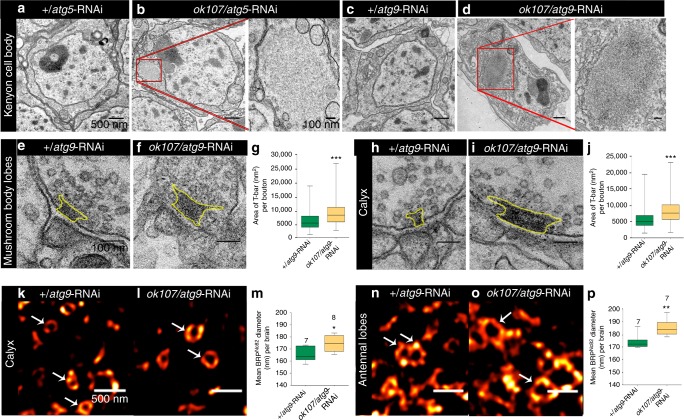
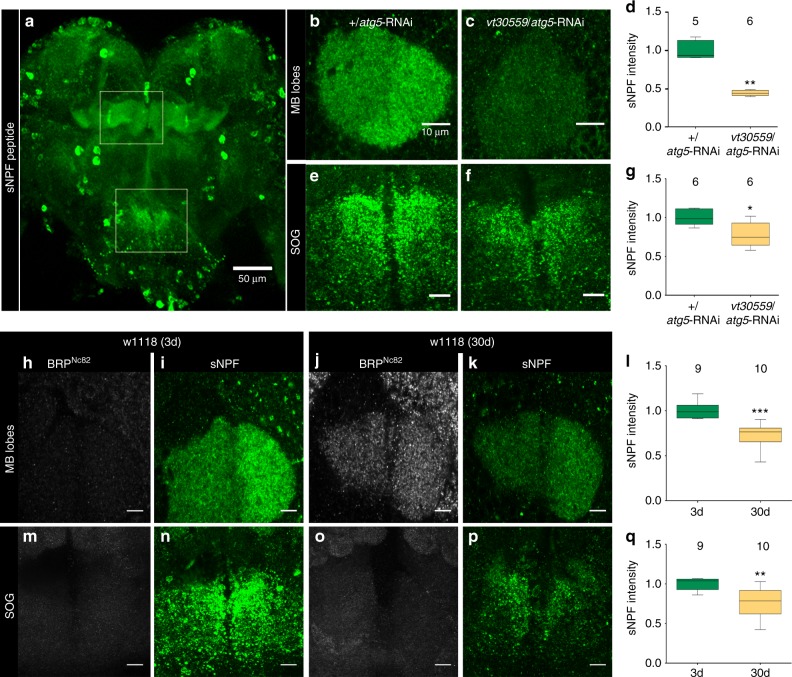
Macroautophagy is an evolutionarily conserved cellular maintenance program, meant to protect the brain from premature aging and neurodegeneration. How neuronal autophagy, usually loosing efficacy with age, intersects with neuronal processes mediating brain maintenance remains to be explored. Here, we show that impairing autophagy in the Drosophila learning center (mushroom body, MB) but not in other brain regions triggered changes normally restricted to aged brains: impaired associative olfactory memory as well as a brain-wide ultrastructural increase of presynaptic active zones (metaplasticity), a state non-compatible with memory formation. Mechanistically, decreasing autophagy within the MBs reduced expression of an NPY-family neuropeptide, and interfering with autocrine NPY signaling of the MBs provoked similar brain-wide metaplastic changes. Our results in an exemplary fashion show that autophagy-regulated signaling emanating from a higher brain integration center can execute high-level control over other brain regions to steer life-strategy decisions such as whether or not to form memories.
自噬是一种进化上保守的细胞维护程序,旨在保护大脑免受过早衰老和神经退行性变的影响。神经元自噬通常随着年龄的增长而降低效率,但其与介导大脑维持的神经元过程如何交叉仍然需要探索。在这里,我们表明,在果蝇学习中心(蘑菇体,MB)而不是其他脑区中破坏自噬,会引发通常仅限于老年大脑的变化:嗅觉联想记忆受损以及全脑范围内的突触前活性区(超可塑性)的增加,这种状态与记忆形成不兼容。从机制上讲,减少 MB 中的自噬会降低一种 NPY 家族神经肽的表达,并且干扰 MB 中的自分泌 NPY 信号会引起类似的全脑超可塑性变化。我们在一个典范的方式中表明,自噬调节的信号从一个更高的大脑整合中心发出,可以对其他大脑区域进行高级控制,以引导生活策略决策,例如是否形成记忆。