Department of Chemical and Biological Engineering, Princeton University, Princeton, NJ, 08854, USA.
Department of Civil and Environmental Engineering, Princeton University, Princeton, NJ, 08854, USA.
J Transl Med. 2019 Mar 22;17(1):97. doi: 10.1186/s12967-019-1849-8.
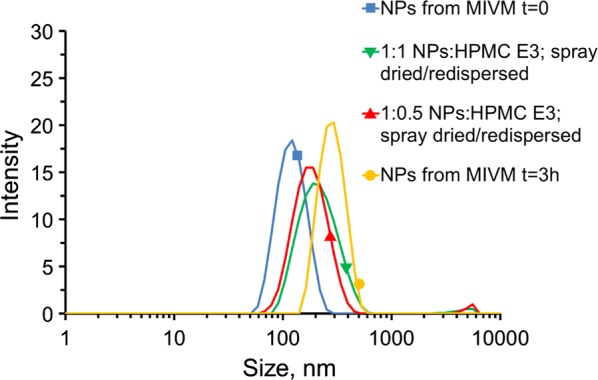
OZ439 is a new chemical entity which is active against drug-resistant malaria and shows potential as a single-dose cure. However, development of an oral formulation with desired exposure has proved problematic, as OZ439 is poorly soluble (BCS Class II drug). In order to be feasible for low and middle income countries (LMICs), any process to create or formulate such a therapeutic must be inexpensive at scale, and the resulting formulation must survive without refrigeration even in hot, humid climates. We here demonstrate the scalability and stability of a nanoparticle (NP) formulation of OZ439. Previously, we applied a combination of hydrophobic ion pairing and Flash NanoPrecipitation (FNP) to formulate OZ439 NPs 150 nm in diameter using the inexpensive stabilizer hydroxypropyl methylcellulose acetate succinate (HPMCAS). Lyophilization was used to process the NPs into a dry form, and the powder's in vitro solubilization was over tenfold higher than unprocessed OZ439.
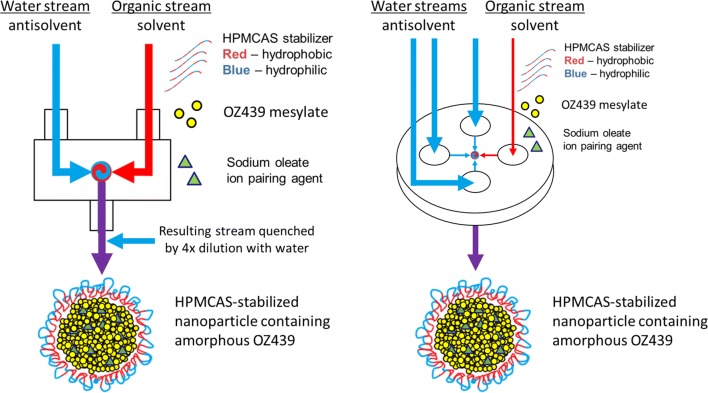
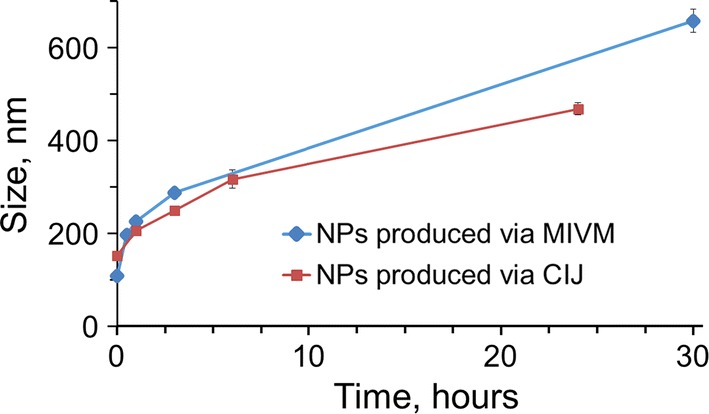
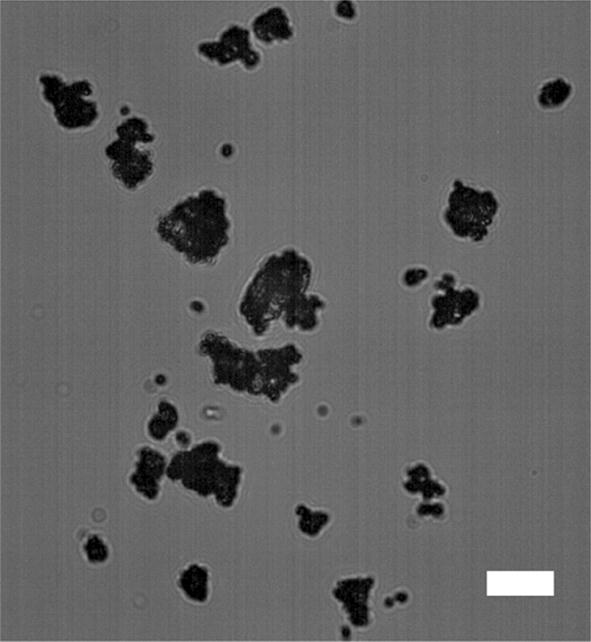
In this study, we optimize our previous formulation using a large-scale multi-inlet vortex mixer (MIVM). Spray drying is a more scalable and less expensive operation than lyophilization and is, therefore, optimized to produce dry powders. The spray dried powders are then subjected to a series of accelerated aging stability trials at high temperature and humidity conditions.
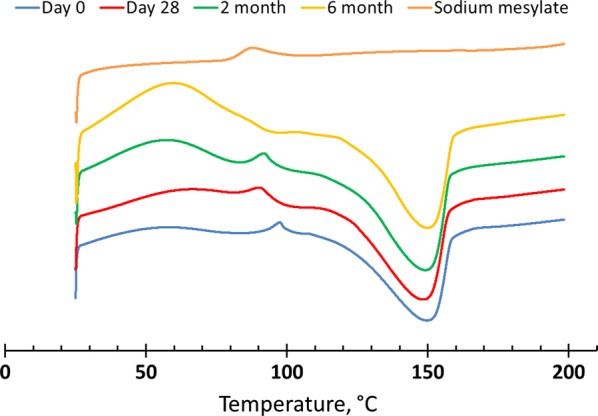
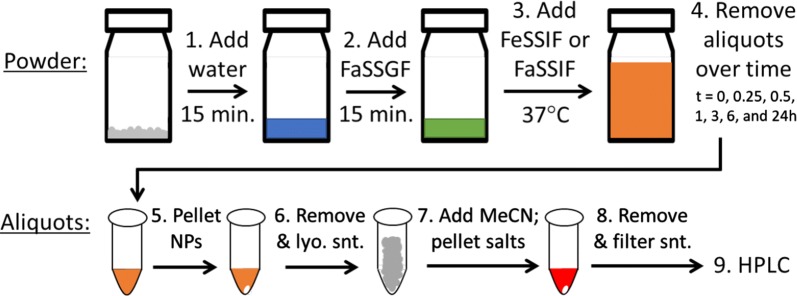
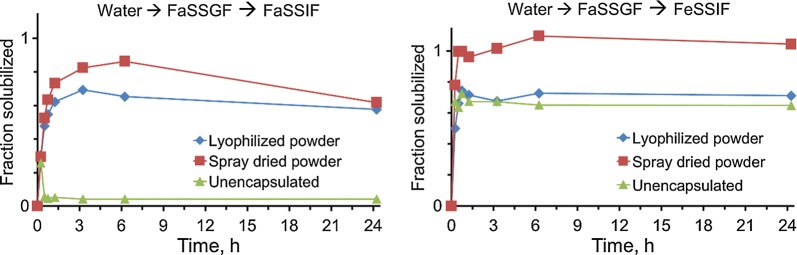
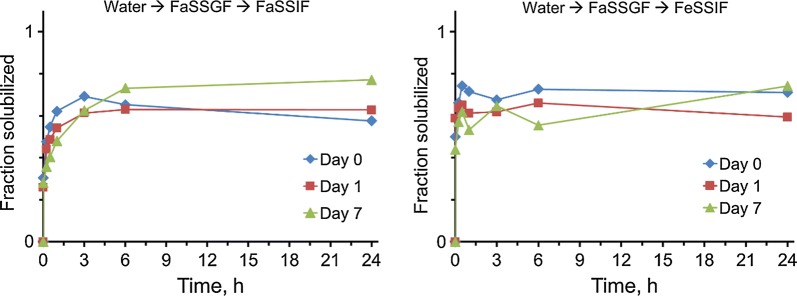
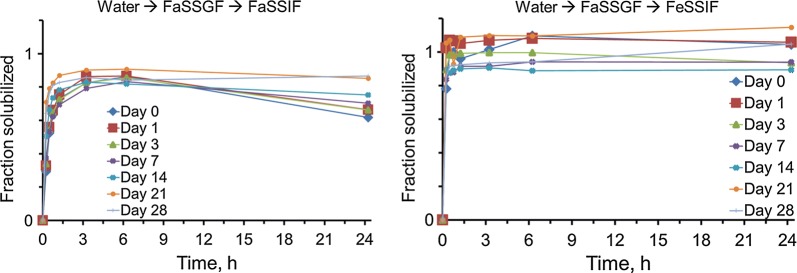
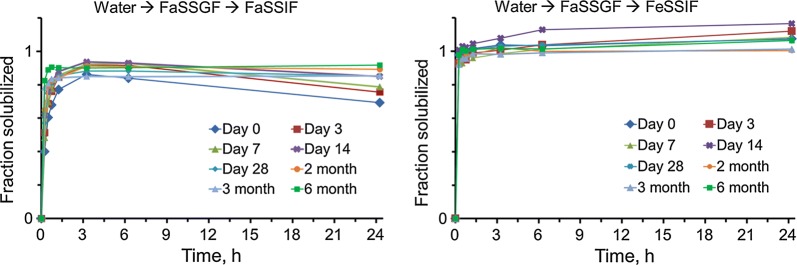
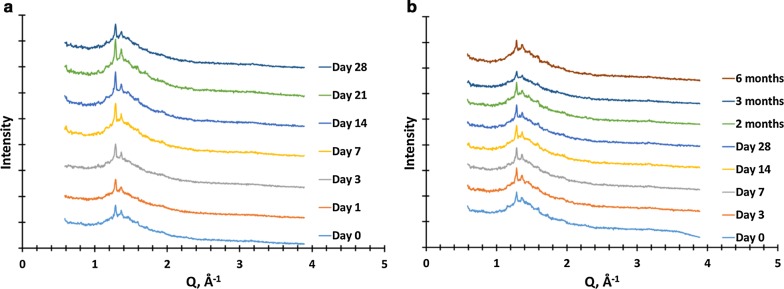
The spray dried OZ439 powder's dissolution kinetics are superior to those of lyophilized NPs. The powder's OZ439 solubilization profile remains constant after 1 month in uncapped vials in an oven at 50 °C and 75% RH, and for 6 months in capped vials at 40 °C and 75% RH. In fasted-state intestinal fluid, spray dried NPs achieved 80-85% OZ439 dissolution, to a concentration of 430 µg/mL, within 3 h. In fed-state intestinal fluid, 95-100% OZ439 dissolution is achieved within 1 h, to a concentration of 535 µg/mL. X-ray powder diffraction and differential scanning calorimetry profiles similarly remain constant over these periods.
The combined nanofabrication and drying process described herein, which utilizes two continuous unit operations that can be operated at scale, is an important step toward an industrially-relevant method of formulating the antimalarial OZ439 into a single-dose oral form with good stability against humidity and temperature.
OZ439 是一种新的化学实体,对耐药性疟疾具有活性,并显示出作为单剂量治愈的潜力。然而,开发具有所需暴露的口服制剂已被证明是有问题的,因为 OZ439 的溶解度很差(BCS 类 II 药物)。为了在中低收入国家(LMICs)可行,任何创建或配制此类治疗方法的过程都必须具有成本效益,并且即使在炎热潮湿的气候下,无需冷藏即可使制剂保持稳定。在这里,我们展示了 OZ439 纳米颗粒(NP)制剂的可扩展性和稳定性。以前,我们应用疏水性离子对和 Flash NanoPrecipitation(FNP)的组合,使用廉价的稳定剂羟丙基甲基纤维素醋酸琥珀酸酯(HPMCAS)将 OZ439 纳米颗粒制成直径为 150nm 的 NP。冷冻干燥用于将 NPs 加工成干粉,干粉的体外溶解度比未处理的 OZ439 高十倍以上。
在这项研究中,我们使用大型多入口旋流混合器(MIVM)对我们以前的配方进行了优化。喷雾干燥比冷冻干燥更具可扩展性和成本效益,因此被优化为生产干粉。然后,将喷雾干燥的粉末在高温高湿度条件下进行一系列加速老化稳定性试验。
喷雾干燥的 OZ439 粉末的溶解动力学优于冷冻干燥的 NP。在 50°C 和 75%RH 的烘箱中未加盖的小瓶中放置 1 个月后,以及在 40°C 和 75%RH 的加盖小瓶中放置 6 个月后,粉末的 OZ439 溶解度曲线保持不变。在空腹状态下的肠液中,喷雾干燥的 NPs 在 3 小时内达到 80-85%的 OZ439 溶解,浓度为 430µg/mL。在进食状态下的肠液中,95-100%的 OZ439 溶解在 1 小时内完成,浓度为 535µg/mL。在此期间,X 射线粉末衍射和差示扫描量热法曲线也保持不变。
本文所述的纳米制造和干燥工艺相结合,利用两种可规模化操作的连续单元操作,是朝着将抗疟药 OZ439 制成具有良好湿度和温度稳定性的单剂量口服制剂的工业化相关方法迈出的重要一步。