Abiodun Gbenga J, Witbooi Peter J, Okosun Kazeem O, Maharaj Rajendra
Research Unit, Foundation for Professional Development, Pretoria 0184, Republic of South Africa.
Department of Mathematics and Applied Mathematics, University of the Western Cape, Private Bag X17, Bellville7535, Republic of South Africa.
Open Infect Dis J. 2018;10:88-100. doi: 10.2174/1874279301810010088. Epub 2018 Jul 24.
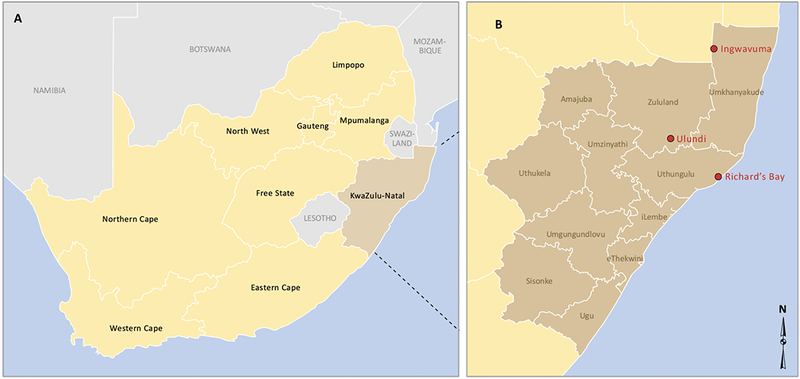
The reasons for malaria resurgence mostly in Africa are yet to be well understood. Although the causes are often linked to regional climate change, it is important to understand the impact of climate variability on the dynamics of the disease. However, this is almost impossible without adequate long-term malaria data over the study areas.
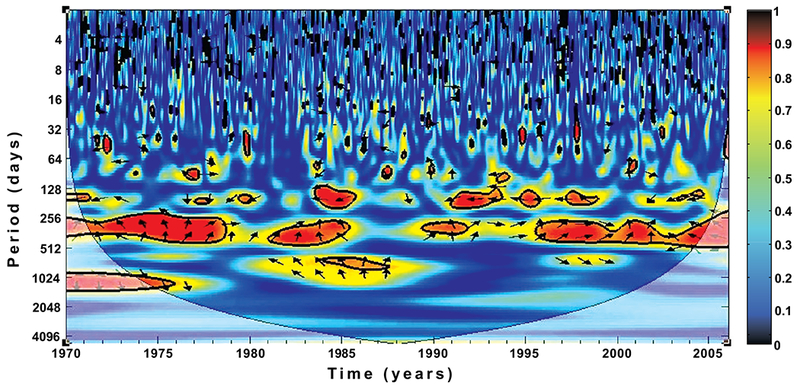
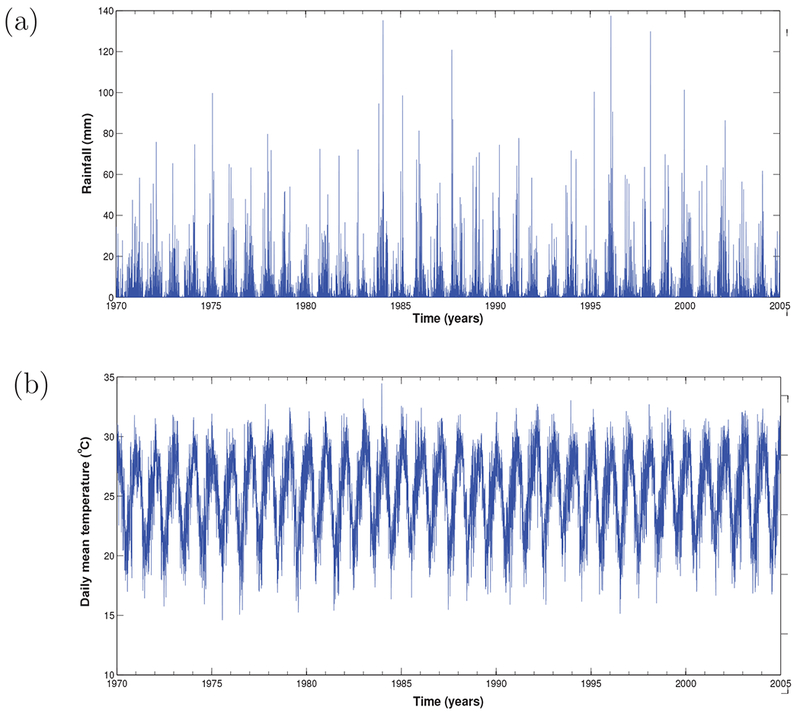
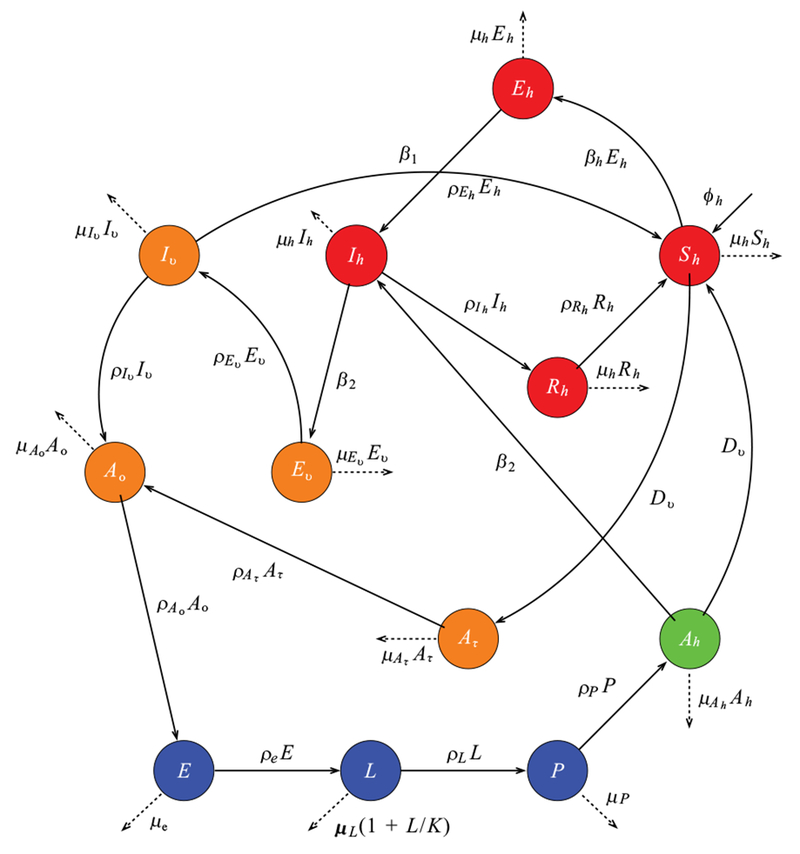
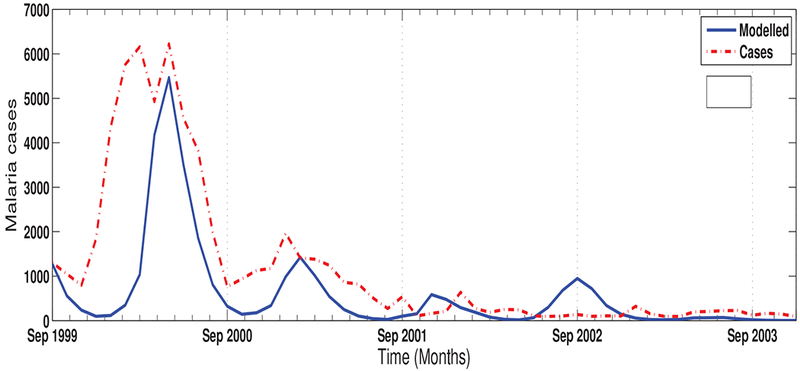
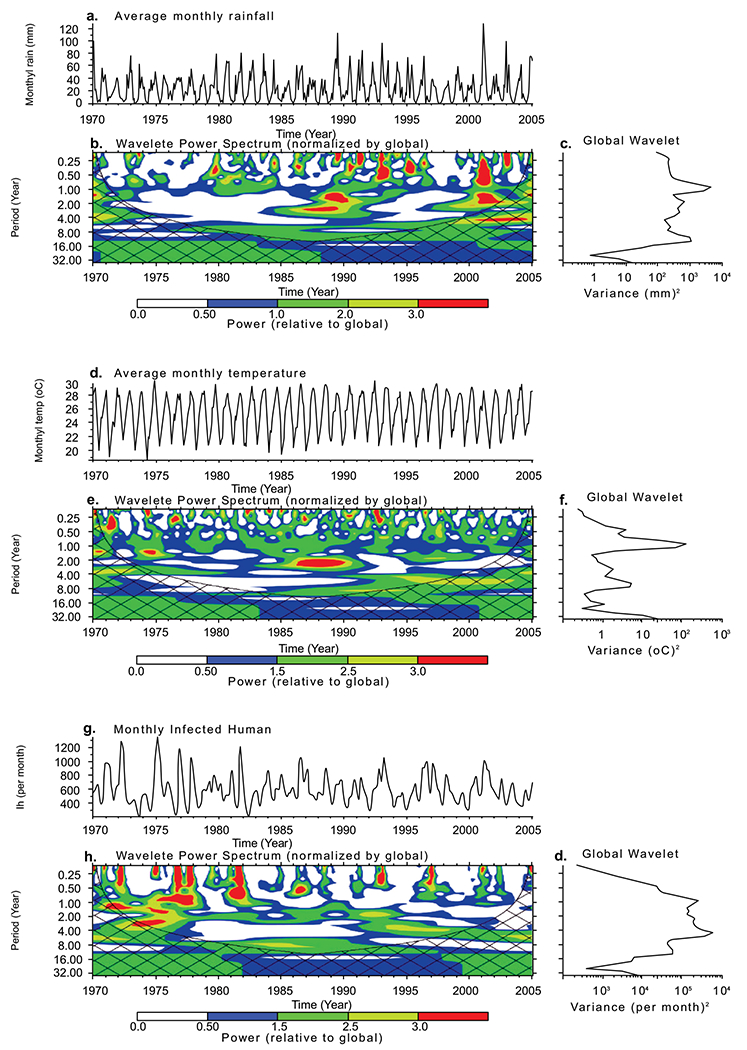
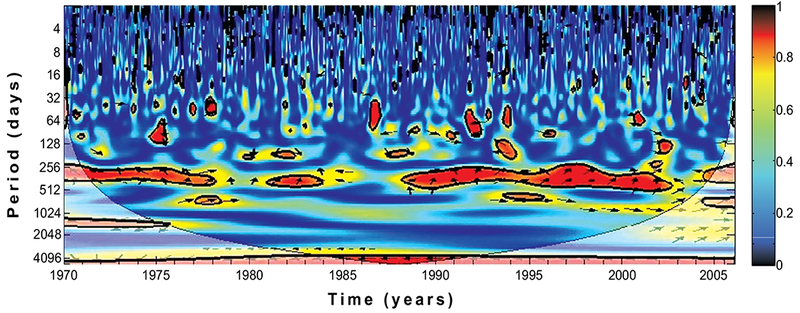
In this study, we develop a climate-based mosquito-human malaria model to study malaria dynamics in the human population over KwaZulu-Natal, one of the epidemic provinces in South Africa, from 1970-2005. We compare the model output with available observed monthly malaria cases over the province from September 1999 to December 2003. We further use the model outputs to explore the relationship between the climate variables (rainfall and temperature) and malaria incidence over the province using principal component analysis, wavelet power spectrum and wavelet coherence analysis. The model produces a reasonable fit with the observed data and in particular, it captures all the spikes in malaria prevalence.
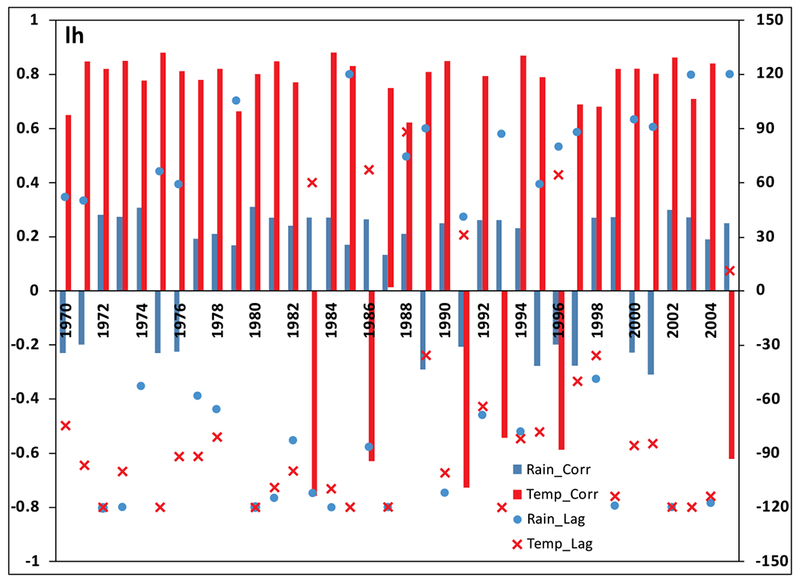
Our results highlight the importance of climate factors on malaria transmission and show the seasonality of malaria epidemics over the province. Results from the principal component analyses further suggest that, there are two principal factors associated with climates variables and the model outputs. One of the factors indicate high loadings on Susceptible, Exposed and Infected human, while the other is more correlated with Susceptible and Recovered humans. However, both factors reveal the inverse correlation between Susceptible-Infected and Susceptible-Recovered humans respectively. Through the spectrum analysis, we notice a strong annual cycle of malaria incidence over the province and ascertain a dominant of one year periodicity. Consequently, our findings indicate that an average of 0 to 120-day lag is generally noted over the study period, but the 120-day lag is more associated with temperature than rainfall. This is consistence with other results obtained from our analyses that malaria transmission is more tightly coupled with temperature than with rainfall in KwaZulu-Natal province.
疟疾在非洲再度流行的原因尚未得到充分理解。尽管其病因常与区域气候变化相关,但了解气候变率对该疾病动态的影响至关重要。然而,若没有研究区域充足的长期疟疾数据,这几乎是不可能的。
在本研究中,我们开发了一个基于气候的蚊媒-人类疟疾模型,以研究1970年至2005年南非疟疾流行省份之一夸祖鲁-纳塔尔省人群中的疟疾动态。我们将模型输出结果与1999年9月至2003年12月该省可获得的每月疟疾病例观测数据进行比较。我们还使用模型输出结果,通过主成分分析、小波功率谱和小波相干分析,探究该省气候变量(降雨量和温度)与疟疾发病率之间的关系。该模型与观测数据拟合良好,特别是捕捉到了疟疾流行率的所有峰值。
我们的结果突出了气候因素对疟疾传播的重要性,并显示了该省疟疾流行的季节性。主成分分析结果进一步表明,有两个主要因素与气候变量和模型输出相关。其中一个因素显示在易感、暴露和感染人群上负荷较高,而另一个因素与易感和康复人群的相关性更强。然而,这两个因素分别揭示了易感-感染人群和易感-康复人群之间的负相关关系。通过频谱分析,我们注意到该省疟疾发病率有很强的年周期,并确定一年的周期性占主导。因此,我们的研究结果表明,在研究期间通常观察到平均0至120天的滞后,但120天的滞后与温度的相关性比与降雨的相关性更强。这与我们分析得出的其他结果一致,即在夸祖鲁-纳塔尔省,疟疾传播与温度的耦合比与降雨的耦合更紧密。