Aula Dei Experimental Station (EEAD-CSIC), Avda. Montañana 1005, E-50059, Zaragoza, Spain.
Fundación ARAID, Zaragoza, Spain.
BMC Plant Biol. 2019 Mar 25;19(1):113. doi: 10.1186/s12870-019-1727-9.
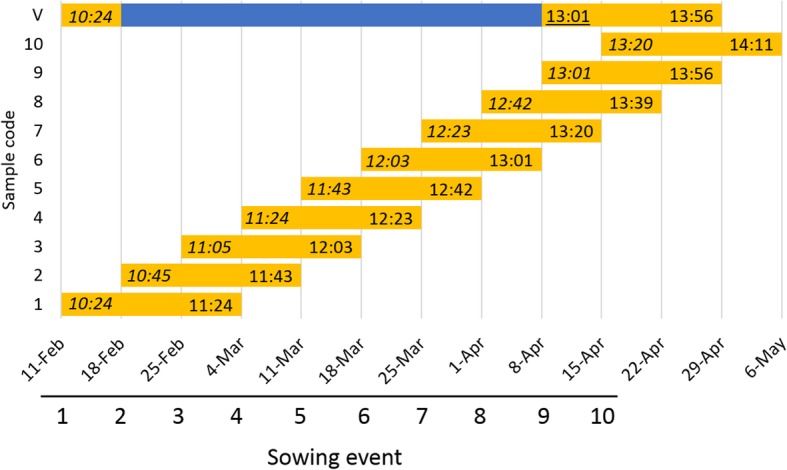
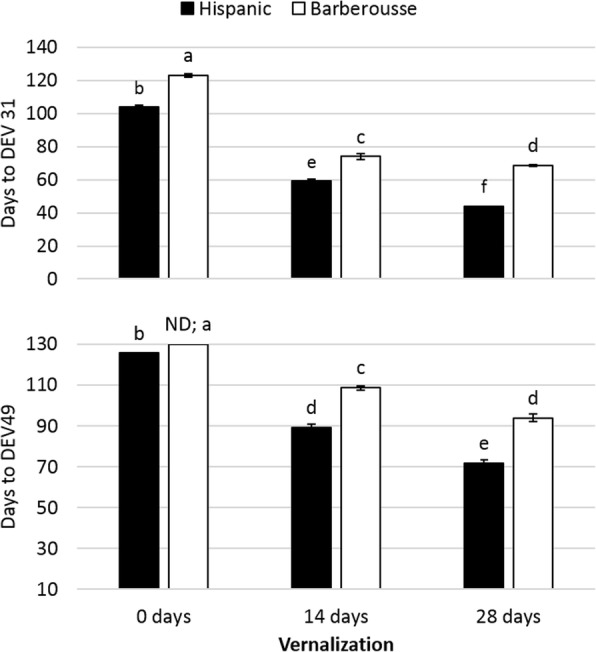
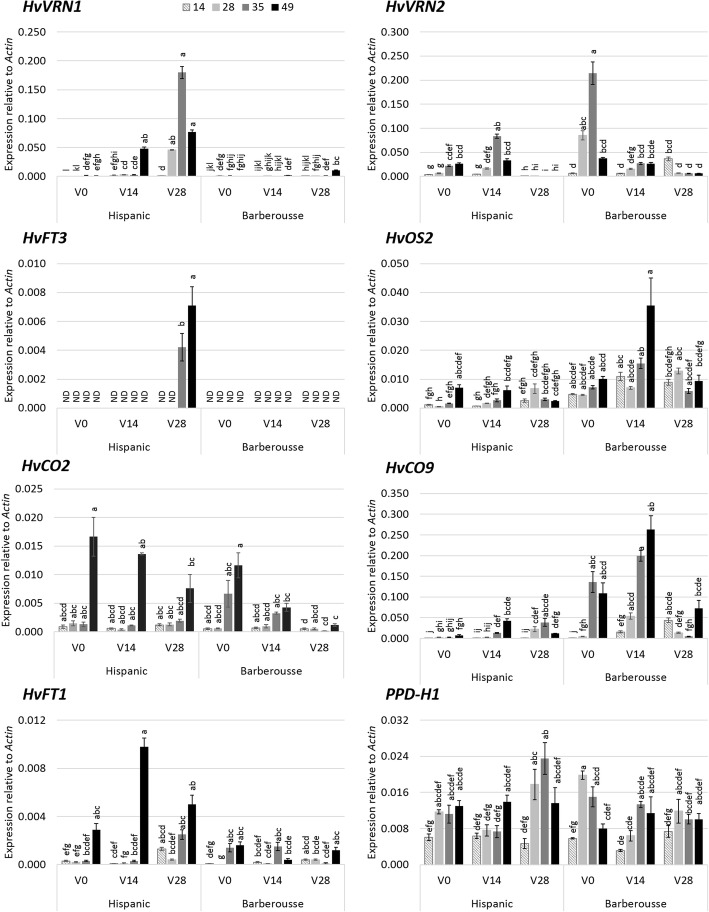
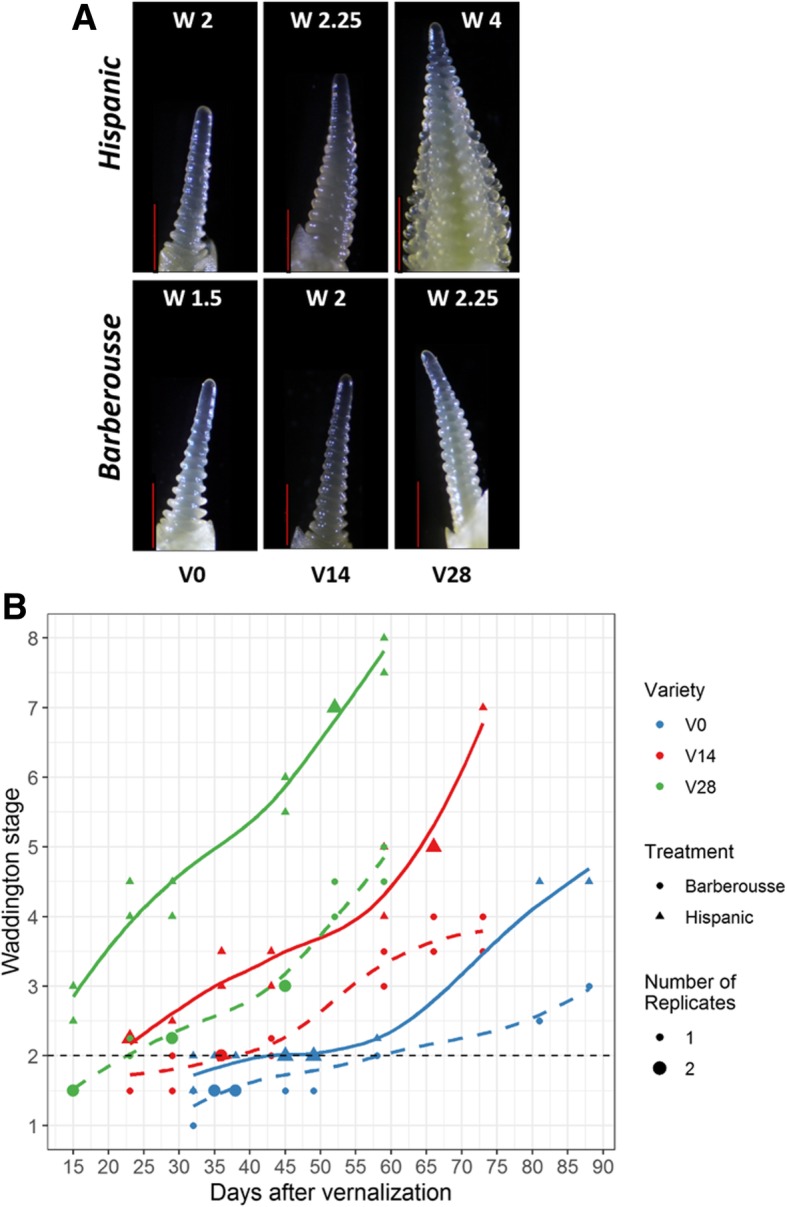
In winter barley plants, vernalization and photoperiod cues have to be integrated to promote flowering. Plant development and expression of different flowering promoter (HvVRN1, HvCO2, PPD-H1, HvFT1, HvFT3) and repressor (HvVRN2, HvCO9 and HvOS2) genes were evaluated in two winter barley varieties under: (1) natural increasing photoperiod, without vernalization, and (2) under short day conditions in three insufficient vernalization treatments. These challenging conditions were chosen to capture non-optimal and natural responses, representative of those experienced in the Mediterranean area.
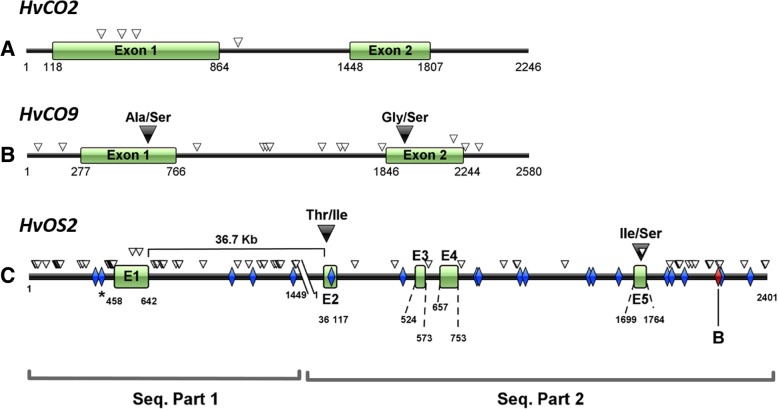
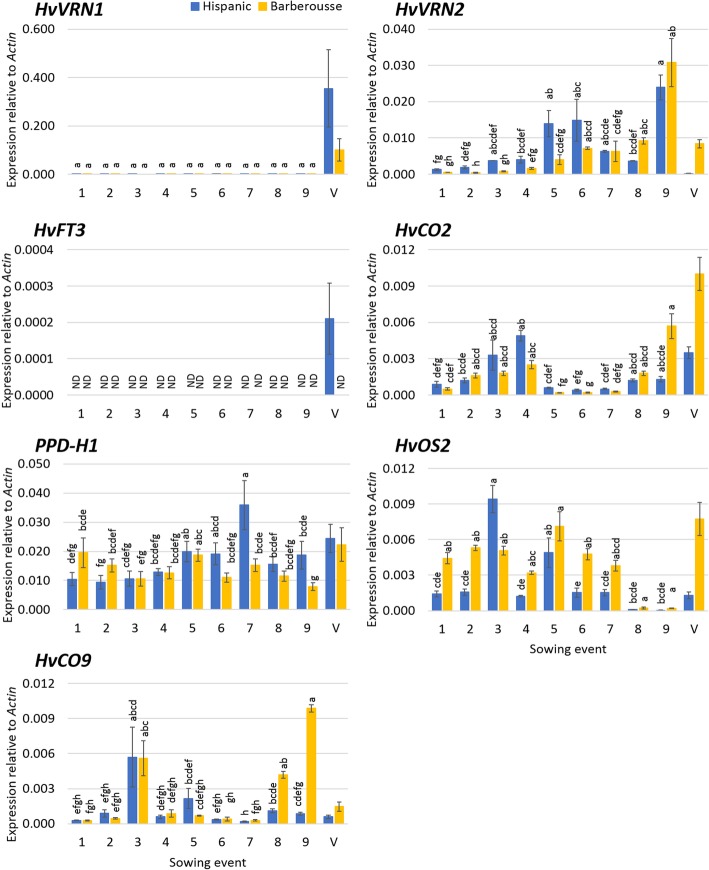
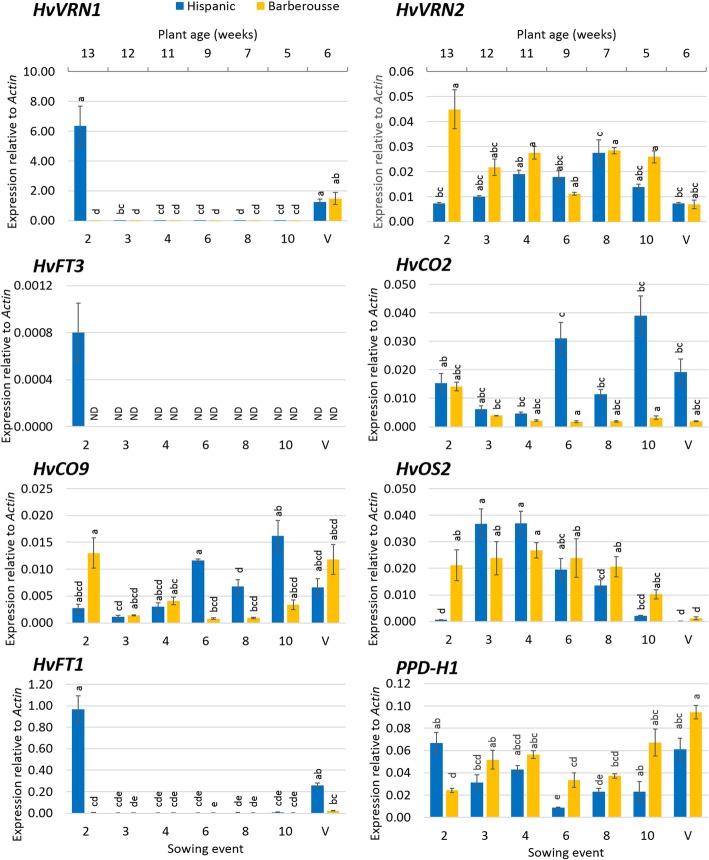
In absence of vernalization and under increasing photoperiods, HvVRN2 expression increased with day-length, mainly between 12 and 13 h photoperiods in our latitudes. The flowering promoter gene in short days, HvFT3, was only expressed after receiving induction of cold or plant age, which was associated with low transcript levels of HvVRN2 and HvOS2. Under the sub-optimal conditions here described, great differences in development were found between the two winter barley varieties used in the study. Delayed development in 'Barberousse' was associated with increased expression levels of HvOS2. Novel variation for HvCO9 and HvOS2 is reported and might explain such differences.
The balance between the expression of flowering promoters and repressor genes regulates the promotion towards flowering or the maintenance of the vegetative state. HvOS2, an ortholog of FLC, appears as a strong candidate to mediate in the vernalization response of barley. Natural variation found would help to exploit the plasticity in development to obtain better-adapted varieties for current and future climate conditions.
在冬大麦植物中,春化和光周期线索必须整合起来,以促进开花。在两种冬大麦品种中,评估了不同开花促进剂(HvVRN1、HvCO2、PPD-H1、HvFT1、HvFT3)和抑制剂(HvVRN2、HvCO9 和 HvOS2)基因的植物发育和表达情况:(1)自然增加光周期,无需春化,和(2)在三个不足春化处理下的短日条件下。选择这些具有挑战性的条件是为了捕捉非最佳和自然的反应,这些反应代表了在地中海地区经历的反应。
在没有春化和增加光周期的情况下,HvVRN2 的表达随日照时间增加,主要在我们纬度的 12 到 13 小时光照周期之间。在短日条件下的开花促进基因 HvFT3,仅在接受冷或植物年龄诱导后表达,这与 HvVRN2 和 HvOS2 的低转录水平有关。在本文所述的次优条件下,研究中使用的两种冬大麦品种在发育方面存在很大差异。'Barberousse' 的发育延迟与 HvOS2 的表达水平增加有关。报道了 HvCO9 和 HvOS2 的新变异,这可能解释了这些差异。
开花促进剂和抑制剂基因的表达平衡调节着向开花的促进或营养生长状态的维持。HvOS2,是 FLC 的同源物,似乎是介导大麦春化反应的一个强有力的候选基因。发现的自然变异将有助于利用发育的可塑性,获得更适应当前和未来气候条件的品种。