Taylor M Joan, Tomlins Paul, Sahota Tarsem S
INsmart group, School of Pharmacy Faculty of Health & Life Sciences, De Montfort University, Leicester, LE1 9BH, UK.
Gels. 2017 Jan 10;3(1):4. doi: 10.3390/gels3010004.
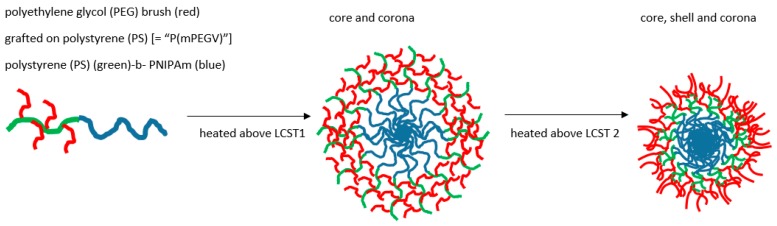
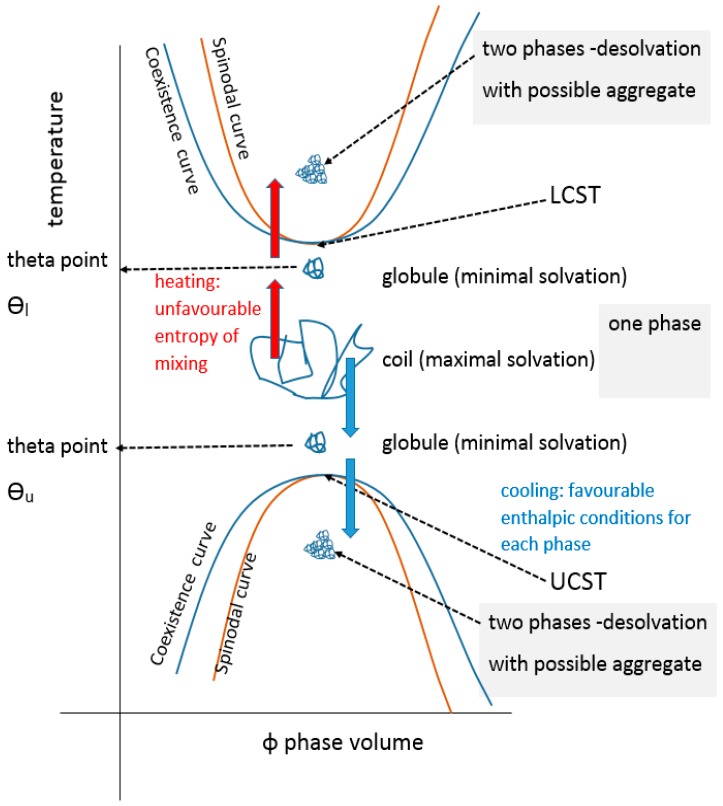
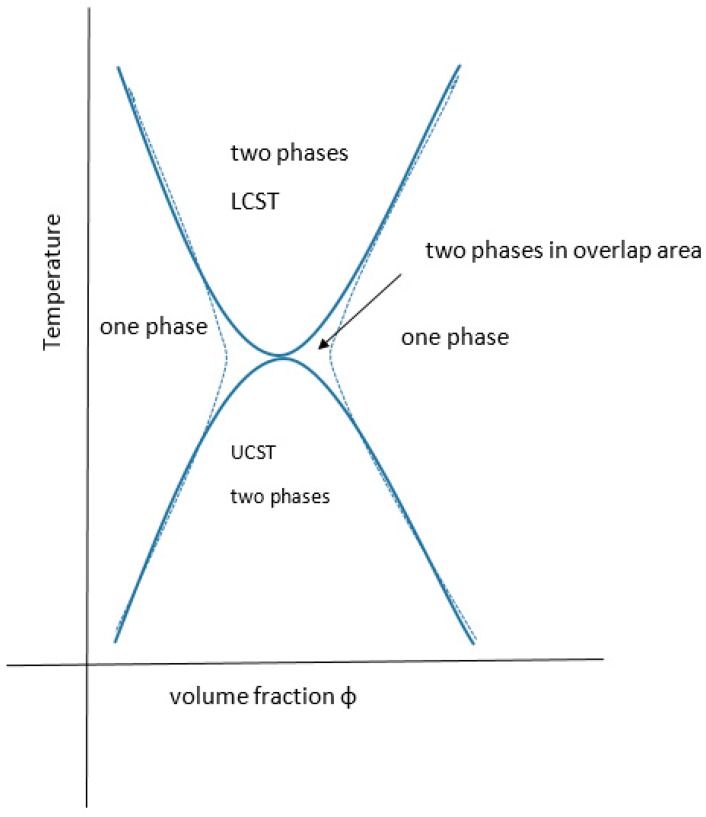
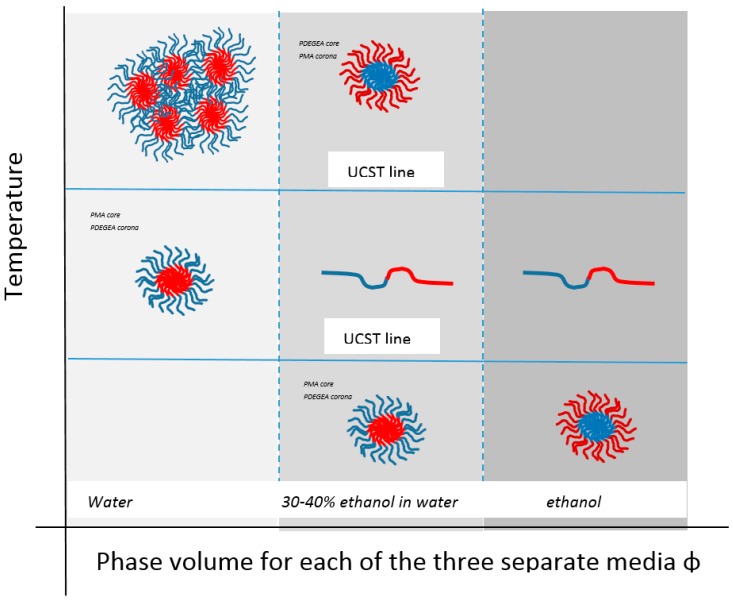
Thermoresponsive gelling materials constructed from natural and synthetic polymers can be used to provide triggered action and therefore customised products such as drug delivery and regenerative medicine types as well as for other industries. Some materials give Arrhenius-type viscosity changes based on coil to globule transitions. Others produce more counterintuitive responses to temperature change because of agglomeration induced by enthalpic or entropic drivers. Extensive covalent crosslinking superimposes complexity of response and the upper and lower critical solution temperatures can translate to critical volume temperatures for these swellable but insoluble gels. Their structure and volume response confer advantages for actuation though they lack robustness. Dynamic covalent bonding has created an intermediate category where shape moulding and self-healing variants are useful for several platforms. Developing synthesis methodology-for example, Reversible Addition Fragmentation chain Transfer (RAFT) and Atomic Transfer Radical Polymerisation (ATRP)-provides an almost infinite range of materials that can be used for many of these gelling systems. For those that self-assemble into micelle systems that can gel, the upper and lower critical solution temperatures (UCST and LCST) are analogous to those for simpler dispersible polymers. However, the tuned hydrophobic-hydrophilic balance plus the introduction of additional pH-sensitivity and, for instance, thermochromic response, open the potential for coupled mechanisms to create complex drug targeting effects at the cellular level.
由天然和合成聚合物构建的热响应性凝胶材料可用于提供触发作用,从而用于定制产品,如药物递送和再生医学类型的产品,以及用于其他行业。一些材料基于线圈到球体的转变呈现阿累尼乌斯型粘度变化。其他材料由于焓或熵驱动引起的团聚,对温度变化产生更违反直觉的响应。广泛的共价交联增加了响应的复杂性,对于这些可溶胀但不溶性凝胶,上临界溶液温度和下临界溶液温度可转化为临界体积温度。它们的结构和体积响应赋予了驱动优势,尽管它们缺乏坚固性。动态共价键创造了一个中间类别,其中形状成型和自愈合变体对多个平台很有用。开发合成方法,例如可逆加成断裂链转移(RAFT)和原子转移自由基聚合(ATRP),提供了几乎无限范围的材料,可用于许多这些凝胶系统。对于那些自组装成可凝胶化的胶束系统的材料,上临界溶液温度和下临界溶液温度(UCST和LCST)与更简单的可分散聚合物的类似。然而,调节后的疏水-亲水平衡加上额外的pH敏感性以及例如热致变色响应的引入,为耦合机制在细胞水平上产生复杂的药物靶向作用开辟了潜力。