Institute of Bioengineering, School of Engineering and Materials Science, Queen Mary University of London, UK.
Department of Endocrinology, William Harvey Research Centre, Queen Mary University of London, UK.
Osteoarthritis Cartilage. 2019 Jul;27(7):1064-1074. doi: 10.1016/j.joca.2019.03.003. Epub 2019 Mar 25.
Physiological mechanical loading reduces inflammatory signalling in numerous cell types including articular chondrocytes however the mechanism responsible remains unclear. This study investigates the role of chondrocyte primary cilia and associated intraflagellar transport (IFT) in the mechanical regulation of interleukin-1β (IL-1β) signalling.
Isolated chondrocytes and cartilage explants were subjected to cyclic mechanical loading in the presence and absence of the cytokine IL-1β. Nitric oxide (NO) and prostaglandin E (PGE) release were used to monitor IL-1β signalling whilst Sulphated glycosaminoglycan (sGAG) release provided measurement of cartilage degradation. Measurements were made of HDAC6 activity and tubulin polymerisation and acetylation. Effects on primary cilia were monitored by confocal and super resolution microscopy. Involvement of IFT was analysed using ORPK cells with hypomorphic mutation of IFT88.
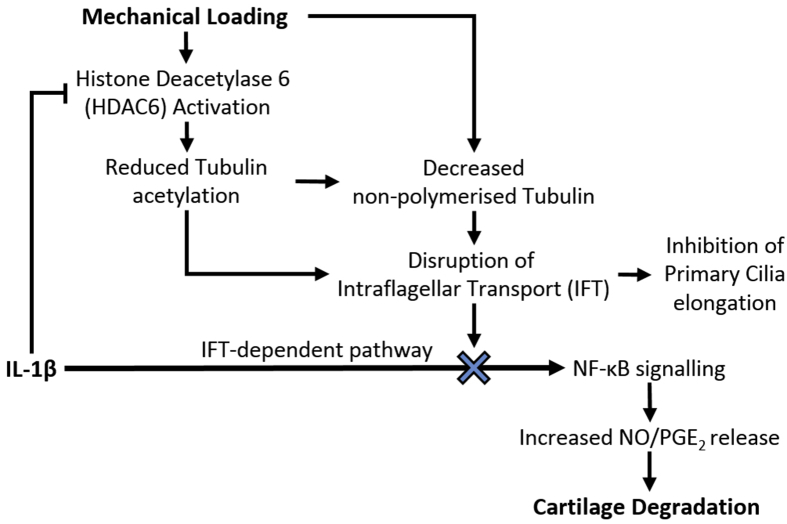
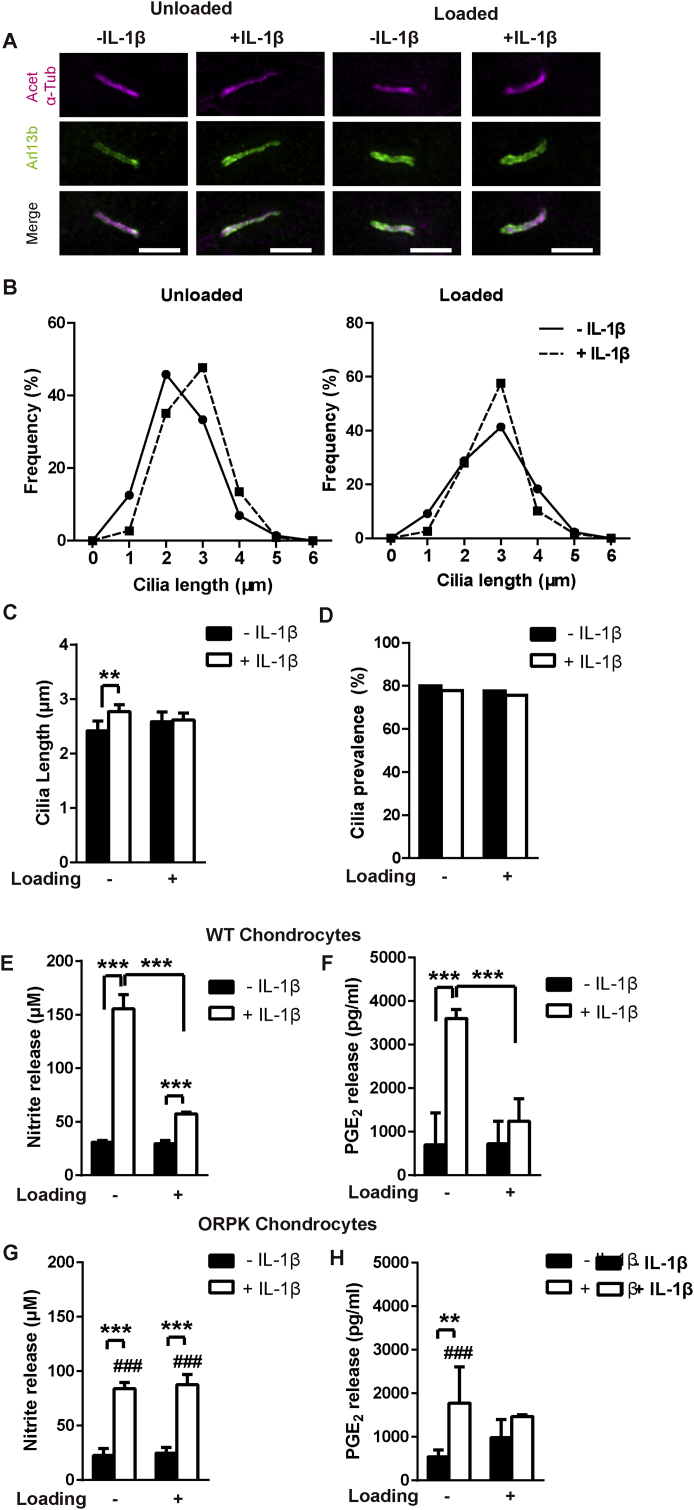
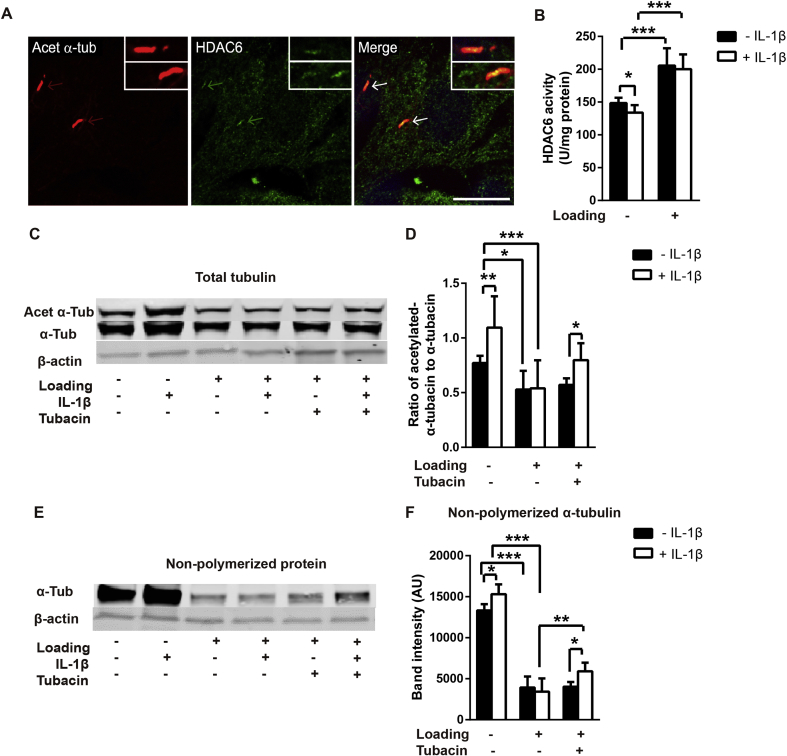
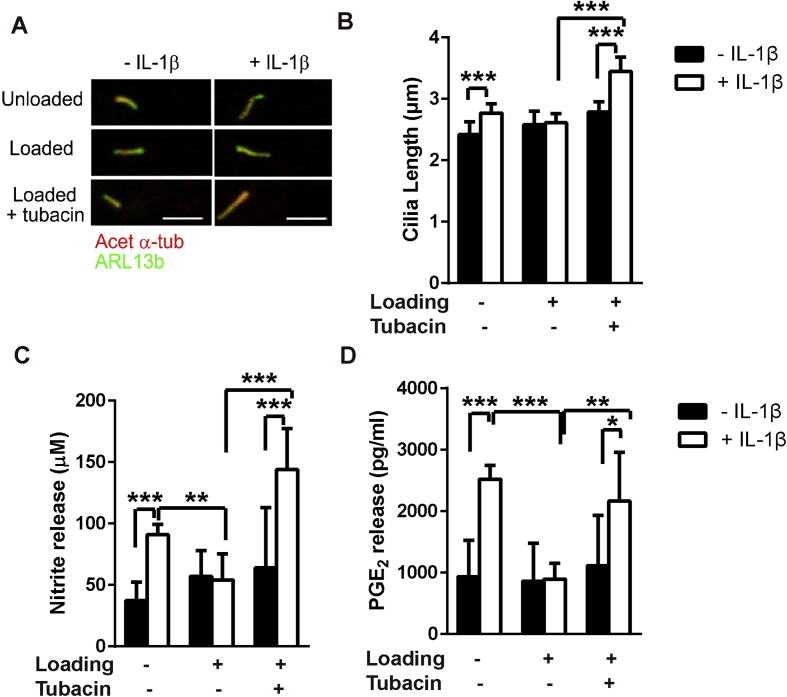
Mechanical loading suppressed NO and PGE release and prevented cartilage degradation. Loading activated HDAC6 and disrupted tubulin acetylation and cilia elongation induced by IL-1β. HDAC6 inhibition with tubacin blocked the anti-inflammatory effects of loading and restored tubulin acetylation and cilia elongation. Hypomorphic mutation of IFT88 reduced IL-1β signalling and abolished the anti-inflammatory effects of loading indicating the mechanism is IFT-dependent. Loading reduced the pool of non-polymerised tubulin which was replicated by taxol which also mimicked the anti-inflammatory effects of mechanical loading and prevented cilia elongation.
This study reveals that mechanical loading suppresses inflammatory signalling, partially dependent on IFT, by activation of HDAC6 and post transcriptional modulation of tubulin.
生理机械负荷可减少包括关节软骨细胞在内的多种细胞类型的炎症信号,但负责的机制尚不清楚。本研究调查了软骨细胞初级纤毛及其相关的内纤毛运输(IFT)在白细胞介素 1β(IL-1β)信号的机械调节中的作用。
在存在和不存在细胞因子 IL-1β的情况下,对分离的软骨细胞和软骨外植体进行循环机械加载。一氧化氮(NO)和前列腺素 E(PGE)的释放用于监测 IL-1β信号,而硫酸盐糖胺聚糖(sGAG)的释放则提供了软骨降解的测量。测量了 HDAC6 活性和微管聚合和乙酰化。通过共聚焦和超分辨率显微镜监测初级纤毛的影响。使用 IFT88 功能减弱突变的 ORPK 细胞分析 IFT 的参与。
机械加载抑制了 NO 和 PGE 的释放,并防止了软骨降解。加载激活了 HDAC6,并破坏了 IL-1β诱导的微管乙酰化和纤毛伸长。用 tubacin 抑制 HDAC6 阻断了加载的抗炎作用,并恢复了微管乙酰化和纤毛伸长。IFT88 的功能减弱突变减少了 IL-1β 信号,并消除了加载的抗炎作用,表明该机制是 IFT 依赖性的。加载减少了非聚合微管的池,这被紫杉醇复制,紫杉醇还模拟了机械加载的抗炎作用,并防止了纤毛伸长。
本研究揭示了机械加载通过激活 HDAC6 和微管的转录后调节来抑制炎症信号,部分依赖于 IFT。