Biomedical Engineering, 2nd Floor Cell and Tissue Laboratories, School of Engineering and Materials Science, Queen Mary, University of London, Mile End Road, London, E1 4NS, UK.
Cell Mol Life Sci. 2012 Sep;69(17):2967-77. doi: 10.1007/s00018-012-0980-y. Epub 2012 Apr 6.
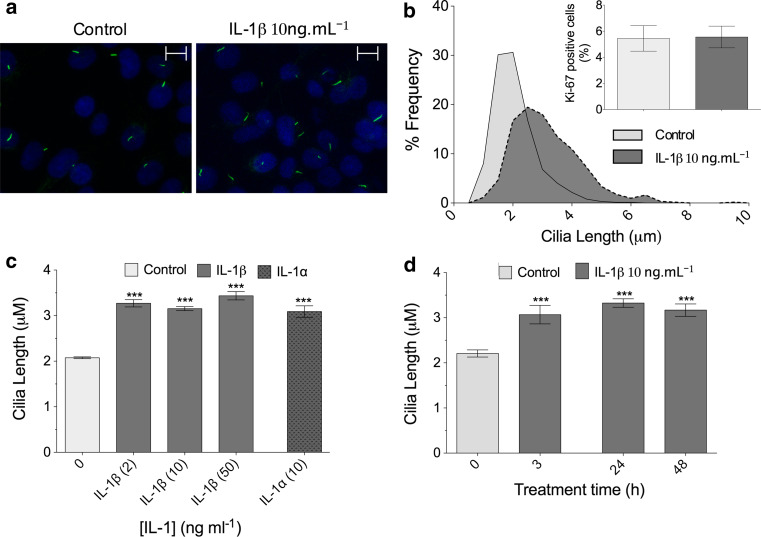
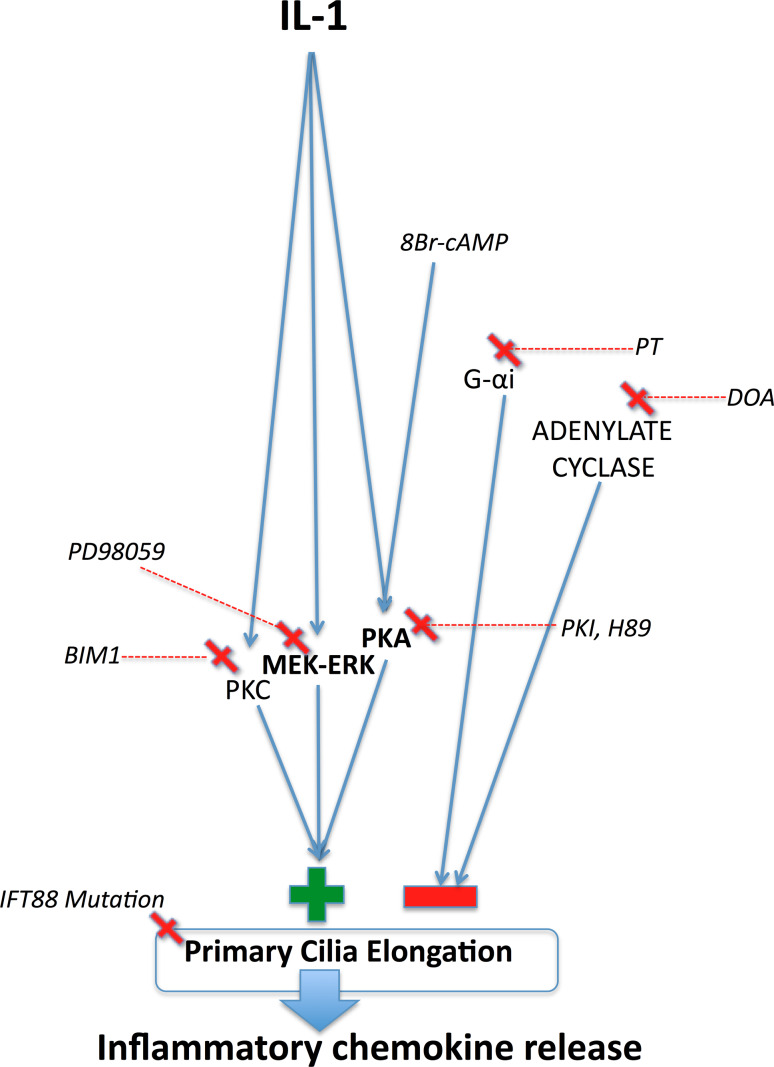
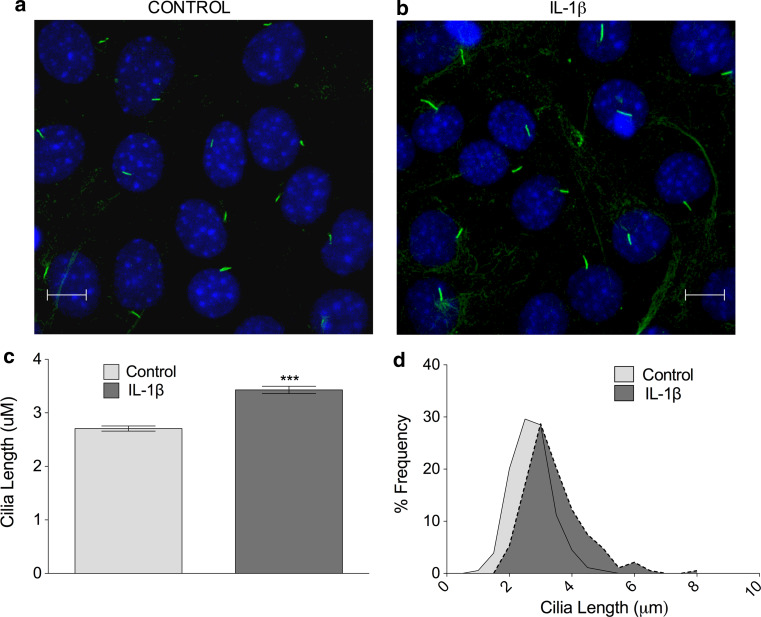
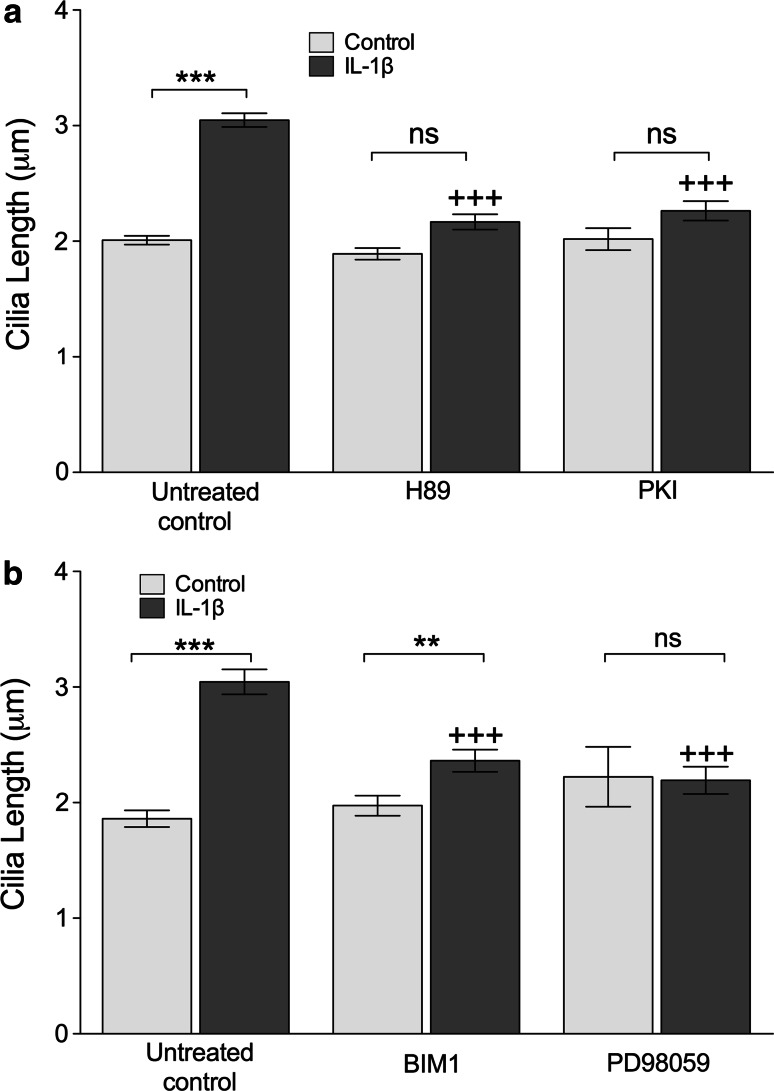
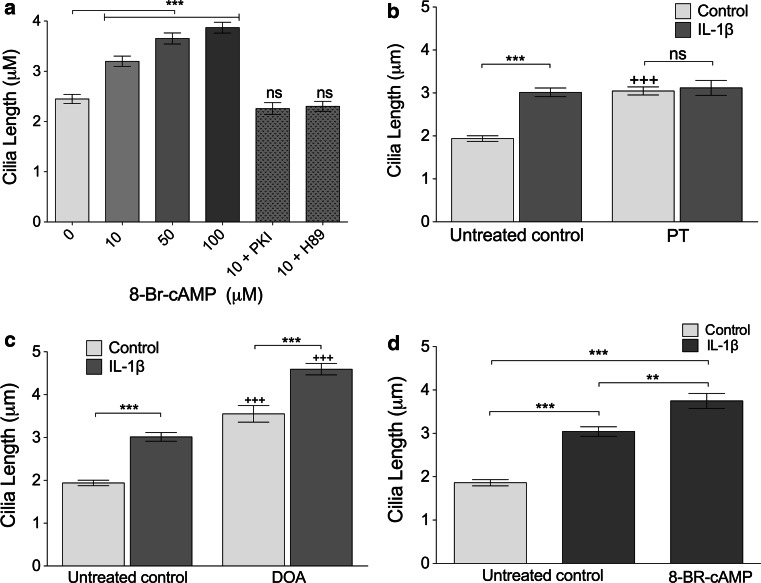
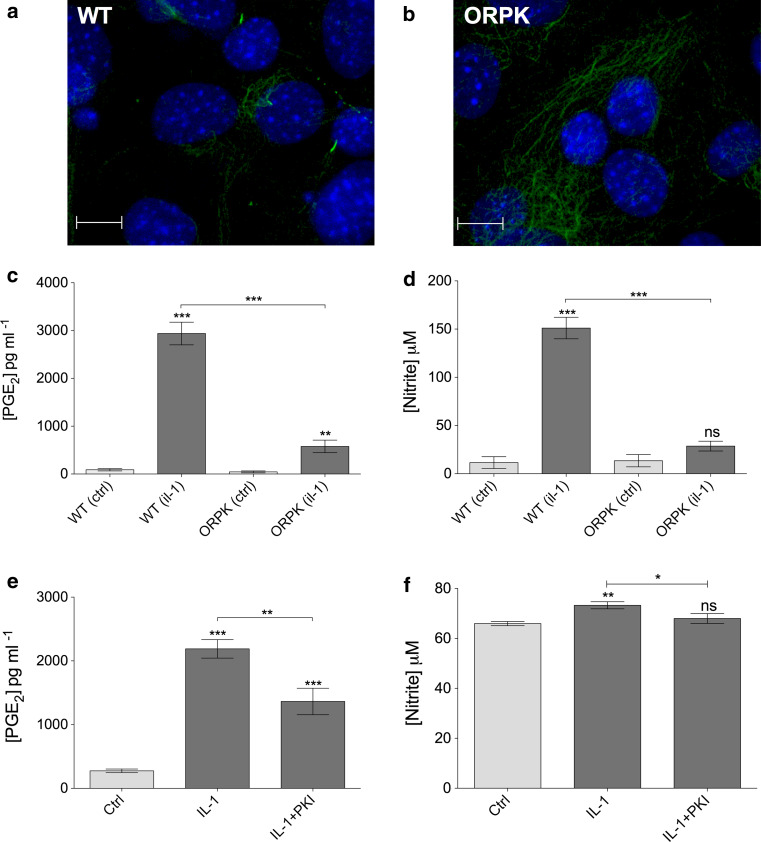
Primary cilia are singular, cytoskeletal organelles present in the majority of mammalian cell types where they function as coordinating centres for mechanotransduction, Wnt and hedgehog signalling. The length of the primary cilium is proposed to modulate cilia function, governed in part by the activity of intraflagellar transport (IFT). In articular cartilage, primary cilia length is increased and hedgehog signaling activated in osteoarthritis (OA). Here, we examine primary cilia length with exposure to the quintessential inflammatory cytokine interleukin-1 (IL-1), which is up-regulated in OA. We then test the hypothesis that the cilium is involved in mediating the downstream inflammatory response. Primary chondrocytes treated with IL-1 exhibited a 50% increase in cilia length after 3 h exposure. IL-1-induced cilia elongation was also observed in human fibroblasts. In chondrocytes, this elongation occurred via a protein kinase A (PKA)-dependent mechanism. G-protein coupled adenylate cyclase also regulated the length of chondrocyte primary cilia but not downstream of IL-1. Chondrocytes treated with IL-1 exhibit a characteristic increase in the release of the inflammatory chemokines, nitric oxide and prostaglandin E2. However, in cells with a mutation in IFT88 whereby the cilia structure is lost, this response to IL-1 was significantly attenuated and, in the case of nitric oxide, completely abolished. Inhibition of IL-1-induced cilia elongation by PKA inhibition also attenuated the chemokine response. These results suggest that cilia assembly regulates the response to inflammatory cytokines. Therefore, the cilia proteome may provide a novel therapeutic target for the treatment of inflammatory pathologies, including OA.
初级纤毛是存在于大多数哺乳动物细胞类型中的单一细胞骨架细胞器,它们作为机械转导、Wnt 和 hedgehog 信号的协调中心。初级纤毛的长度被认为可以调节纤毛功能,部分受鞭毛内运输 (IFT) 的活性控制。在关节软骨中,初级纤毛长度增加,hedgehog 信号在骨关节炎 (OA) 中被激活。在这里,我们研究了暴露于典型炎症细胞因子白细胞介素-1 (IL-1) 时初级纤毛的长度,OA 中 IL-1 的表达上调。然后,我们检验了纤毛参与介导下游炎症反应的假设。IL-1 处理的原代软骨细胞在暴露 3 小时后纤毛长度增加了 50%。在人成纤维细胞中也观察到了 IL-1 诱导的纤毛伸长。在软骨细胞中,这种伸长是通过蛋白激酶 A (PKA) 依赖性机制发生的。G 蛋白偶联腺苷酸环化酶也调节软骨细胞初级纤毛的长度,但不是在 IL-1 下游。IL-1 处理的软骨细胞表现出炎症趋化因子、一氧化氮和前列腺素 E2 的释放显著增加。然而,在 IFT88 突变的细胞中,纤毛结构丧失,对 IL-1 的这种反应明显减弱,在一氧化氮的情况下,完全被抑制。PKA 抑制也减弱了 IL-1 诱导的纤毛伸长,从而减弱了趋化因子反应。这些结果表明,纤毛组装调节对炎症细胞因子的反应。因此,纤毛蛋白组可能为炎症性疾病(包括 OA)的治疗提供新的治疗靶点。