Department of Nephrology, University Hospital Essen, University Duisburg Essen, Hufelandstrasse 55, 45122 Essen, Germany.
Department of Gastroenterology, Hepatology and Infectious Diseases, University Magdeburg, Leipzigerstrasse 44, 39120 Magdeburg, Germany.
Mediators Inflamm. 2019 Feb 25;2019:7537649. doi: 10.1155/2019/7537649. eCollection 2019.
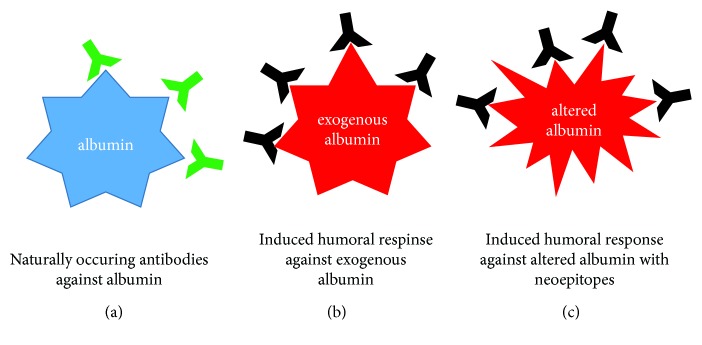
Liver cirrhosis yearly causes 1.2 million deaths worldwide, ranking as the 10th leading cause of death in the most developed countries. High susceptibility to infections along with a significant risk for infection-related mortality justifies the description of liver cirrhosis as the world's most common immunodeficiency syndrome. Liver cirrhosis is an end-stage organic disease hallmarked by a multifaceted immune dysfunction due to deterioration of antimicrobial recognition and elimination mechanisms in macrophages along with an impaired antigen presentation ability in circulating monocytes. Bacterial translocation supports-and is supported by-uncontrolled activation of immune cell responses and/or loss of toll-like receptor (TLR) tolerance, which can turn exaggerated inflammatory responses to systemic inflammation. Lipopolysaccharide (LPS) or endotoxin boosts systemic inflammatory activity through activation of TLR-2- and TLR-4-dependent pathways and facilitate a massive production of cytokines. This, in turn, results into elevated secretion of reactive oxygen species (ROS), which further enhances intestinal hyperpermeability and thus sustains a vicious circle of events widely known as "leaky gut." Albumin can be of particular benefit in cirrhotic patients with spontaneous bacterial peritonitis and/or hepatorenal syndrome type of acute kidney injury (HRS-AKI) due to anti-inflammatory and antioxidative stress as well as volume-expanding properties and endothelial-stabilizing attributes. However, presence of autoantibodies against albumin in patients with liver cirrhosis has been described. Although previous research suggested that these antibodies should be regarded as naturally occurring antibodies (NOA), the origin of the antialbumin immune response is obscure. High occurrence of NAO/albumin complexes in patients with liver disease might reflect a limited clearance capacity due to bypassing portal circulation. Moreover, high burden of oxidized albumin is associated with less favorable outcome in patients with liver cirrhosis. To date, there is no data available as to whether oxidized forms of albumin result in neoepitopes recognized by the immune system. Nevertheless, it is reasonable to hypothesize that these alterations may have the potential to induce antialbumin immune responses and thus favor systemic inflammation.
肝硬化每年在全球导致 120 万人死亡,在最发达国家中排名第 10 位,是主要死因。由于巨噬细胞中抗菌识别和消除机制恶化,以及循环单核细胞中抗原呈递能力受损,导致肝硬化患者极易感染,且具有很高的感染相关死亡率,因此将肝硬化描述为世界上最常见的免疫缺陷综合征是合理的。肝硬化是一种终末期器官疾病,其特征是多方面的免疫功能障碍,由于巨噬细胞中抗菌识别和消除机制恶化,以及循环单核细胞中抗原呈递能力受损,导致肝硬化患者极易感染,且具有很高的感染相关死亡率,因此将肝硬化描述为世界上最常见的免疫缺陷综合征是合理的。肝硬化是一种终末期器官疾病,其特征是多方面的免疫功能障碍,由于巨噬细胞中抗菌识别和消除机制恶化,以及循环单核细胞中抗原呈递能力受损,导致肝硬化患者极易感染,且具有很高的感染相关死亡率,因此将肝硬化描述为世界上最常见的免疫缺陷综合征是合理的。由于免疫细胞反应的失控激活和/或 Toll 样受体 (TLR) 耐受的丧失,细菌易位支持并受其支持,这可能会将炎症反应转化为全身性炎症。脂多糖 (LPS) 或内毒素通过激活 TLR-2 和 TLR-4 依赖性途径增强全身炎症活性,并促进细胞因子的大量产生。这反过来又导致活性氧 (ROS) 的分泌增加,进一步增强肠道通透性,从而维持广泛称为“漏肠”的恶性循环。由于具有抗炎和抗氧化应激作用,以及扩容和稳定内皮特性,白蛋白对自发性细菌性腹膜炎和/或肝肾综合征型急性肾损伤 (HRS-AKI) 的肝硬化患者特别有益。然而,已经描述了肝硬化患者中存在针对白蛋白的自身抗体。尽管先前的研究表明这些抗体应被视为天然存在的抗体 (NOA),但抗白蛋白免疫反应的起源尚不清楚。肝病患者中 NAO/白蛋白复合物的高发生率可能反映了由于绕过门脉循环而导致的清除能力有限。此外,氧化白蛋白负担高与肝硬化患者的预后较差相关。迄今为止,尚无关于白蛋白的氧化形式是否会导致免疫系统识别的新表位的数据。然而,合理的假设是,这些改变可能具有诱导抗白蛋白免疫反应的潜力,并因此有利于全身炎症。