Liu Kang, Kang Min, Li Jixi, Qin Wen, Wang Rensheng
Department of Radiation Oncology, The First Affiliated Hospital of Guangxi Medical University, Nanning, Guangxi 530021, P.R. China.
Exp Ther Med. 2019 Apr;17(4):2657-2665. doi: 10.3892/etm.2019.7228. Epub 2019 Jan 31.
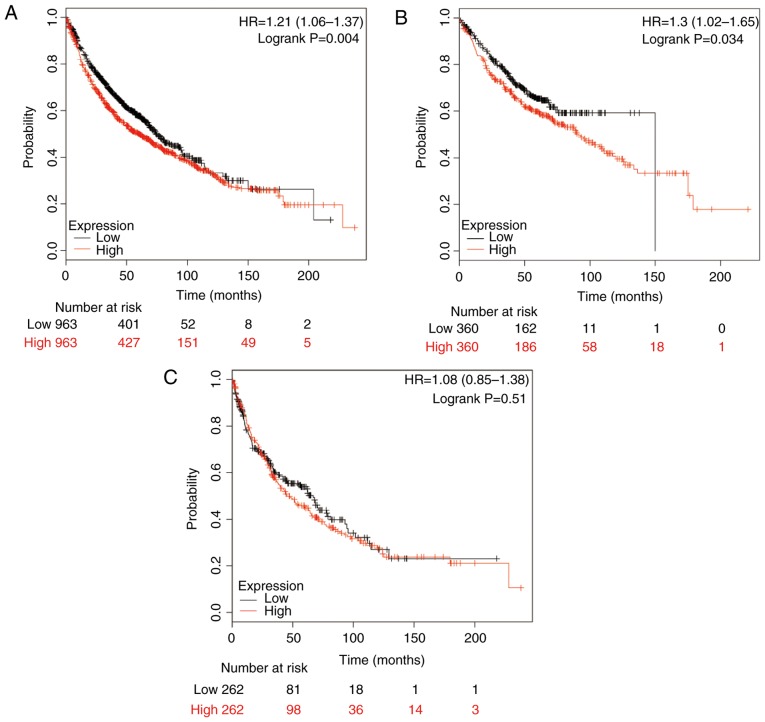
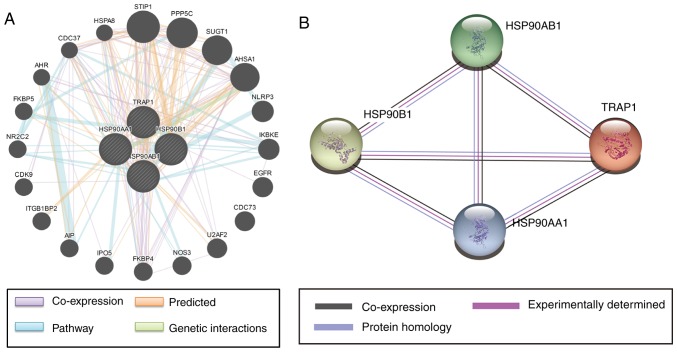
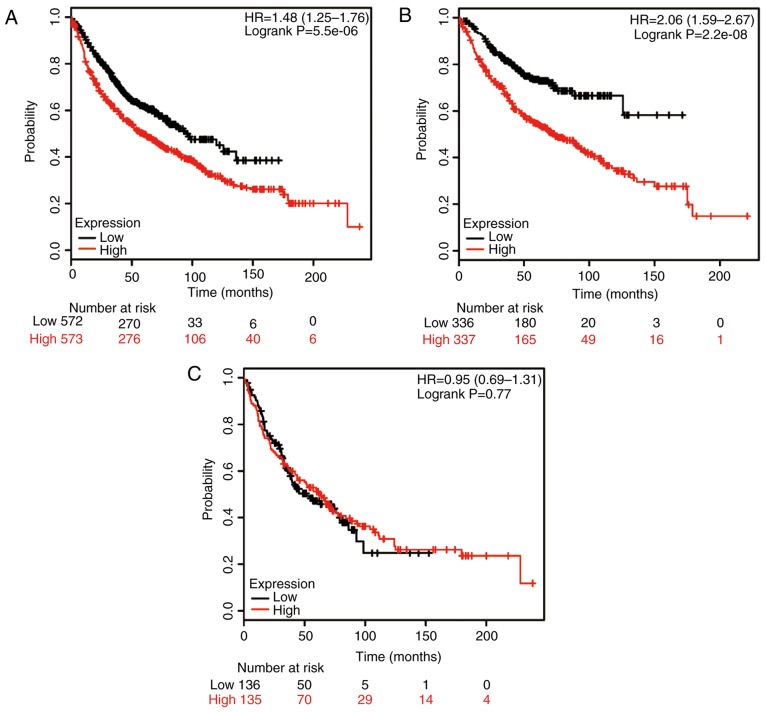
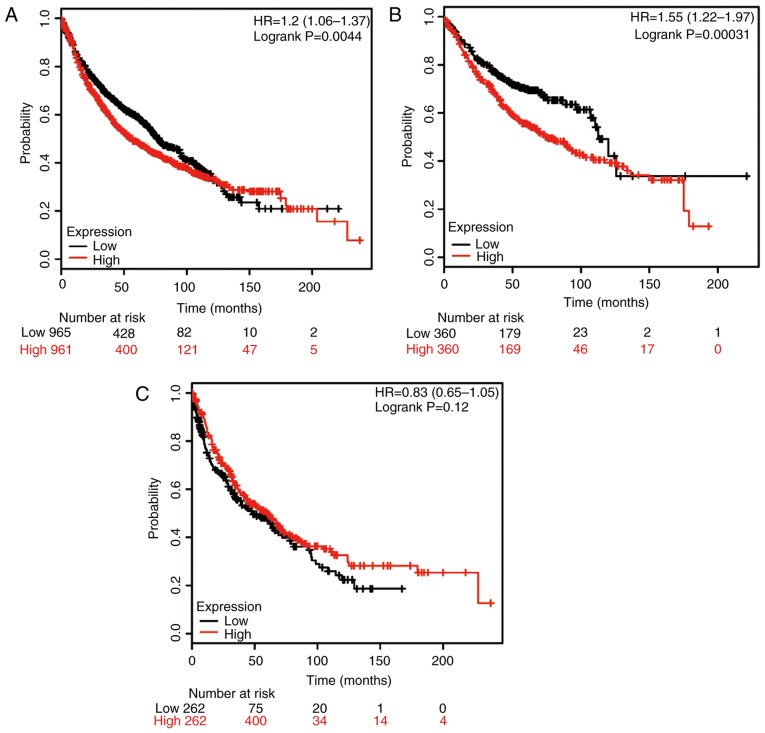
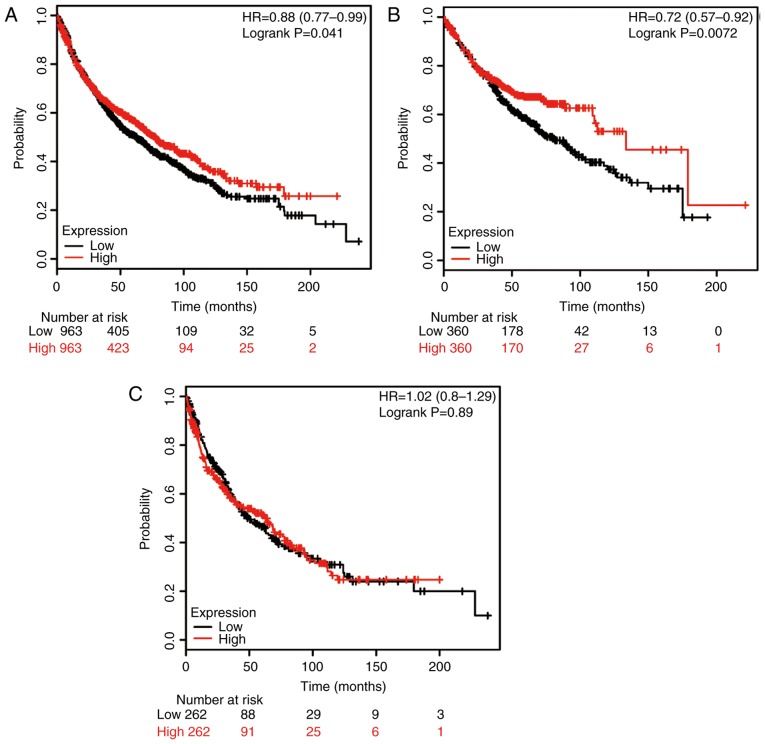
The aim of the present study was to investigate the potential prognostic value of members of the heat shock protein (HSP)90 family in non-small cell lung cancer (NSCLC) patients. The mRNA expression profiles of 1,926 NSCLC patients, which was available from the Kaplan-Meier plotter database, were included in the study. High expression of HSP90AA1 mRNA was significantly associated with a poorer rate of overall survival (OS) for all NSCLC patients [hazard ratio (HR), 1.21; 95% confidence interval (CI): 1.06-1.37; P=0.004], as well as for patients with adenocarcinoma (ADE; HR, 1.3; 95% CI: 1.02-1.65; P=0.034), but no significant correlation was identified for squamous cell carcinoma (SCC) patients (HR, 1.08; 95% CI: 0.85-1.38; P=0.51). High expression of HSP90AB1 and HSP90B1 mRNA was significantly associated with poorer rates of OS in lung SCC and ADE patients combined, as well as in lung ADE patients alone. By contrast, high expression of tumor necrosis factor receptor-associated protein 1 (TRAP1) mRNA was significantly associated with improved OS rates in all NSCLC patients combined (HR, 0.88; 95% CI: 0.77-0.99; P=0.041), as well as ADE patients. In stratified survival analysis, a high expression of HSP90AA1, HSP90AB1 and HSP90B1 predicted poor prognosis in stage I NSLCC patients, suggesting that these genes may serve as stage-independent prognostic indicators. As an elevated expression of HSP90AA1, HSP90AB1, HSP90B1 and TRAP1 was associated with poorer OS outcomes in patients with NSCLC, these HSP90 members may be potential prognostic biomarkers and drug targets for the treatment of NSCLC.
本研究的目的是调查热休克蛋白(HSP)90家族成员在非小细胞肺癌(NSCLC)患者中的潜在预后价值。研究纳入了来自Kaplan-Meier Plotter数据库的1926例NSCLC患者的mRNA表达谱。HSP90AA1 mRNA的高表达与所有NSCLC患者较差的总生存率(OS)显著相关[风险比(HR),1.21;95%置信区间(CI):1.06 - 1.37;P = 0.004],腺癌(ADE)患者也是如此(HR,1.3;95% CI:1.02 - 1.65;P = 0.034),但鳞状细胞癌(SCC)患者未发现显著相关性(HR,1.08;95% CI:0.85 - 1.38;P = 0.51)。HSP90AB1和HSP90B1 mRNA的高表达与肺SCC和ADE患者联合组以及单独的肺ADE患者较差的OS率显著相关。相比之下,肿瘤坏死因子受体相关蛋白1(TRAP1)mRNA的高表达与所有NSCLC患者联合组(HR,0.88;95% CI:0.77 - 0.99;P = 0.041)以及ADE患者较好的OS率显著相关。在分层生存分析中,HSP90AA1、HSP90AB1和HSP90B1的高表达预测I期NSLCC患者预后不良,表明这些基因可能作为不依赖分期的预后指标。由于HSP90AA1、HSP90AB1、HSP90B1和TRAP1的表达升高与NSCLC患者较差的OS结果相关,这些HSP90家族成员可能是NSCLC治疗的潜在预后生物标志物和药物靶点。