Institute of Molecular Evolution, Heinrich-Heine-University, 40225, Düsseldorf, Germany.
Department of Biochemistry, Faculty of Natural Sciences, Comenius University in Bratislava, 851 04, Bratislava, Slovakia.
Free Radic Biol Med. 2019 Aug 20;140:279-294. doi: 10.1016/j.freeradbiomed.2019.03.030. Epub 2019 Mar 29.
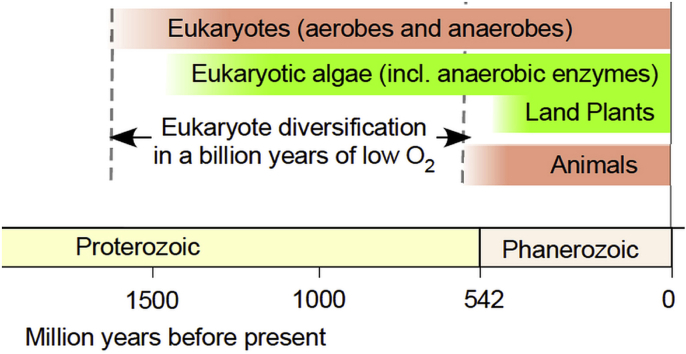
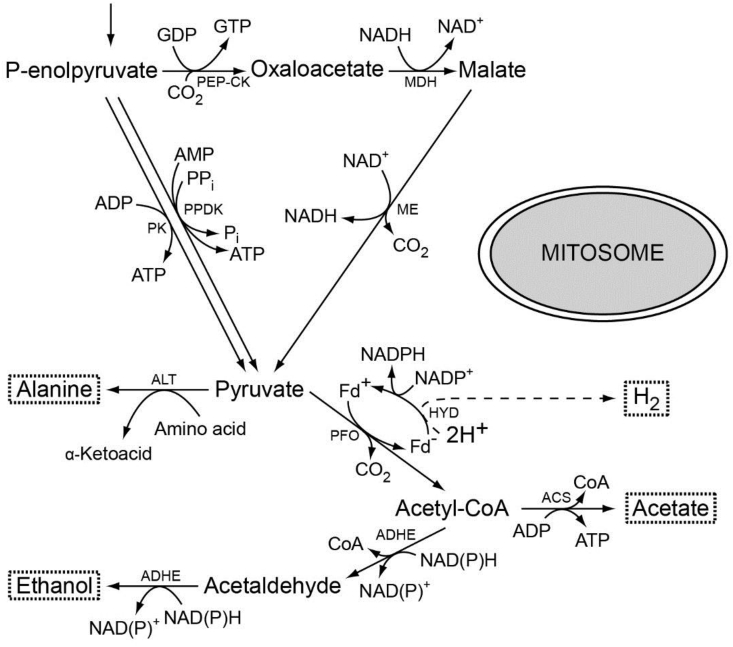
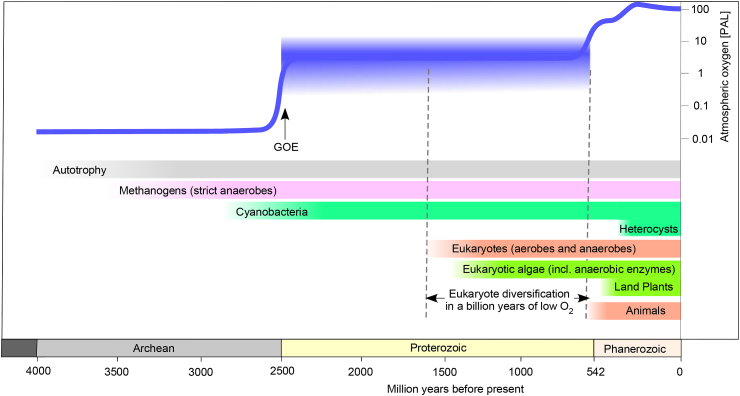
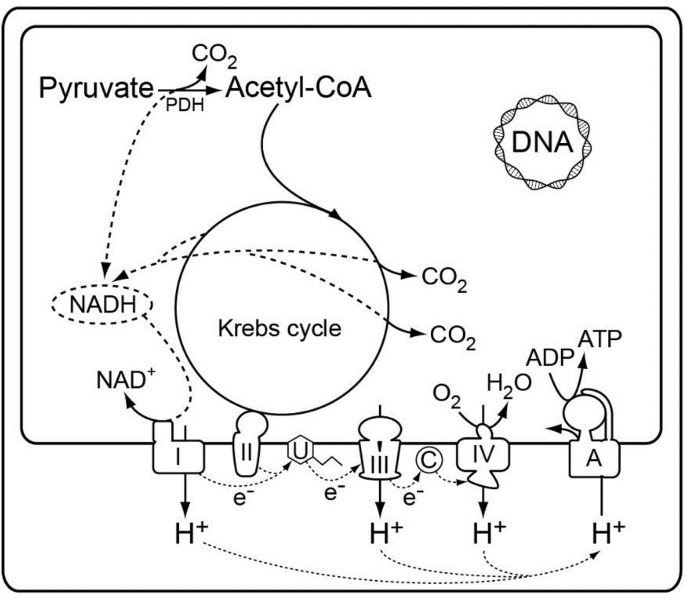
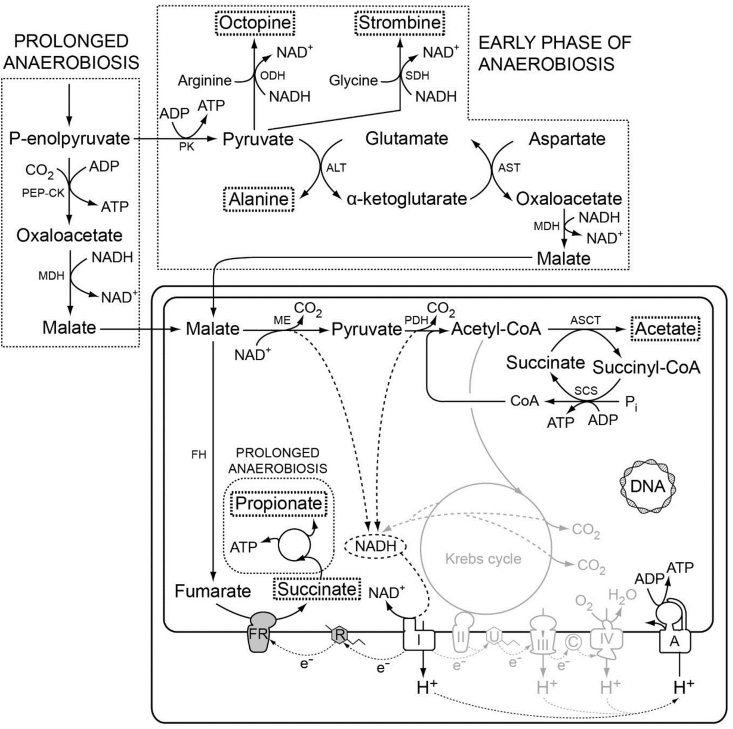
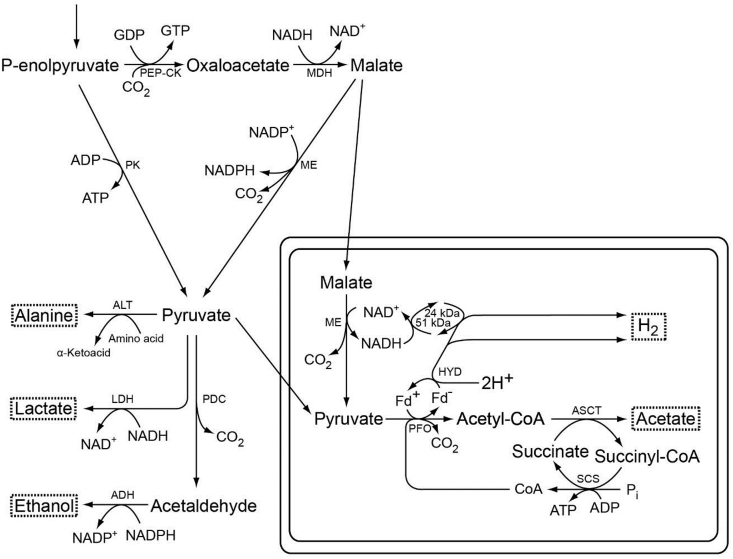
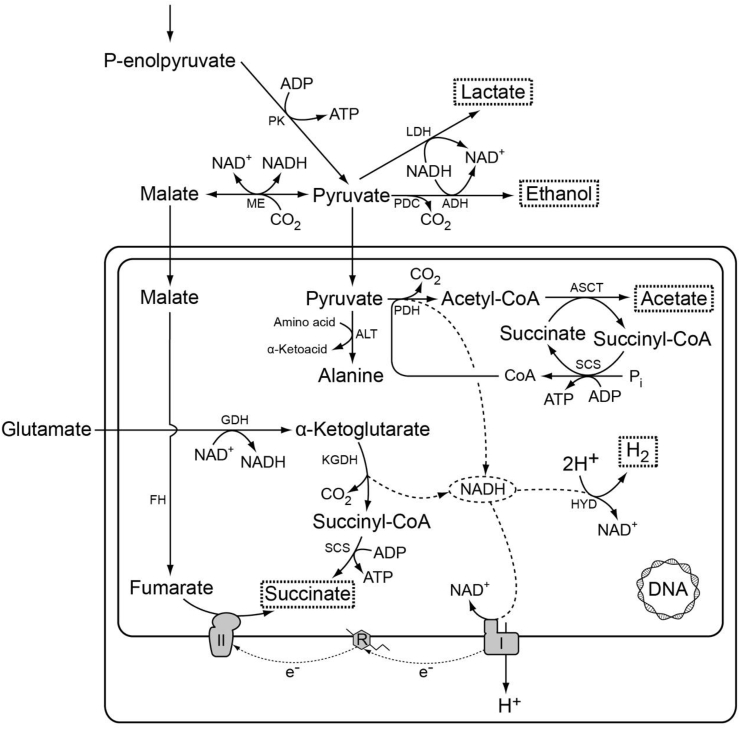
Eukaryotes arose about 1.6 billion years ago, at a time when oxygen levels were still very low on Earth, both in the atmosphere and in the ocean. According to newer geochemical data, oxygen rose to approximately its present atmospheric levels very late in evolution, perhaps as late as the origin of land plants (only about 450 million years ago). It is therefore natural that many lineages of eukaryotes harbor, and use, enzymes for oxygen-independent energy metabolism. This paper provides a concise overview of anaerobic energy metabolism in eukaryotes with a focus on anaerobic energy metabolism in mitochondria. We also address the widespread assumption that oxygen improves the overall energetic state of a cell. While it is true that ATP yield from glucose or amino acids is increased in the presence of oxygen, it is also true that the synthesis of biomass costs thirteen times more energy per cell in the presence of oxygen than in anoxic conditions. This is because in the reaction of cellular biomass with O, the equilibrium lies very far on the side of CO. The absence of oxygen offers energetic benefits of the same magnitude as the presence of oxygen. Anaerobic and low oxygen environments are ancient. During evolution, some eukaryotes have specialized to life in permanently oxic environments (life on land), other eukaryotes have remained specialized to low oxygen habitats. We suggest that the K of mitochondrial cytochrome c oxidase of 0.1-10 μM for O, which corresponds to about 0.04%-4% (avg. 0.4%) of present atmospheric O levels, reflects environmental O concentrations that existed at the time that the eukaryotes arose.
真核生物大约在 16 亿年前出现,当时地球的大气和海洋中的氧气含量都非常低。根据新的地球化学数据,氧气在进化过程中很晚才上升到现在的大气水平,可能直到陆地植物的起源(大约在 4.5 亿年前)才达到。因此,许多真核生物的谱系都拥有并使用氧气独立的能量代谢酶也就不足为奇了。本文简要概述了真核生物的无氧能量代谢,重点介绍了线粒体中的无氧能量代谢。我们还讨论了一个广泛存在的假设,即氧气改善了细胞的整体能量状态。虽然在有氧条件下,葡萄糖或氨基酸的 ATP 产量确实增加了,但在有氧条件下,细胞生物量的合成比无氧条件下每细胞多消耗 13 倍的能量也是事实。这是因为在细胞生物质与 O 的反应中,平衡非常偏向于 CO。无氧环境提供的能量优势与有氧环境相同。无氧和低氧环境是古老的。在进化过程中,一些真核生物已经特化到有氧环境中生活(陆地生活),而其他真核生物仍然特化到低氧栖息地。我们认为,线粒体细胞色素 c 氧化酶的 K 值为 0.1-10 μM,对应于当前大气 O 水平的 0.04%-4%(平均 0.4%),反映了真核生物出现时存在的环境 O 浓度。