• 文献检索
  • 文档翻译
  • 深度研究
  • 学术资讯
  • Suppr Zotero 插件Zotero 插件
  • 邀请有礼
  • 套餐&价格
  • 历史记录
应用&插件
Suppr Zotero 插件Zotero 插件浏览器插件Mac 客户端Windows 客户端微信小程序
定价
高级版会员购买积分包购买API积分包
服务
文献检索文档翻译深度研究API 文档MCP 服务
关于我们
关于 Suppr公司介绍联系我们用户协议隐私条款
关注我们

Suppr 超能文献

核心技术专利:CN118964589B侵权必究
粤ICP备2023148730 号-1Suppr @ 2026

文献检索

告别复杂PubMed语法,用中文像聊天一样搜索,搜遍4000万医学文献。AI智能推荐,让科研检索更轻松。

立即免费搜索

文件翻译

保留排版,准确专业,支持PDF/Word/PPT等文件格式,支持 12+语言互译。

免费翻译文档

深度研究

AI帮你快速写综述,25分钟生成高质量综述,智能提取关键信息,辅助科研写作。

立即免费体验

通过简单的核酸酶诱导的双链断裂实现精确的治疗性基因校正。

Precise therapeutic gene correction by a simple nuclease-induced double-stranded break.

机构信息

Department of Molecular, Cell and Cancer Biology, University of Massachusetts Medical School, Worcester, MA, USA.

Department of Neurology, University of Massachusetts Medical School, Worcester, MA, USA.

出版信息

Nature. 2019 Apr;568(7753):561-565. doi: 10.1038/s41586-019-1076-8. Epub 2019 Apr 3.

DOI:10.1038/s41586-019-1076-8
PMID:30944467
原文链接:https://pmc.ncbi.nlm.nih.gov/articles/PMC6483862/
Abstract

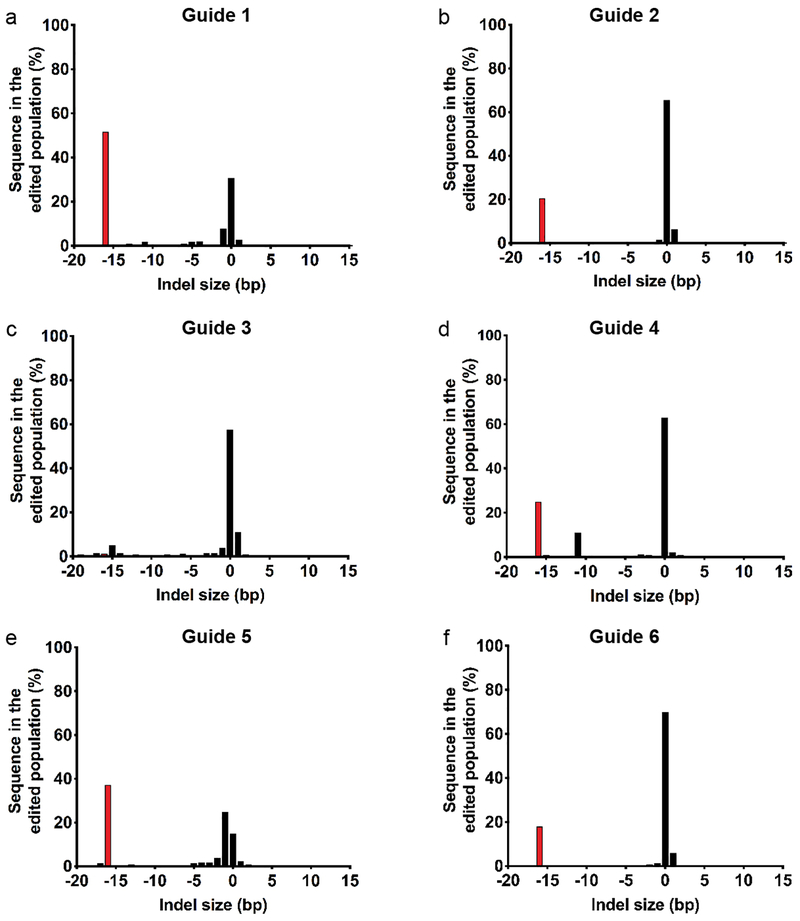
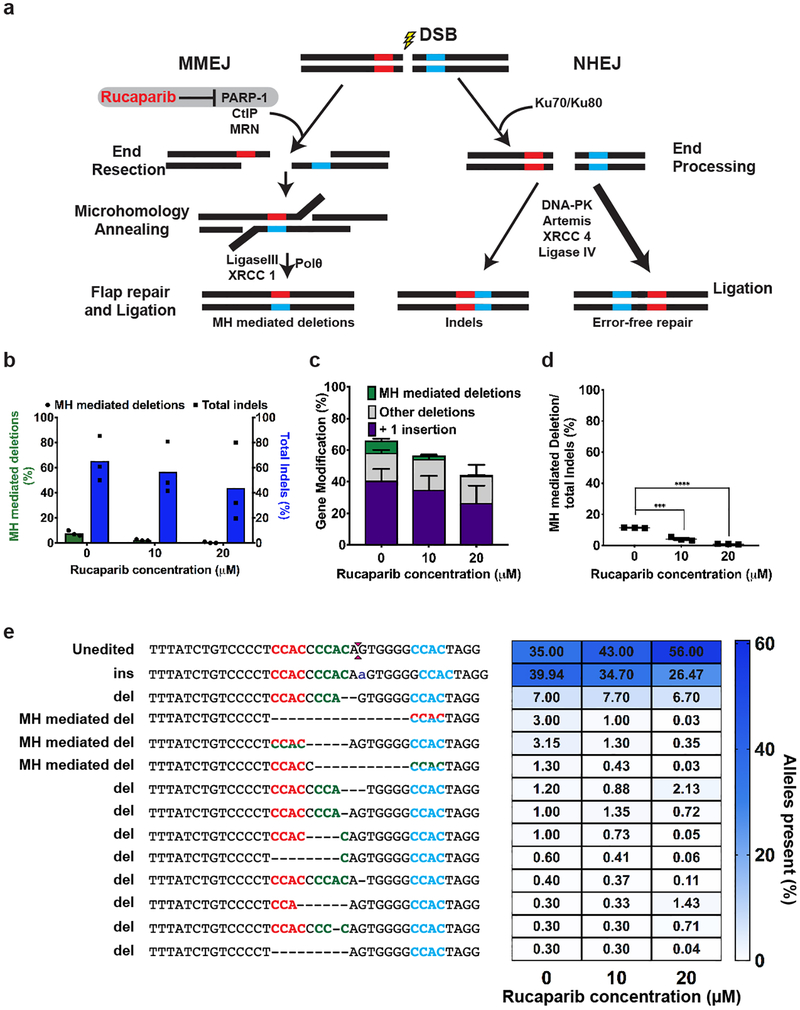
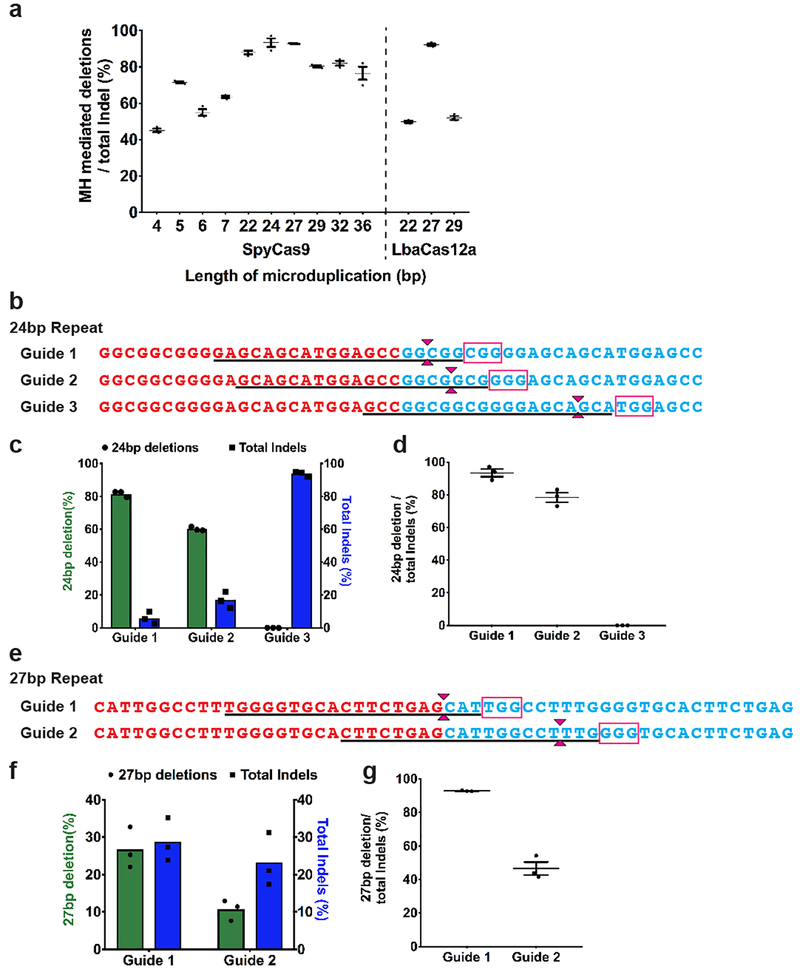
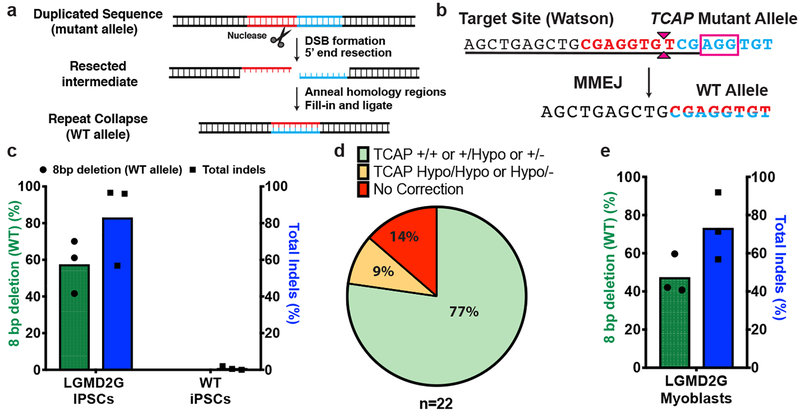
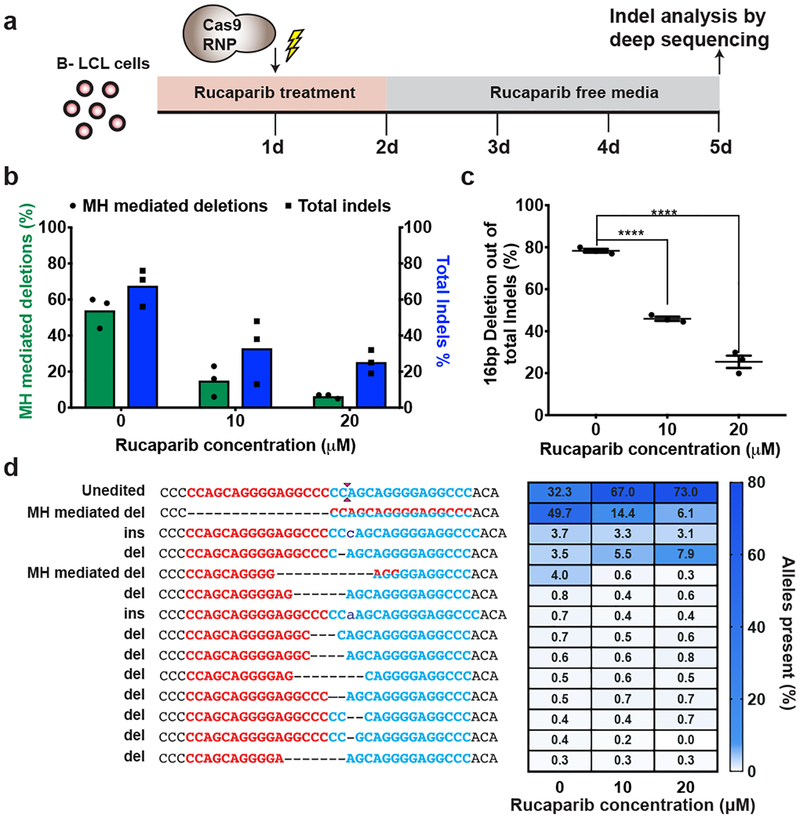
Current programmable nuclease-based methods (for example, CRISPR-Cas9) for the precise correction of a disease-causing genetic mutation harness the homology-directed repair pathway. However, this repair process requires the co-delivery of an exogenous DNA donor to recode the sequence and can be inefficient in many cell types. Here we show that disease-causing frameshift mutations that result from microduplications can be efficiently reverted to the wild-type sequence simply by generating a DNA double-stranded break near the centre of the duplication. We demonstrate this in patient-derived cell lines for two diseases: limb-girdle muscular dystrophy type 2G (LGMD2G) and Hermansky-Pudlak syndrome type 1 (HPS1). Clonal analysis of inducible pluripotent stem (iPS) cells from the LGMD2G cell line, which contains a mutation in TCAP, treated with the Streptococcus pyogenes Cas9 (SpCas9) nuclease revealed that about 80% contained at least one wild-type TCAP allele; this correction also restored TCAP expression in LGMD2G iPS cell-derived myotubes. SpCas9 also efficiently corrected the genotype of an HPS1 patient-derived B-lymphoblastoid cell line. Inhibition of polyADP-ribose polymerase 1 (PARP-1) suppressed the nuclease-mediated collapse of the microduplication to the wild-type sequence, confirming that precise correction is mediated by the microhomology-mediated end joining (MMEJ) pathway. Analysis of editing by SpCas9 and Lachnospiraceae bacterium ND2006 Cas12a (LbCas12a) at non-pathogenic 4-36-base-pair microduplications within the genome indicates that the correction strategy is broadly applicable to a wide range of microduplication lengths and can be initiated by a variety of nucleases. The simplicity, reliability and efficacy of this MMEJ-based therapeutic strategy should permit the development of nuclease-based gene correction therapies for a variety of diseases that are associated with microduplications.

摘要

目前基于可编程核酸酶的方法(例如 CRISPR-Cas9)可用于精确校正致病基因突变,其利用同源定向修复途径。然而,这种修复过程需要共递送外源性 DNA 供体来重新编码序列,并且在许多细胞类型中效率不高。在这里,我们证明,由微重复引起的致病移码突变可以通过在重复的中心附近产生 DNA 双链断裂而有效地恢复为野生型序列。我们在两种疾病的患者来源的细胞系中证明了这一点:肢带型肌营养不良 2G(LGMD2G)和 Hermansky-Pudlak 综合征 1 型(HPS1)。用化脓性链球菌 Cas9(SpCas9)核酸酶处理来自含有 TCAP 突变的 LGMD2G 细胞系的诱导多能干细胞(iPS)细胞的克隆分析显示,大约 80%的细胞至少含有一个野生型 TCAP 等位基因;这种校正也恢复了 LGMD2G iPS 细胞衍生的肌管中的 TCAP 表达。SpCas9 还有效地校正了 HPS1 患者来源的 B 淋巴细胞母细胞系的基因型。聚 ADP-核糖聚合酶 1(PARP-1)抑制剂抑制了微重复向野生型序列的核酸酶介导的崩溃,证实精确校正由微同源介导的末端连接(MMEJ)途径介导。SpCas9 和 Lachnospiraceae 细菌 ND2006 Cas12a(LbCas12a)在基因组内非致病性 4-36 碱基对微重复中的编辑分析表明,该校正策略广泛适用于各种微重复长度,并且可以由各种核酸酶引发。这种基于 MMEJ 的治疗策略的简单性、可靠性和有效性应允许开发用于各种与微重复相关的疾病的基于核酸酶的基因校正疗法。

https://cdn.ncbi.nlm.nih.gov/pmc/blobs/74c3/6483862/32ad1fd89a5f/nihms-1522514-f0004.jpg
https://cdn.ncbi.nlm.nih.gov/pmc/blobs/74c3/6483862/83256990e115/nihms-1522514-f0005.jpg
https://cdn.ncbi.nlm.nih.gov/pmc/blobs/74c3/6483862/4f2992e74801/nihms-1522514-f0006.jpg
https://cdn.ncbi.nlm.nih.gov/pmc/blobs/74c3/6483862/ff2b357eccfa/nihms-1522514-f0007.jpg
https://cdn.ncbi.nlm.nih.gov/pmc/blobs/74c3/6483862/ed78f168790d/nihms-1522514-f0008.jpg
https://cdn.ncbi.nlm.nih.gov/pmc/blobs/74c3/6483862/977e32a0c01c/nihms-1522514-f0009.jpg
https://cdn.ncbi.nlm.nih.gov/pmc/blobs/74c3/6483862/5087fbf69b60/nihms-1522514-f0010.jpg
https://cdn.ncbi.nlm.nih.gov/pmc/blobs/74c3/6483862/73d42146f066/nihms-1522514-f0011.jpg
https://cdn.ncbi.nlm.nih.gov/pmc/blobs/74c3/6483862/c977d84946f1/nihms-1522514-f0012.jpg
https://cdn.ncbi.nlm.nih.gov/pmc/blobs/74c3/6483862/d081462a7d51/nihms-1522514-f0013.jpg
https://cdn.ncbi.nlm.nih.gov/pmc/blobs/74c3/6483862/86b490993a3f/nihms-1522514-f0014.jpg
https://cdn.ncbi.nlm.nih.gov/pmc/blobs/74c3/6483862/bb496fa1e04a/nihms-1522514-f0001.jpg
https://cdn.ncbi.nlm.nih.gov/pmc/blobs/74c3/6483862/0ee5b1dfe4ae/nihms-1522514-f0002.jpg
https://cdn.ncbi.nlm.nih.gov/pmc/blobs/74c3/6483862/480f9bb96d63/nihms-1522514-f0003.jpg
https://cdn.ncbi.nlm.nih.gov/pmc/blobs/74c3/6483862/32ad1fd89a5f/nihms-1522514-f0004.jpg
https://cdn.ncbi.nlm.nih.gov/pmc/blobs/74c3/6483862/83256990e115/nihms-1522514-f0005.jpg
https://cdn.ncbi.nlm.nih.gov/pmc/blobs/74c3/6483862/4f2992e74801/nihms-1522514-f0006.jpg
https://cdn.ncbi.nlm.nih.gov/pmc/blobs/74c3/6483862/ff2b357eccfa/nihms-1522514-f0007.jpg
https://cdn.ncbi.nlm.nih.gov/pmc/blobs/74c3/6483862/ed78f168790d/nihms-1522514-f0008.jpg
https://cdn.ncbi.nlm.nih.gov/pmc/blobs/74c3/6483862/977e32a0c01c/nihms-1522514-f0009.jpg
https://cdn.ncbi.nlm.nih.gov/pmc/blobs/74c3/6483862/5087fbf69b60/nihms-1522514-f0010.jpg
https://cdn.ncbi.nlm.nih.gov/pmc/blobs/74c3/6483862/73d42146f066/nihms-1522514-f0011.jpg
https://cdn.ncbi.nlm.nih.gov/pmc/blobs/74c3/6483862/c977d84946f1/nihms-1522514-f0012.jpg
https://cdn.ncbi.nlm.nih.gov/pmc/blobs/74c3/6483862/d081462a7d51/nihms-1522514-f0013.jpg
https://cdn.ncbi.nlm.nih.gov/pmc/blobs/74c3/6483862/86b490993a3f/nihms-1522514-f0014.jpg
https://cdn.ncbi.nlm.nih.gov/pmc/blobs/74c3/6483862/bb496fa1e04a/nihms-1522514-f0001.jpg
https://cdn.ncbi.nlm.nih.gov/pmc/blobs/74c3/6483862/0ee5b1dfe4ae/nihms-1522514-f0002.jpg
https://cdn.ncbi.nlm.nih.gov/pmc/blobs/74c3/6483862/480f9bb96d63/nihms-1522514-f0003.jpg
https://cdn.ncbi.nlm.nih.gov/pmc/blobs/74c3/6483862/32ad1fd89a5f/nihms-1522514-f0004.jpg

相似文献

1
Precise therapeutic gene correction by a simple nuclease-induced double-stranded break.通过简单的核酸酶诱导的双链断裂实现精确的治疗性基因校正。
Nature. 2019 Apr;568(7753):561-565. doi: 10.1038/s41586-019-1076-8. Epub 2019 Apr 3.
2
Single-Strand Annealing Plays a Major Role in Double-Strand DNA Break Repair following CRISPR-Cas9 Cleavage in .单链退火在 CRISPR-Cas9 切割后双链 DNA 断裂修复中起主要作用。
mSphere. 2019 Aug 21;4(4):e00408-19. doi: 10.1128/mSphere.00408-19.
3
Precise Correction of Disease Mutations in Induced Pluripotent Stem Cells Derived From Patients With Limb Girdle Muscular Dystrophy.对来自肢带型肌营养不良症患者的诱导多能干细胞中疾病突变的精确校正。
Mol Ther. 2016 Apr;24(4):685-96. doi: 10.1038/mt.2016.40. Epub 2016 Feb 26.
4
In planta gene targeting can be enhanced by the use of CRISPR/Cas12a.在植物体内,基因靶向可以通过使用 CRISPR/Cas12a 来增强。
Plant J. 2019 Dec;100(5):1083-1094. doi: 10.1111/tpj.14488. Epub 2019 Sep 19.
5
SpCas9- and LbCas12a-Mediated DNA Editing Produce Different Gene Knockout Outcomes in Zebrafish Embryos.SpCas9 和 LbCas12a 介导的 DNA 编辑在斑马鱼胚胎中产生不同的基因敲除效果。
Genes (Basel). 2020 Jul 3;11(7):740. doi: 10.3390/genes11070740.
6
Allele-Specific Chromosome Removal after Cas9 Cleavage in Human Embryos.Cas9 酶切后人类胚胎中的等位基因特异性染色体去除。
Cell. 2020 Dec 10;183(6):1650-1664.e15. doi: 10.1016/j.cell.2020.10.025. Epub 2020 Oct 29.
7
Distal myopathy due to TCAP variants in four unrelated Chinese patients.四位无关联的中国患者因 TCAP 变异导致的远端肌病。
Neurogenetics. 2021 Mar;22(1):1-10. doi: 10.1007/s10048-020-00623-4. Epub 2020 Aug 6.
8
Modulating DNA Repair Pathways to Improve Precision Genome Engineering.调控 DNA 修复途径以提高精确基因组工程。
ACS Chem Biol. 2018 Feb 16;13(2):389-396. doi: 10.1021/acschembio.7b00777. Epub 2017 Dec 20.
9
Robust activation of microhomology-mediated end joining for precision gene editing applications.用于精确基因编辑应用的微同源介导末端连接的稳健激活。
PLoS Genet. 2018 Sep 12;14(9):e1007652. doi: 10.1371/journal.pgen.1007652. eCollection 2018 Sep.
10
Predictable and precise template-free CRISPR editing of pathogenic variants.可预测且精确的无模板 CRISPR 编辑致病性变异。
Nature. 2018 Nov;563(7733):646-651. doi: 10.1038/s41586-018-0686-x. Epub 2018 Nov 7.

引用本文的文献

1
Improving the Efficiency of CRISPR/Cas9-Mediated Non-Homologous End Joining Gene Knockout Using Small Molecules in Porcine Cells.利用小分子提高猪细胞中CRISPR/Cas9介导的非同源末端连接基因敲除效率
Biomolecules. 2025 Aug 6;15(8):1132. doi: 10.3390/biom15081132.
2
ENHANCED CLEAVAGE OF GENOMIC USING CASX2.使用CasX2增强基因组切割
bioRxiv. 2025 Jul 11:2025.07.08.663680. doi: 10.1101/2025.07.08.663680.
3
Extrachromosomal circular DNA drives dynamic genome plasticity: emerging roles in disease progression and clinical potential.

本文引用的文献

1
Highly efficient therapeutic gene editing of human hematopoietic stem cells.高效的人类造血干细胞治疗性基因编辑。
Nat Med. 2019 May;25(5):776-783. doi: 10.1038/s41591-019-0401-y. Epub 2019 Mar 25.
2
Enhanced Cas12a editing in mammalian cells and zebrafish.增强型 Cas12a 在哺乳动物细胞和斑马鱼中的编辑作用。
Nucleic Acids Res. 2019 May 7;47(8):4169-4180. doi: 10.1093/nar/gkz184.
3
A Compact, High-Accuracy Cas9 with a Dinucleotide PAM for In Vivo Genome Editing.一种紧凑型、高精度的 Cas9,带有双核苷酸 PAM,用于体内基因组编辑。
染色体外环状DNA驱动动态基因组可塑性:在疾病进展中的新作用及临床潜力
Theranostics. 2025 May 25;15(13):6387-6411. doi: 10.7150/thno.111765. eCollection 2025.
4
Division of labor within polymerase theta in repair of CRISPR-induced DNA breaks in .聚合酶θ在修复CRISPR诱导的DNA断裂中的分工 。 (你提供的原文似乎不完整,最后的“in”后面缺少具体内容)
PNAS Nexus. 2025 Jun 3;4(6):pgaf183. doi: 10.1093/pnasnexus/pgaf183. eCollection 2025 Jun.
5
Precise template-free correction restores gene function in Tay-Sachs disease while reframing is ineffective.精确的无模板校正可恢复泰-萨克斯病中的基因功能,而重新编码则无效。
Mol Ther Nucleic Acids. 2024 Nov 26;36(1):102401. doi: 10.1016/j.omtn.2024.102401. eCollection 2025 Mar 11.
6
Unveiling the mysteries of extrachromosomal circular DNA: from generation to clinical relevance in human cancers and health.揭开染色体外环状DNA的奥秘:从产生到在人类癌症与健康中的临床相关性
Mol Cancer. 2024 Dec 20;23(1):276. doi: 10.1186/s12943-024-02187-5.
7
From bench to bedside: cutting-edge applications of base editing and prime editing in precision medicine.从实验室到临床:碱基编辑和引导编辑在精准医学中的前沿应用
J Transl Med. 2024 Dec 20;22(1):1133. doi: 10.1186/s12967-024-05957-3.
8
Direct delivery of Cas-embedded cytosine base editors as ribonucleoprotein complexes for efficient and accurate editing of clinically relevant targets.作为核糖核蛋白复合物直接递送嵌入Cas的胞嘧啶碱基编辑器,用于高效准确地编辑临床相关靶点。
Nucleic Acids Res. 2025 Jan 7;53(1). doi: 10.1093/nar/gkae1217.
9
Gene editing without ex vivo culture evades genotoxicity in human hematopoietic stem cells.无需体外培养的基因编辑可避免人类造血干细胞中的基因毒性。
Cell Stem Cell. 2025 Feb 6;32(2):191-208.e11. doi: 10.1016/j.stem.2024.11.001. Epub 2024 Dec 12.
10
Precise Gene Knock-In Tools with Minimized Risk of DSBs: A Trend for Gene Manipulation.精确的基因敲入工具,最小化 DSB 风险:基因操作的趋势。
Adv Sci (Weinh). 2024 Jul;11(28):e2401797. doi: 10.1002/advs.202401797. Epub 2024 May 10.
Mol Cell. 2019 Feb 21;73(4):714-726.e4. doi: 10.1016/j.molcel.2018.12.003. Epub 2018 Dec 20.
4
Orthogonal Cas9-Cas9 chimeras provide a versatile platform for genome editing.正交 Cas9-Cas9 嵌合体为基因组编辑提供了一个通用的平台。
Nat Commun. 2018 Nov 19;9(1):4856. doi: 10.1038/s41467-018-07310-x.
5
Predictable and precise template-free CRISPR editing of pathogenic variants.可预测且精确的无模板 CRISPR 编辑致病性变异。
Nature. 2018 Nov;563(7733):646-651. doi: 10.1038/s41586-018-0686-x. Epub 2018 Nov 7.
6
Repair of double-strand breaks induced by CRISPR-Cas9 leads to large deletions and complex rearrangements.CRISPR-Cas9 诱导的双链断裂的修复会导致大片段缺失和复杂重排。
Nat Biotechnol. 2018 Sep;36(8):765-771. doi: 10.1038/nbt.4192. Epub 2018 Jul 16.
7
Minimap2: pairwise alignment for nucleotide sequences.Minimap2:核苷酸序列的两两比对。
Bioinformatics. 2018 Sep 15;34(18):3094-3100. doi: 10.1093/bioinformatics/bty191.
8
Evolved Cas9 variants with broad PAM compatibility and high DNA specificity.进化的 Cas9 变体具有广泛的 PAM 兼容性和高 DNA 特异性。
Nature. 2018 Apr 5;556(7699):57-63. doi: 10.1038/nature26155. Epub 2018 Feb 28.
9
Microhomology-assisted scarless genome editing in human iPSCs.人诱导多能干细胞中微同源性辅助的无痕基因组编辑
Nat Commun. 2018 Mar 5;9(1):939. doi: 10.1038/s41467-018-03044-y.
10
ClinVar: improving access to variant interpretations and supporting evidence.ClinVar:改善变异解读和支持证据的获取。
Nucleic Acids Res. 2018 Jan 4;46(D1):D1062-D1067. doi: 10.1093/nar/gkx1153.