Laboratory of Genetics, Microbiology Doctoral Training Program, Genome Center of Wisconsin, Wisconsin Energy Institute, J. F. Crow Institute for the Study of Evolution, University of Wisconsin-Madison, Madison, Wisconsin, United States of America.
DOE Great Lakes Bioenergy Research Center, University of Wisconsin-Madison, Madison, Wisconsin, United States of America.
PLoS Genet. 2019 Apr 4;15(4):e1007786. doi: 10.1371/journal.pgen.1007786. eCollection 2019 Apr.
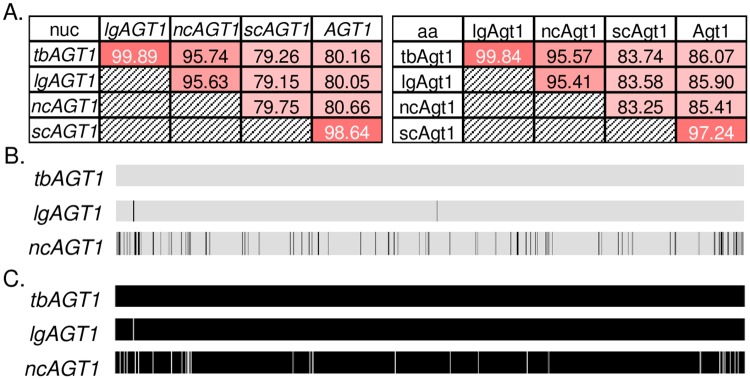
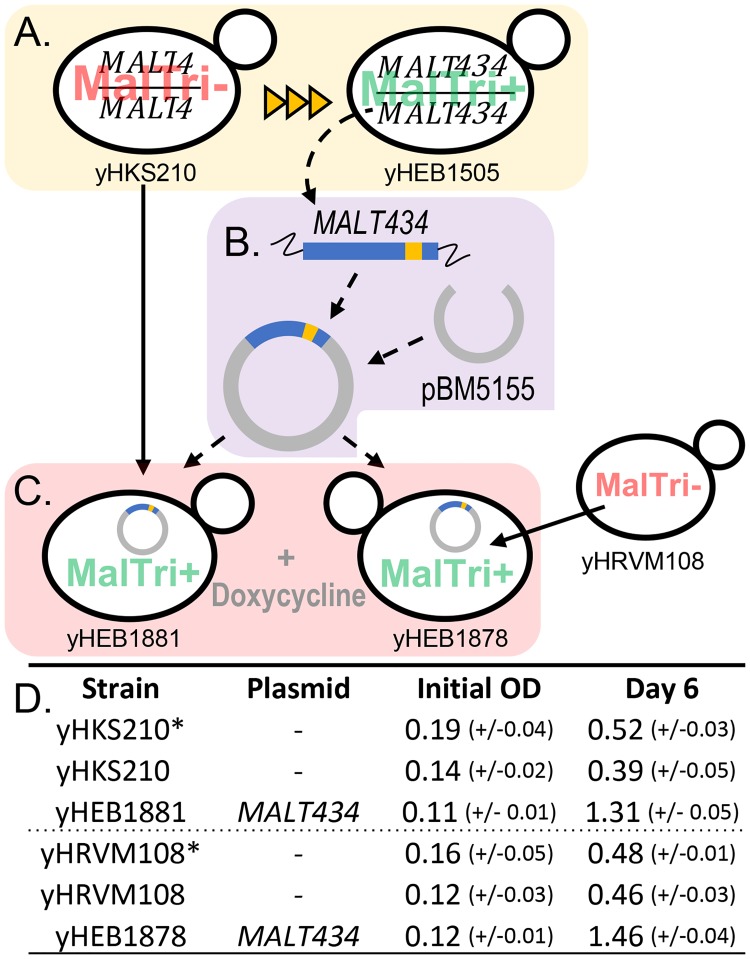
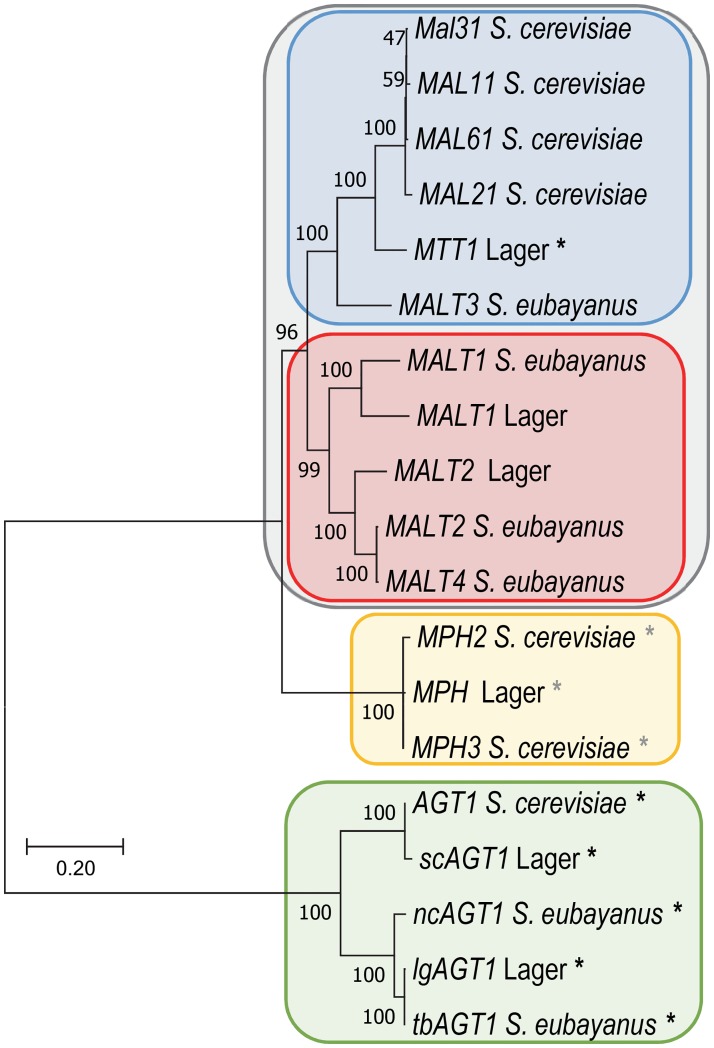
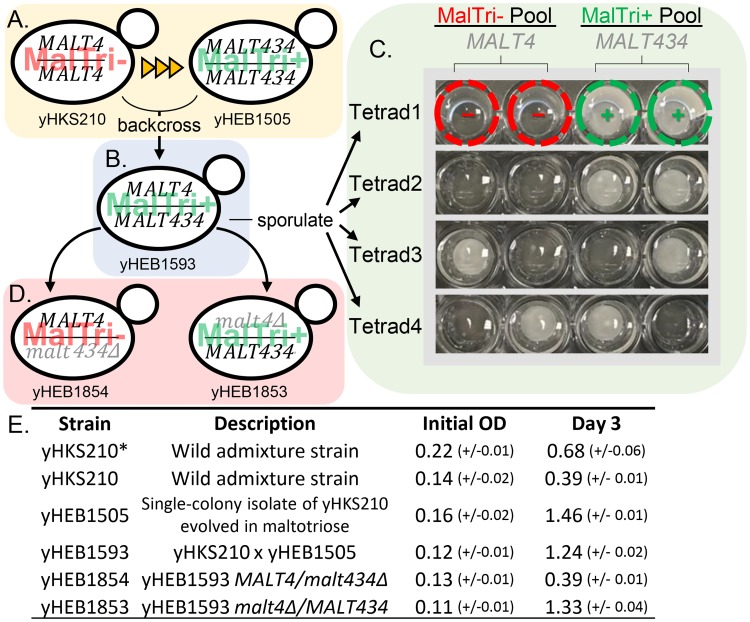
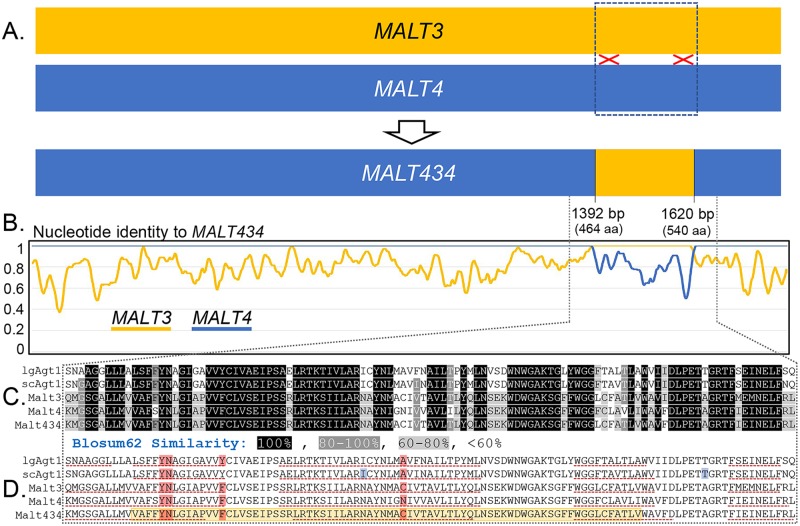
At the molecular level, the evolution of new traits can be broadly divided between changes in gene expression and changes in protein-coding sequence. For proteins, the evolution of novel functions is generally thought to proceed through sequential point mutations or recombination of whole functional units. In Saccharomyces, the uptake of the sugar maltotriose into the cell is the primary limiting factor in its utilization, but maltotriose transporters are relatively rare, except in brewing strains. No known wild strains of Saccharomyces eubayanus, the cold-tolerant parent of hybrid lager-brewing yeasts (Saccharomyces cerevisiae x S. eubayanus), are able to consume maltotriose, which limits their ability to fully ferment malt extract. In one strain of S. eubayanus, we found a gene closely related to a known maltotriose transporter and were able to confer maltotriose consumption by overexpressing this gene or by passaging the strain on maltose. Even so, most wild strains of S. eubayanus lack native maltotriose transporters. To determine how this rare trait could evolve in naive genetic backgrounds, we performed an adaptive evolution experiment for maltotriose consumption, which yielded a single strain of S. eubayanus able to grow on maltotriose. We mapped the causative locus to a gene encoding a novel chimeric transporter that was formed by an ectopic recombination event between two genes encoding transporters that are unable to import maltotriose. In contrast to classic models of the evolution of novel protein functions, the recombination breakpoints occurred within a single functional domain. Thus, the ability of the new protein to carry maltotriose was likely acquired through epistatic interactions between independently evolved substitutions. By acquiring multiple mutations at once, the transporter rapidly gained a novel function, while bypassing potentially deleterious intermediate steps. This study provides an illuminating example of how recombination between paralogs can establish novel interactions among substitutions to create adaptive functions.
在分子水平上,新性状的进化可以大致分为基因表达的变化和蛋白质编码序列的变化。对于蛋白质来说,新功能的进化通常被认为是通过连续的点突变或整个功能单元的重组来进行的。在酿酒酵母中,将糖麦芽三糖摄取到细胞内是其利用的主要限制因素,但除了在酿造菌株中外,麦芽三糖转运蛋白相对较少。没有已知的野生酿酒酵母(杂交拉格啤酒酵母(酿酒酵母 x S. eubayanus)的耐寒亲本)能够消耗麦芽三糖,这限制了它们充分发酵麦芽提取物的能力。在一株酿酒酵母中,我们发现了一个与已知的麦芽三糖转运蛋白密切相关的基因,并能够通过过表达该基因或在麦芽糖上过继该菌株来赋予该基因对麦芽三糖的消耗能力。即便如此,大多数野生酿酒酵母菌株缺乏天然的麦芽三糖转运蛋白。为了确定这种罕见的性状如何在原始遗传背景下进化,我们进行了一个适应于麦芽三糖消耗的进化实验,该实验产生了一株能够在麦芽三糖上生长的酿酒酵母。我们将因果基因座定位到一个基因上,该基因编码一种新型的嵌合转运蛋白,该转运蛋白是由两个不能导入麦芽三糖的转运蛋白基因之间的异位重组事件形成的。与经典的新蛋白质功能进化模型相反,重组断点发生在单个功能域内。因此,新蛋白质携带麦芽三糖的能力可能是通过独立进化的取代之间的上位性相互作用获得的。通过一次获得多个突变,该转运蛋白迅速获得了新的功能,同时绕过了潜在的有害中间步骤。这项研究提供了一个有启发性的例子,说明了旁系同源物之间的重组如何在取代之间建立新的相互作用,从而创造适应性功能。