NYU Neuroscience Institute, New York University Langone Medical Center, New York, NY 10016, USA.
NYU Neuroscience Institute, New York University Langone Medical Center, New York, NY 10016, USA.
Neuron. 2019 May 22;102(4):828-842.e7. doi: 10.1016/j.neuron.2019.03.012. Epub 2019 Apr 1.
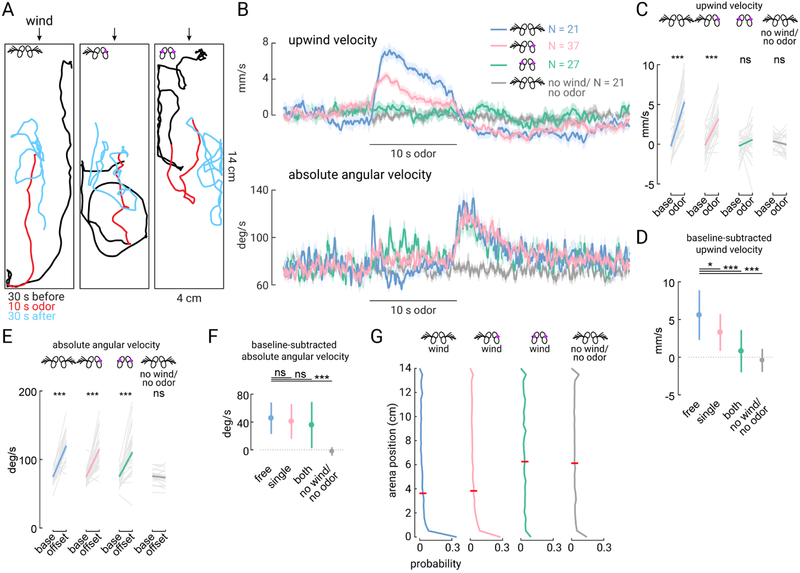
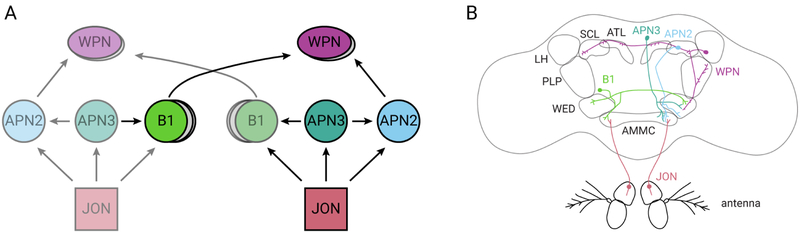
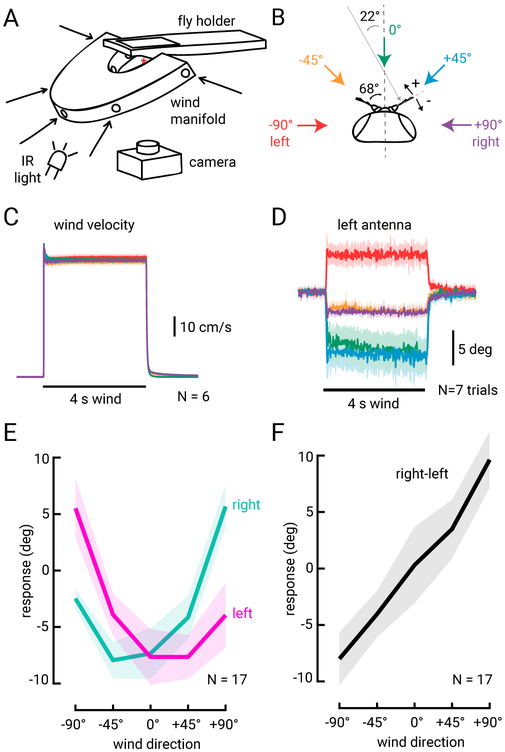
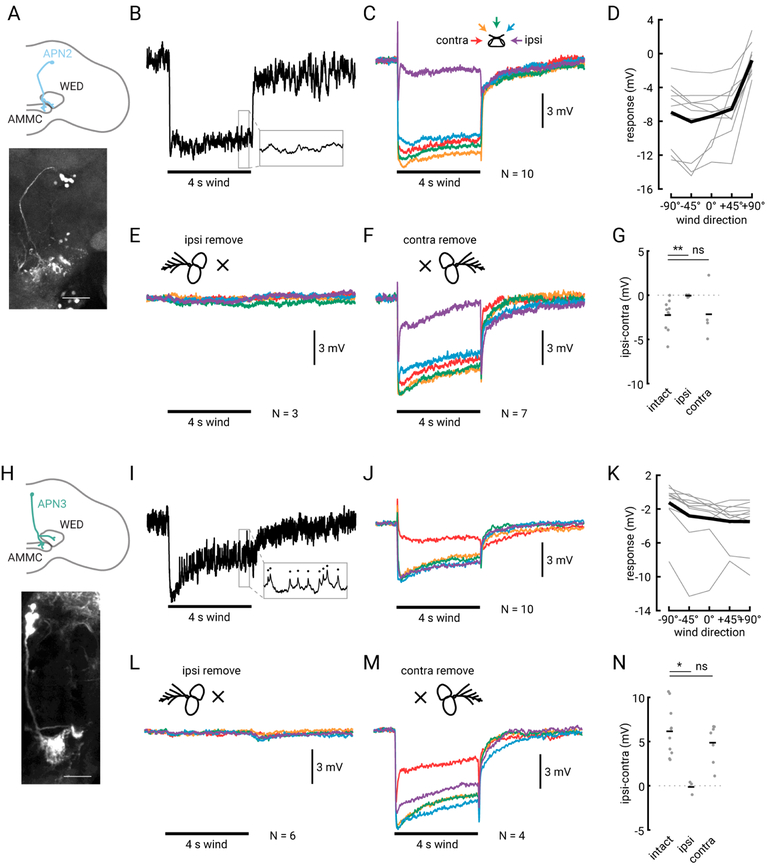
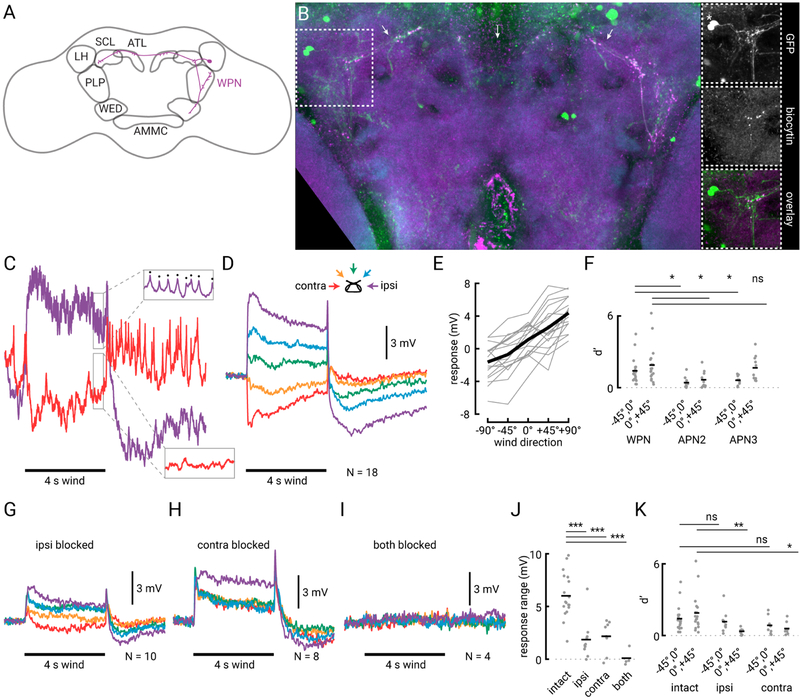
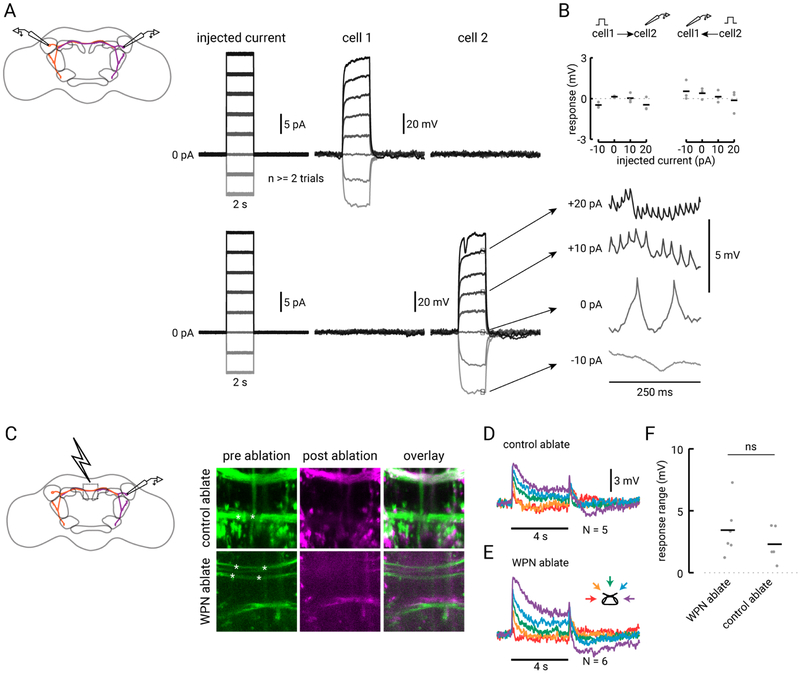
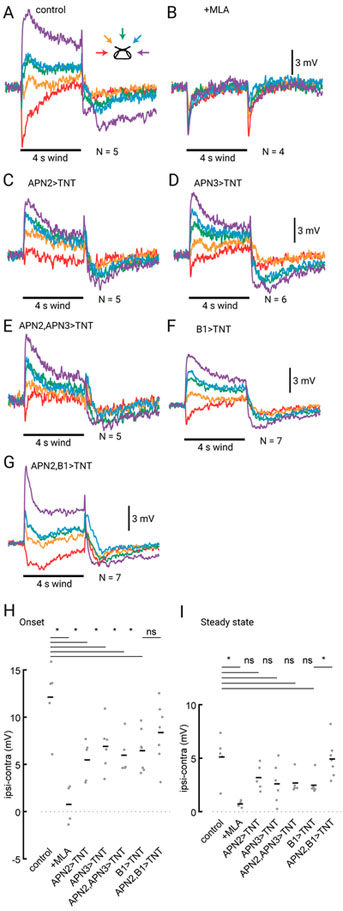
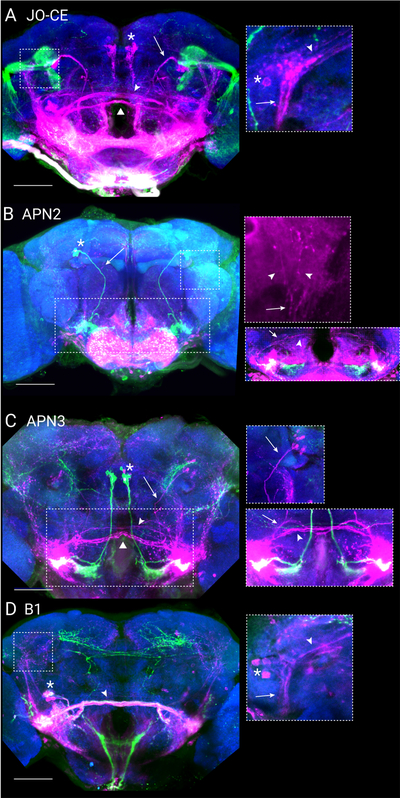
Wind is a major navigational cue for insects, but how wind direction is decoded by central neurons in the insect brain is unknown. Here we find that walking flies combine signals from both antennae to orient to wind during olfactory search behavior. Movements of single antennae are ambiguous with respect to wind direction, but the difference between left and right antennal displacements yields a linear code for wind direction in azimuth. Second-order mechanosensory neurons share the ambiguous responses of a single antenna and receive input primarily from the ipsilateral antenna. Finally, we identify novel "wedge projection neurons" that integrate signals across the two antennae and receive input from at least three classes of second-order neurons to produce a more linear representation of wind direction. This study establishes how a feature of the sensory environment-wind direction-is decoded by neurons that compare information across two sensors.
风是昆虫主要的导航线索,但昆虫大脑中的中枢神经元如何解码风向尚不清楚。在这里,我们发现,在嗅觉搜索行为中,行走的苍蝇会结合来自两只触角的信号来定向风向。单只触角的运动在方向上是模糊的,但左右触角位移的差异产生了方位角中风向的线性编码。第二级机械感觉神经元与单只触角的模糊反应共享,并主要从同侧触角接收输入。最后,我们发现了新的“楔形投射神经元”,它们跨两只触角整合信号,并从至少三类第二级神经元接收输入,从而对风向产生更线性的表示。这项研究确定了感觉环境的一个特征——风向——是如何被神经元解码的,这些神经元比较两个传感器的信息。