HP2, Inserm 1042, Université Grenoble Alpes, Grenoble, France.
Laboratoire sommeil, Hôpital Universitaire de Grenoble, Grenoble, France.
BMJ Open. 2019 Apr 4;9(4):e024253. doi: 10.1136/bmjopen-2018-024253.
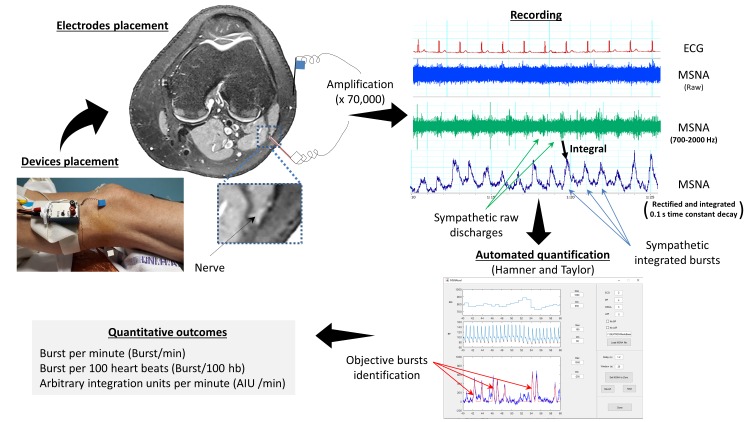
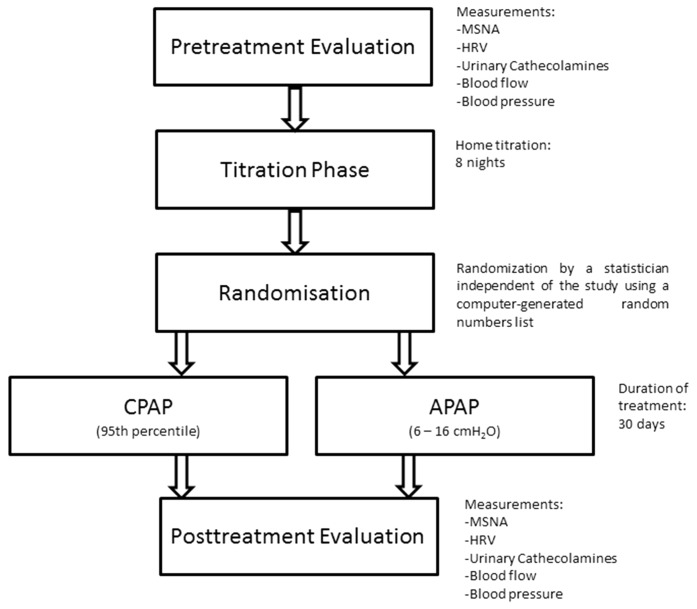
Obstructive sleep apnoea (OSA) is a prevalent disease associated with cardiovascular events. Hypertension is one of the major intermediary mechanisms leading to long-term cardiovascular adverse events. Intermittent hypoxia and hypercapnia associated with nocturnal respiratory events stimulate chemoreflexes, resulting in sympathetic overactivity and blood pressure (BP) elevation. Continuous positive airway pressure (CPAP) is the primary treatment for OSA and induces a small but significant reduction in BP. The use of auto-adjusting positive airway pressure (APAP) has increased in the last years and studies showed different ranges of BP reduction when comparing both modalities. However, the pathophysiological mechanisms implicated are not fully elucidated. Variations in pressure through the night inherent to APAP may induce persistent respiratory efforts and sleep fragmentation that might impair sympathovagal balance during sleep and result in smaller decreases in BP. Therefore, this double-blind randomised controlled trial aims to compare muscle sympathetic nerve activity (MSNA) assessed by microneurography (reference method for measuring sympathetic activity) after 1 month of APAP versus fixed CPAP in treatment-naive OSA patients. This present manuscript describes the design of our study, no results are presented herein. and is registered under the below reference number.
Adult subjects with newly diagnosed OSA (Apnoea-Hypopnoea Index >20/hour) will be randomised for treatment with APAP or fixed CPAP. Measurements of sympathetic activity by MSNA, heart rate variability and catecholamines will be obtained at baseline and after 30 days. The primary composite outcome will be the change in sympathetic tone measured by MSNA in bursts/min and bursts/100 heartbeats. Sample size calculation was performed with bilateral assumption. We will use the Student's t-test to compare changes in sympathetic tone between groups.
The protocol was approved by The French Regional Ethics Committee. The study started in March 2018 with primary completion expected to March 2019. Dissemination plans of the results include presentations at conferences and publication in peer-reviewed journals.
NCT03428516; Pre-results.
阻塞性睡眠呼吸暂停(OSA)是一种常见的疾病,与心血管事件有关。高血压是导致长期心血管不良事件的主要中间机制之一。与夜间呼吸事件相关的间歇性低氧和高碳酸血症刺激化学感受器,导致交感神经活性亢进和血压(BP)升高。持续气道正压通气(CPAP)是 OSA 的主要治疗方法,可使血压(BP)有小幅但显著的降低。近年来,自动调节气道正压通气(APAP)的使用有所增加,并且研究表明,在比较两种方式时,BP 降低的范围不同。然而,其涉及的病理生理机制尚未完全阐明。APAP 夜间压力的变化可能会引起持续的呼吸努力和睡眠片段化,从而在睡眠期间损害交感神经迷走神经平衡,并导致 BP 降低幅度较小。因此,这项双盲随机对照试验旨在比较治疗初发 OSA 患者 1 个月后 APAP 与固定 CPAP 治疗后通过微神经记录法(测量交感活性的参考方法)评估的肌间神经活动(MSNA)。本文介绍了我们研究的设计,目前未呈现研究结果。该研究已在以下参考号下注册。
新诊断为 OSA(呼吸暂停低通气指数>20/小时)的成年患者将被随机分为 APAP 或固定 CPAP 治疗组。在基线和 30 天后,通过 MSNA、心率变异性和儿茶酚胺测量交感活性。主要复合结局是通过 MSNA 测量的每分钟爆发次数和每 100 次心跳爆发次数的交感神经紧张度的变化。使用双侧假设进行了样本量计算。我们将使用学生 t 检验比较两组之间的交感神经紧张度变化。
该方案已获得法国区域伦理委员会的批准。该研究于 2018 年 3 月开始,预计主要完成时间为 2019 年 3 月。研究结果的传播计划包括在会议上的介绍和在同行评议期刊上的发表。
NCT03428516;预结果。