INRA, UR1052, Génétique et Amélioration des Fruits et Légumes, Domaine Saint Maurice, 67 Allée des Chênes CS 60094, 84143, Montfavet Cedex, France.
Syngenta, 12 Chemin de l'Hobit, Saint Sauveur, 31790, France.
Nat Commun. 2019 Apr 4;10(1):1534. doi: 10.1038/s41467-019-09462-w.
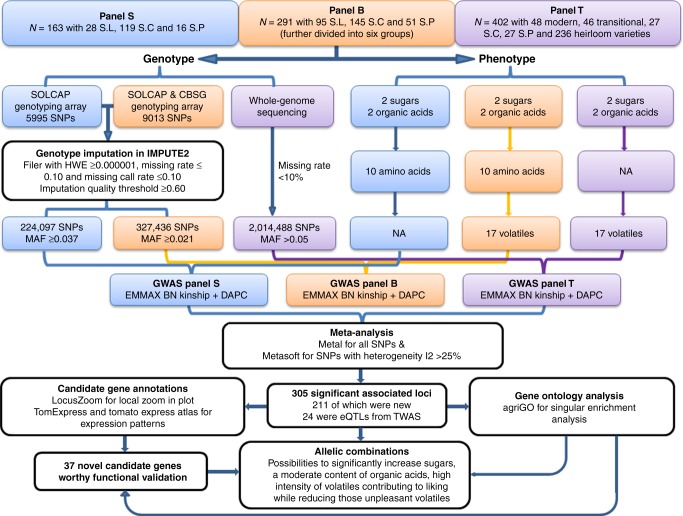
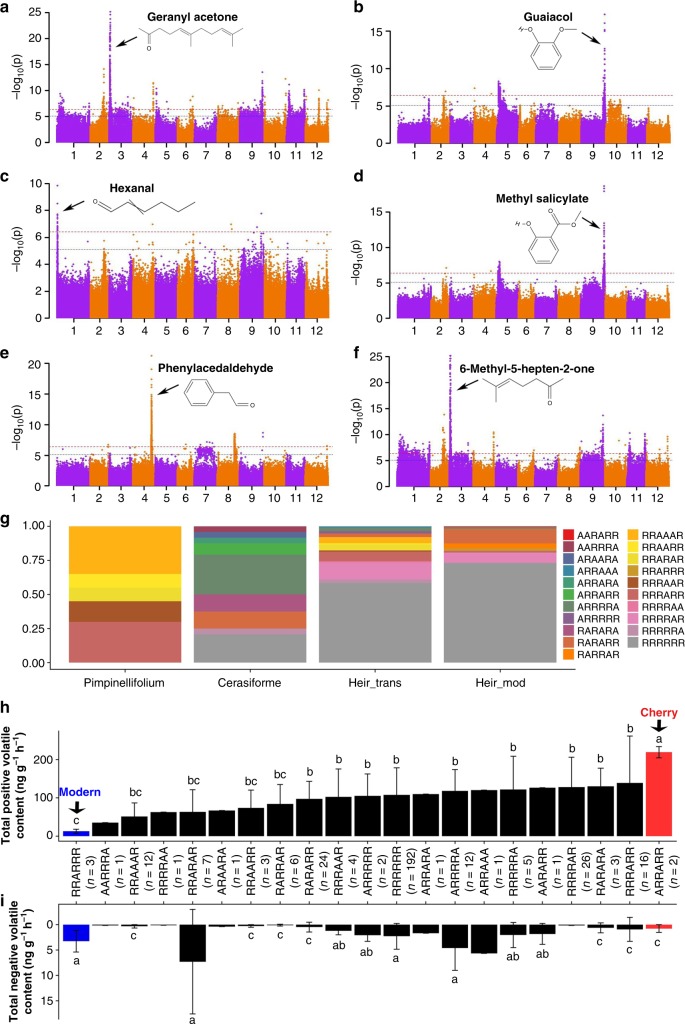
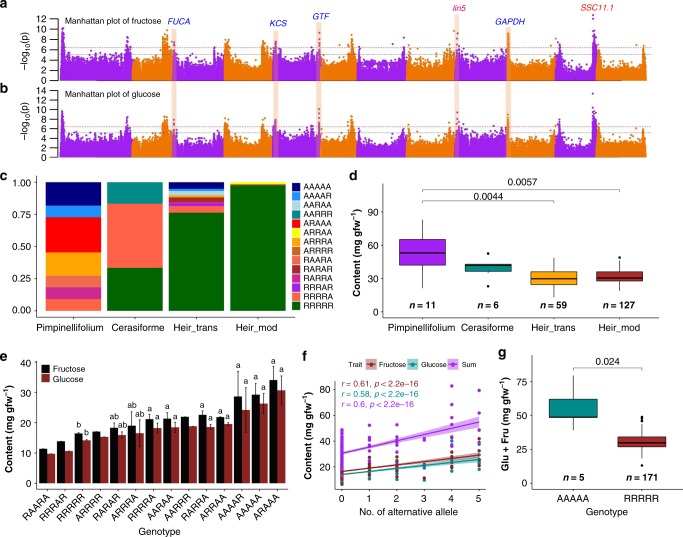
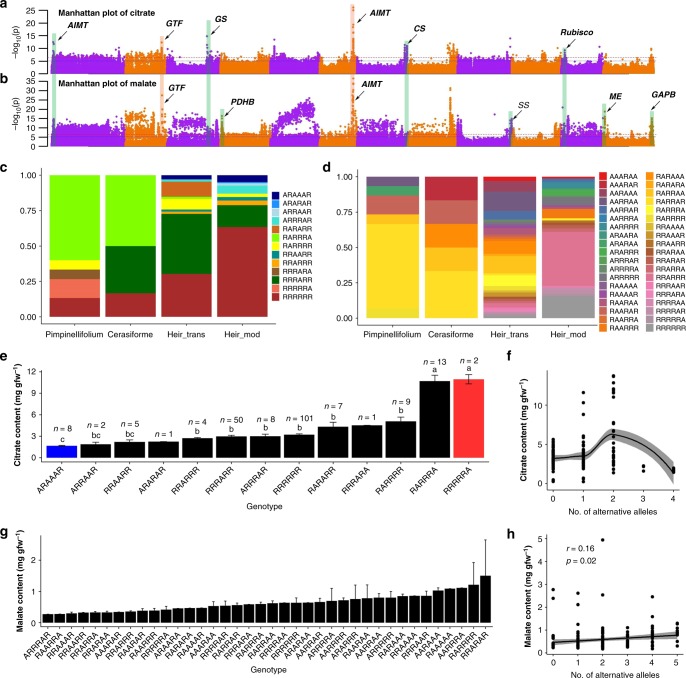
Tomato flavor has changed over the course of long-term domestication and intensive breeding. To understand the genetic control of flavor, we report the meta-analysis of genome-wide association studies (GWAS) using 775 tomato accessions and 2,316,117 SNPs from three GWAS panels. We discover 305 significant associations for the contents of sugars, acids, amino acids, and flavor-related volatiles. We demonstrate that fruit citrate and malate contents have been impacted by selection during domestication and improvement, while sugar content has undergone less stringent selection. We suggest that it may be possible to significantly increase volatiles that positively contribute to consumer preferences while reducing unpleasant volatiles, by selection of the relevant allele combinations. Our results provide genetic insights into the influence of human selection on tomato flavor and demonstrate the benefits obtained from meta-analysis.
番茄的风味在长期的驯化和密集的选育过程中发生了变化。为了了解风味的遗传控制,我们使用三个 GWAS 面板的 775 个番茄品种和 2316117 个 SNPs 进行了全基因组关联研究(GWAS)的荟萃分析。我们发现了 305 个与糖、酸、氨基酸和风味相关挥发物含量有关的显著关联。我们证明,在驯化和改良过程中,果实中的柠檬酸和苹果酸含量受到了选择的影响,而糖含量受到的选择则不太严格。我们认为,通过选择相关的等位基因组合,有可能显著增加对消费者喜好有积极贡献的挥发物,同时减少不愉快的挥发物。我们的研究结果为人类选择对番茄风味的影响提供了遗传见解,并展示了荟萃分析所带来的益处。