Institute of Genomics, University of Tartu, Tartu, Estonia.
Institute of Molecular and Cell Biology, University of Tartu, Tartu, Estonia.
Mol Biol Evol. 2019 Aug 1;36(8):1628-1642. doi: 10.1093/molbev/msz037.
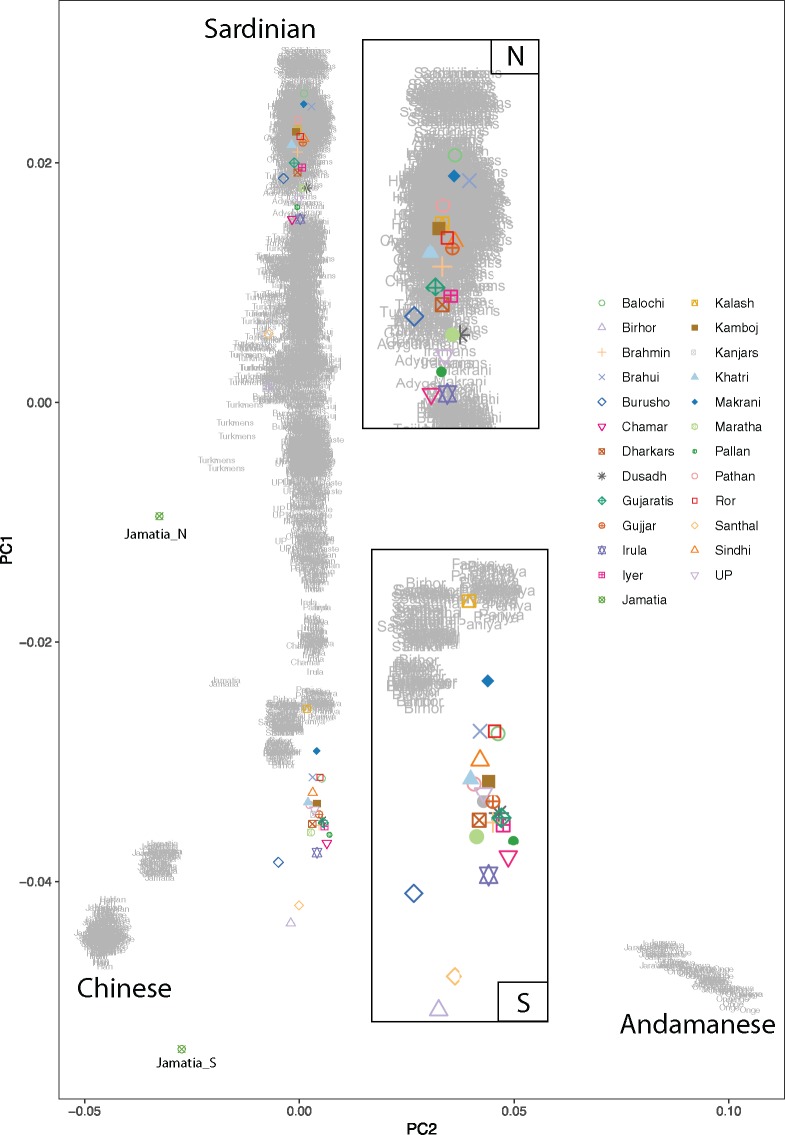
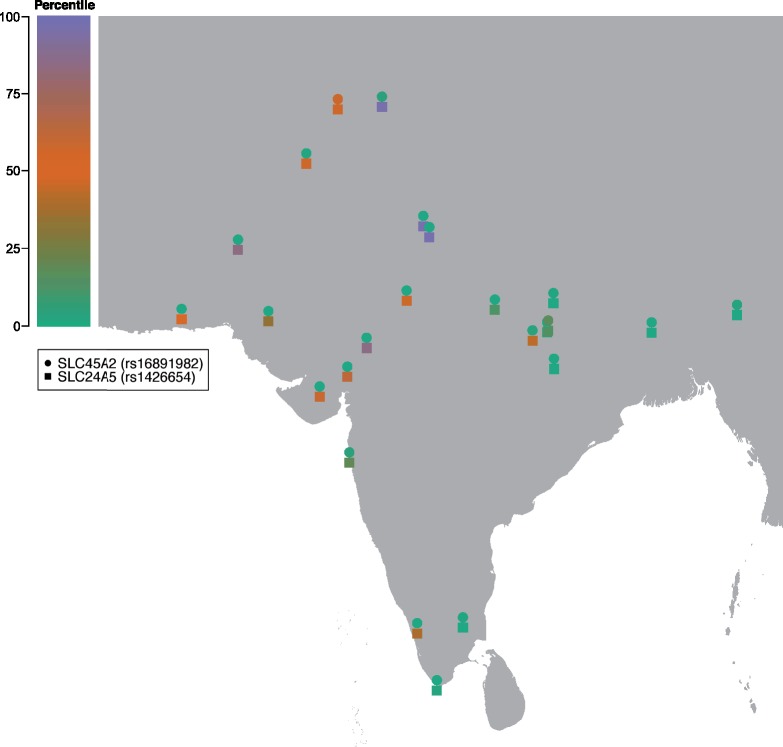
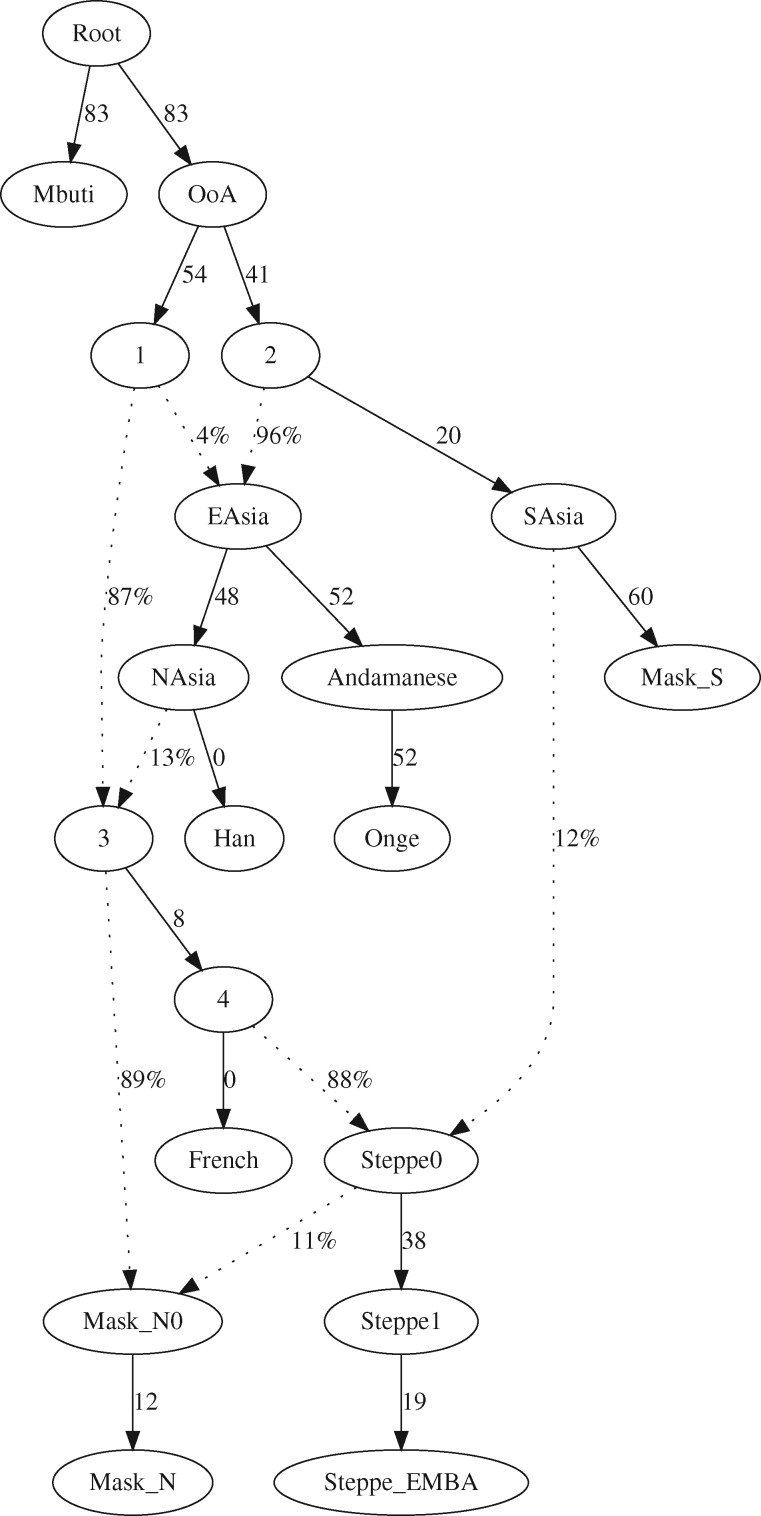
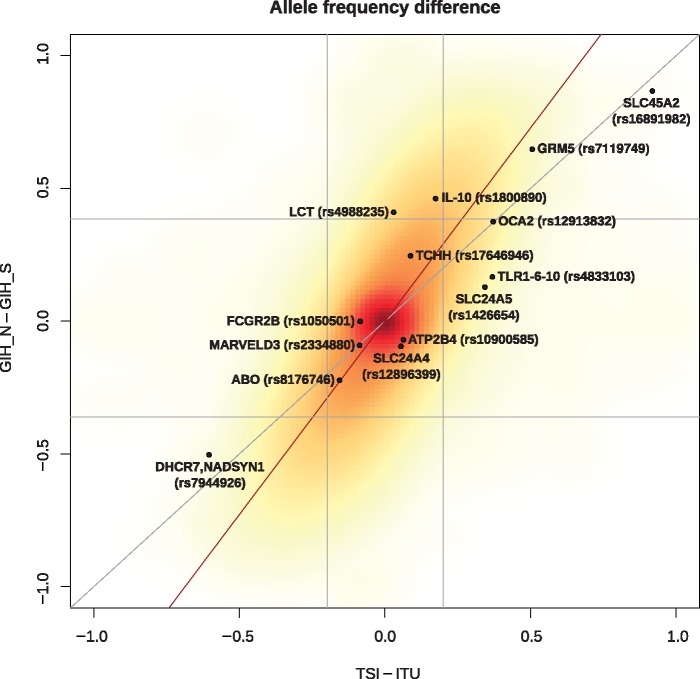
Genetic variation in contemporary South Asian populations follows a northwest to southeast decreasing cline of shared West Eurasian ancestry. A growing body of ancient DNA evidence is being used to build increasingly more realistic models of demographic changes in the last few thousand years. Through high-quality modern genomes, these models can be tested for gene and genome level deviations. Using local ancestry deconvolution and masking, we reconstructed population-specific surrogates of the two main ancestral components for more than 500 samples from 25 South Asian populations and showed our approach to be robust via coalescent simulations. Our f3 and f4 statistics-based estimates reveal that the reconstructed haplotypes are good proxies for the source populations that admixed in the area and point to complex interpopulation relationships within the West Eurasian component, compatible with multiple waves of arrival, as opposed to a simpler one wave scenario. Our approach also provides reliable local haplotypes for future downstream analyses. As one such example, the local ancestry deconvolution in South Asians reveals opposite selective pressures on two pigmentation genes (SLC45A2 and SLC24A5) that are common or fixed in West Eurasians, suggesting post-admixture purifying and positive selection signals, respectively.
当代南亚人群的遗传变异遵循着从西北到东南逐渐减少的共享西欧亚祖先的渐变群。越来越多的古 DNA 证据被用于构建过去几千年人口变化的越来越现实的模型。通过高质量的现代基因组,这些模型可以在基因和基因组水平上进行偏差测试。通过局部祖先去卷积和屏蔽,我们为来自 25 个南亚人群的 500 多个样本重建了两个主要祖先成分的特定于人群的替代物,并通过连锁模拟证明了我们的方法是稳健的。我们基于 f3 和 f4 统计量的估计表明,重建的单倍型很好地代表了在该地区混合的源人群,并指向了西欧亚成分内复杂的种群间关系,与多波到达一致,而不是更简单的一波到达情景。我们的方法还为未来的下游分析提供了可靠的局部单倍型。例如,南亚人的局部祖先去卷积揭示了两个常见或固定在西欧亚人中的色素沉着基因(SLC45A2 和 SLC24A5)上相反的选择压力,分别表明了混合后的净化和阳性选择信号。