Department of Industrial Engineering, University of Trento, via Sommarive 9, 38123, Trento, Italy.
Institute of Materials Science, Vietnam Academy of Science and Technology, 18 Hoang Quoc Viet road, Cau Giay district, Hanoi, Vietnam.
Sci Rep. 2019 Apr 5;9(1):5667. doi: 10.1038/s41598-019-42055-7.
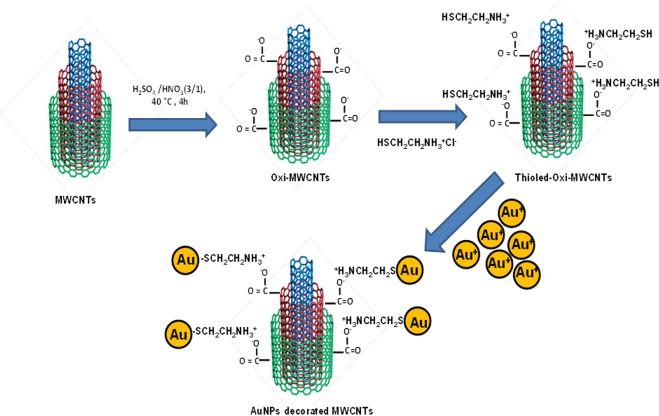
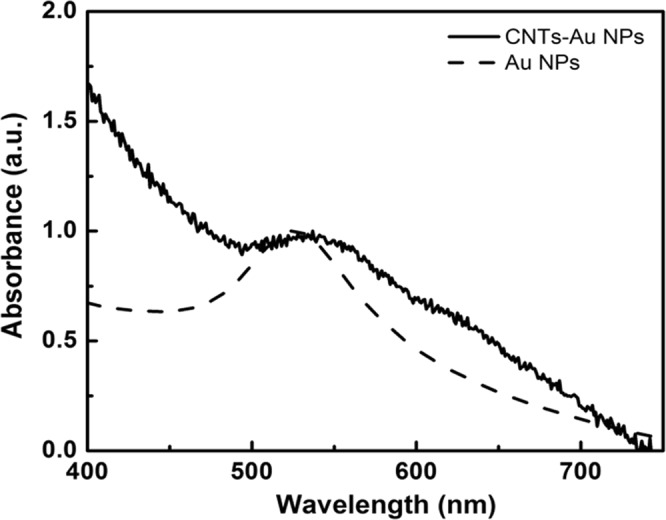
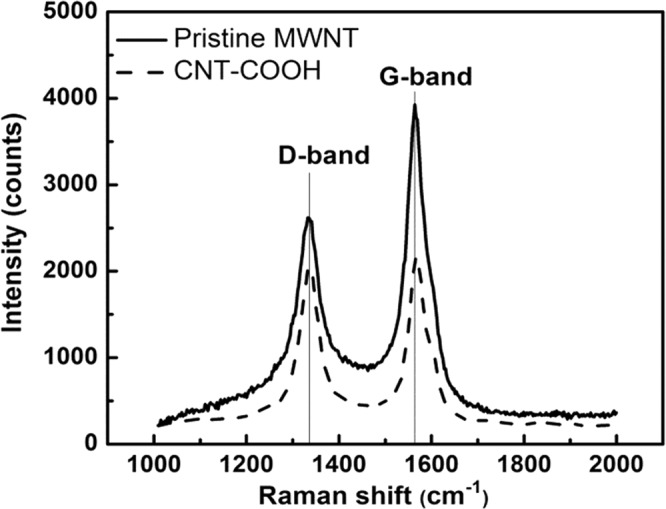
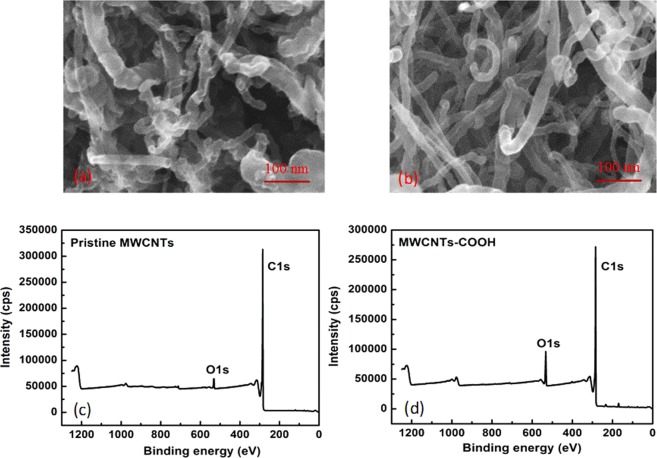
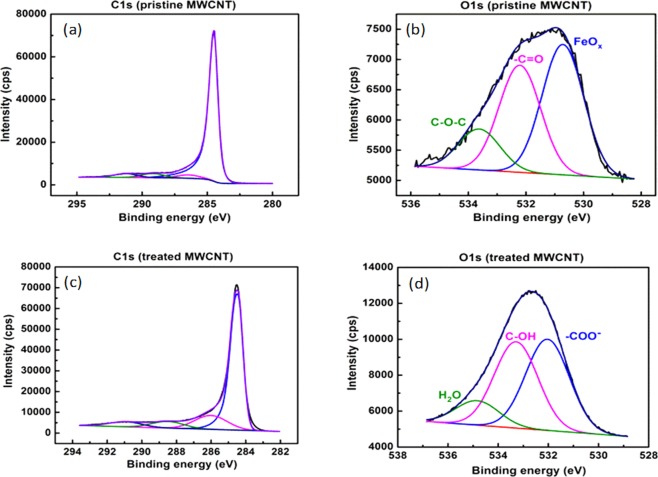
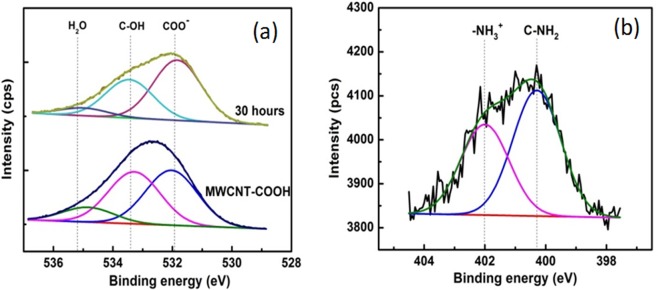
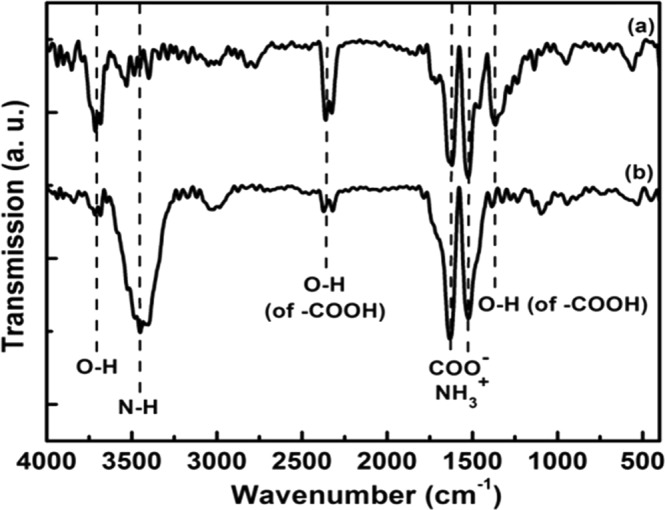
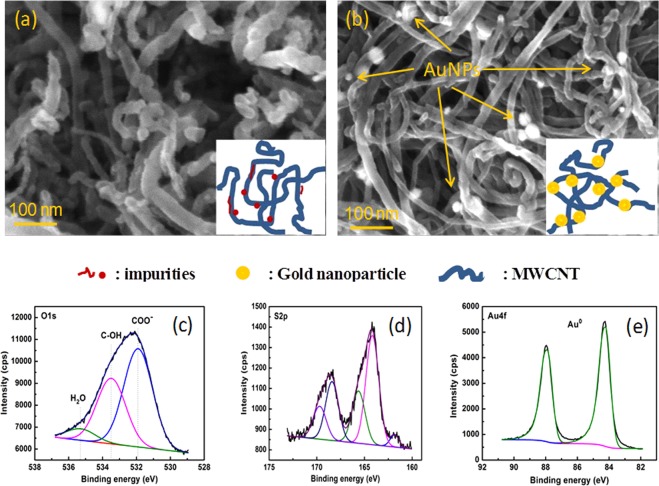
Gold nanoparticles (AuNPs) decorated CNTs are promising materials for photocatalytics and biosensors. However, the synthesis of AuNPs chemically linked to the walls of MWCNTs is challenging and toxic products such as thionylchloride (SOCl) or [1-ethyl-3(dimethyl-amino) propyl] carbodiimide hydrochloride (EDAC) need to be used. This work reports a new approach to prepare gold nanoparticles decorated multiwalled carbon nanotubes (MWCNTs) by using cysteaminium chloride via the formation of a Zwitterionic acide-base bond. The grafting process consists of 3 mains steps: oxidation, thiolation and decoration of AuNPs on the surface of MWCNTs. The completion of each step has been verified out by both spectroscopic (Raman, UV-Vis, FT-IR) and Scanning Electron Miscroscopy (SEM). The chemical bonding states of synthesized products have been proven by X-ray photoelectron spectroscopy (XPS).
金纳米粒子(AuNPs)修饰的碳纳米管是光催化和生物传感器的有前途的材料。然而,将 AuNPs 化学连接到 MWCNTs 壁上的合成具有挑战性,并且需要使用诸如亚硫酰氯(SOCl)或[1-乙基-3(二甲基氨基)丙基]碳二亚胺盐酸盐(EDAC)等有毒产物。这项工作报道了一种通过使用半胱氨酸盐酸盐通过形成两性离子酸碱键来制备金纳米粒子修饰的多壁碳纳米管(MWCNTs)的新方法。接枝过程包括 3 个主要步骤:MWCNTs 表面的氧化,巯基化和 AuNPs 的修饰。通过拉曼,紫外-可见,傅里叶变换红外(FT-IR)和扫描电子显微镜(SEM)都验证了每个步骤的完成。通过 X 射线光电子能谱(XPS)证明了合成产物的化学结合状态。