Malinowski Szymon, Herbert P Anthony F, Rogalski Jerzy, Jaroszyńska-Wolińska Justyna
Civil Engineering and Architecture Faculty, Lublin University of Technology, 20-618 Lublin, Poland.
Plasma Ireland, T23 N592 Cork, Ireland.
Polymers (Basel). 2018 May 16;10(5):532. doi: 10.3390/polym10050532.
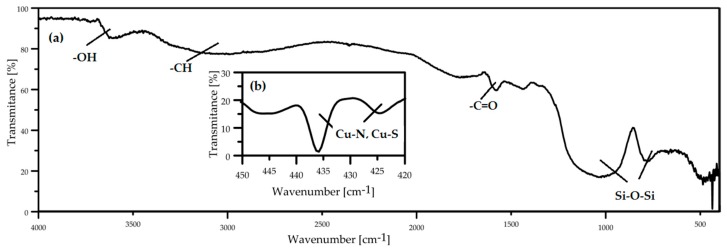
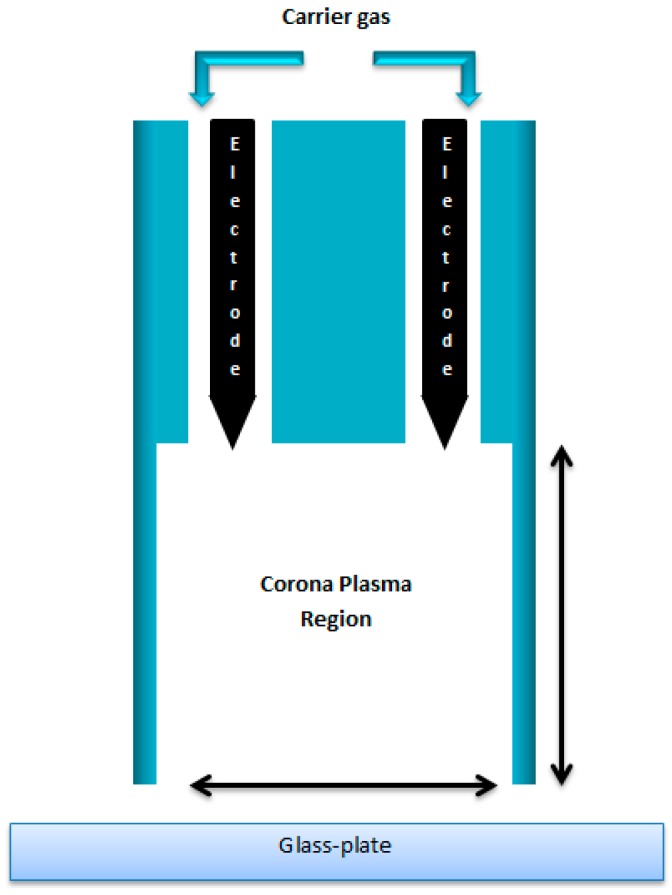
Conventional pin-to-point continuous wave Helium Corona plasma discharge was successfully used in Soft Plasma Polymerization (SPP) processes to immobilize into water and onto glass polymerized bioactive laccase coatings. The coatings were tested for bioactivity and durability under water wash. The coatings showed up to 59% bioactivity relative to the native laccase in water deposition, undoubtedly due to damage to and fragmentation of monomer molecules by the active, energetic species in the plasma. However, plasma deposited laccase coatings on glass delivered 7 times the laccase activity of the same non-plasma deposition process in the coating after water wash. This latter result would seem to be due to the ability of the plasma to both crosslink monomer and more strongly bond it to the glass surface by a combination of surface cleaning and the creation of active, high energy sites in both glass and laccase molecules. FTIR analysis indicated that the core copper containing moieties at the centre of the molecule largely remain undamaged by this plasma type so that bonding and cross-linking reactions are likely to mainly involve species around the outer perimeter of the molecule. The chemical composition and structure of laccase biocoatings deposited by Corona SPP are described. The combination of the coating performance parameter values for retained activity and durability under water wash indicates that a relatively simple Corona plasma process for deposition of biocoatings, which directly polymerizes the monomer with no added matrix or encapsulant material, may offer enhanced solutions for biocatalyst, sensor or lab-on-a-chip applications.
传统的点对点连续波氦电晕等离子体放电已成功应用于软等离子体聚合(SPP)过程,以将聚合的生物活性漆酶涂层固定在水中和玻璃上。对这些涂层进行了水洗条件下的生物活性和耐久性测试。在水沉积过程中,相对于天然漆酶,涂层显示出高达59%的生物活性,这无疑是由于等离子体中的活性高能物种对单体分子造成的破坏和碎片化。然而,在水洗后,玻璃上等离子体沉积的漆酶涂层的漆酶活性是相同非等离子体沉积过程涂层的7倍。后一结果似乎是由于等离子体既能使单体交联,又能通过表面清洁以及在玻璃和漆酶分子中产生活性高能位点的组合,使其更牢固地结合到玻璃表面。傅里叶变换红外光谱(FTIR)分析表明,分子中心含铜的核心部分在这种等离子体类型作用下基本未受损,因此键合和交联反应可能主要涉及分子外围的物种。描述了通过电晕SPP沉积的漆酶生物涂层的化学成分和结构。水洗条件下保留活性和耐久性的涂层性能参数值的组合表明,一种相对简单的用于沉积生物涂层的电晕等离子体工艺,该工艺直接使单体聚合,无需添加基质或密封材料,可能为生物催化剂、传感器或芯片实验室应用提供更好的解决方案。