Brain Barriers Group, School of Biomedical Sciences and Pharmacy, The University of Newcastle, Medical Sciences Building, University Drive, Callaghan, NSW, 2308, Australia.
FloTBI Inc., Cleveland, OH, USA.
Fluids Barriers CNS. 2019 Apr 10;16(1):9. doi: 10.1186/s12987-019-0129-6.
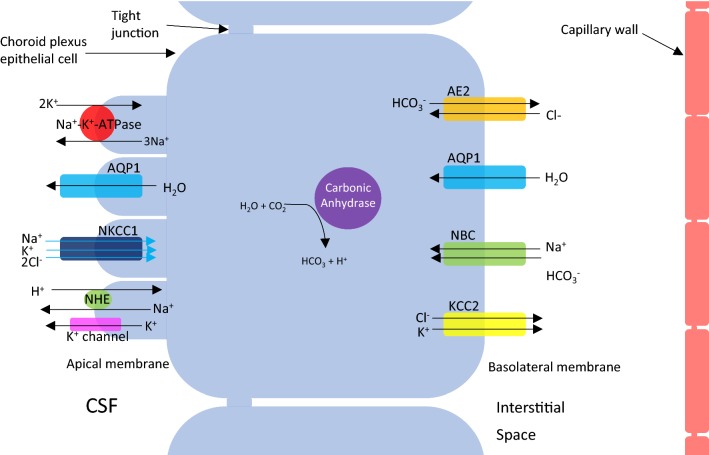
The fine balance between the secretion, composition, volume and turnover of cerebrospinal fluid (CSF) is strictly regulated. However, during certain neurological diseases, this balance can be disrupted. A significant disruption to the normal CSF circulation can be life threatening, leading to increased intracranial pressure (ICP), and is implicated in hydrocephalus, idiopathic intracranial hypertension, brain trauma, brain tumours and stroke. Yet, the exact cellular, molecular and physiological mechanisms that contribute to altered hydrodynamic pathways in these diseases are poorly defined or hotly debated. The traditional views and concepts of CSF secretion, flow and drainage have been challenged, also due to recent findings suggesting more complex mechanisms of brain fluid dynamics than previously proposed. This review evaluates and summarises current hypotheses of CSF dynamics and presents evidence for the role of impaired CSF dynamics in elevated ICP, alongside discussion of the proteins that are potentially involved in altered CSF physiology during neurological disease. Undoubtedly CSF secretion, absorption and drainage are important aspects of brain fluid homeostasis in maintaining a stable ICP. Traditionally, pharmacological interventions or CSF drainage have been used to reduce ICP elevation due to over production of CSF. However, these drugs are used only as a temporary solution due to their undesirable side effects. Emerging evidence suggests that pharmacological targeting of aquaporins, transient receptor potential vanilloid type 4 (TRPV4), and the Na-K-2Cl cotransporter (NKCC1) merit further investigation as potential targets in neurological diseases involving impaired brain fluid dynamics and elevated ICP.
脑脊髓液(CSF)的分泌、组成、体积和周转率之间的精细平衡受到严格调节。然而,在某些神经疾病中,这种平衡可能会被打破。CSF 正常循环的显著中断可能危及生命,导致颅内压(ICP)升高,并与脑积水、特发性颅内高压、脑创伤、脑肿瘤和中风有关。然而,导致这些疾病中水力动力学途径改变的确切细胞、分子和生理机制仍未得到明确界定或存在争议。CSF 分泌、流动和引流的传统观点和概念受到了挑战,这也是由于最近的发现表明脑液动力学的机制比以前提出的更为复杂。本文评估和总结了 CSF 动力学的当前假说,并提出了 CSF 动力学受损在 ICP 升高中的作用的证据,同时讨论了在神经疾病期间潜在参与 CSF 生理学改变的蛋白质。毫无疑问,CSF 分泌、吸收和引流是维持稳定 ICP 的脑液液稳态的重要方面。传统上,由于 CSF 过度产生,药物干预或 CSF 引流被用于降低 ICP 升高。然而,由于其不良副作用,这些药物仅作为临时解决方案使用。新出现的证据表明,水通道蛋白、瞬时受体电位香草醛型 4(TRPV4)和 Na-K-2Cl 协同转运蛋白(NKCC1)的药物靶向作为涉及 CSF 动力学受损和 ICP 升高的神经疾病的潜在靶点值得进一步研究。