Aguado Ainhoa M, Olivares Andy L, Yagüe Carlos, Silva Etelvino, Nuñez-García Marta, Fernandez-Quilez Álvaro, Mill Jordi, Genua Ibai, Arzamendi Dabit, De Potter Tom, Freixa Xavier, Camara Oscar
PhySense, Department of Information and Communication Technologies, Universitat Pompeu Fabra, Barcelona, Spain.
Division of Interventional Cardiology, Hospital de la Santa Creu i Sant Pau, Universitat Autònoma de Barcelona, Barcelona, Spain.
Front Physiol. 2019 Mar 22;10:237. doi: 10.3389/fphys.2019.00237. eCollection 2019.
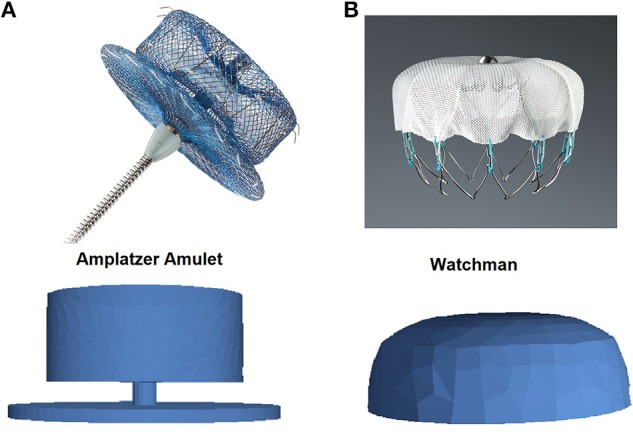
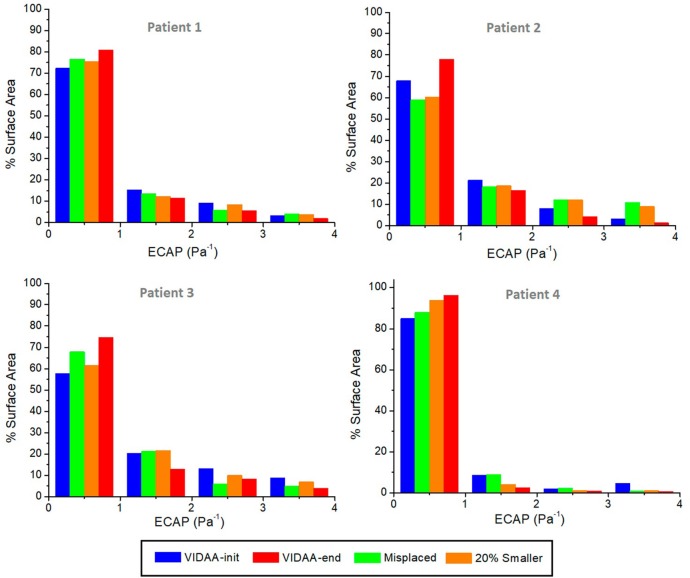
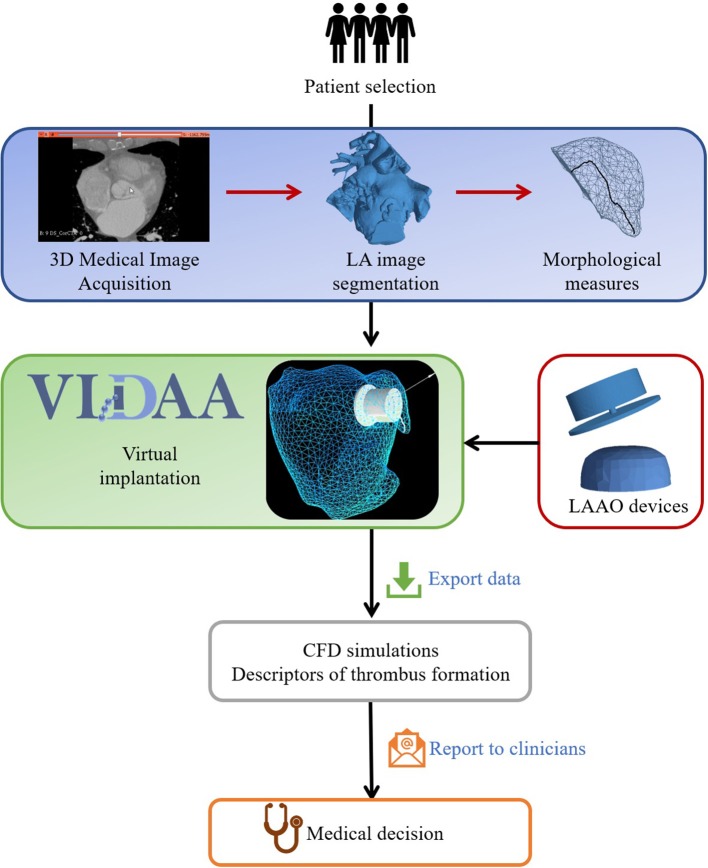
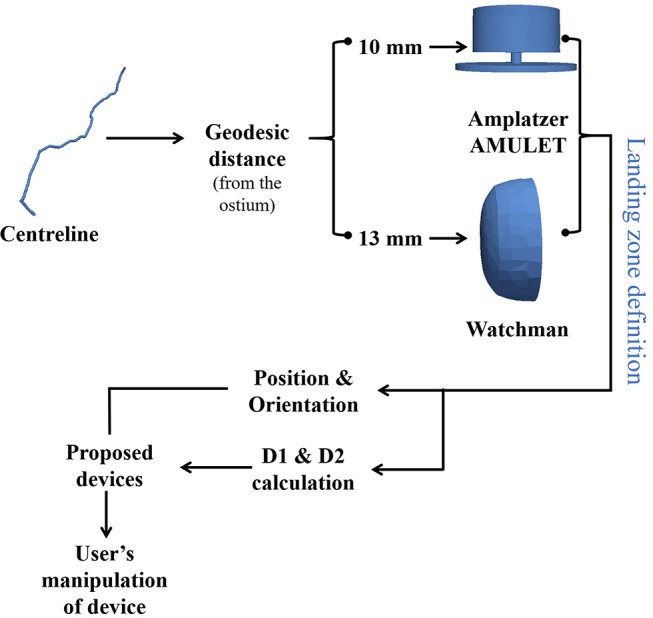
According to clinical studies, around one third of patients with atrial fibrillation (AF) will suffer a stroke during their lifetime. Between 70 and 90% of these strokes are caused by thrombus formed in the left atrial appendage. In patients with contraindications to oral anticoagulants, a left atrial appendage occluder (LAAO) is often implanted to prevent blood flow entering in the LAA. A limited range of LAAO devices is available, with different designs and sizes. Together with the heterogeneity of LAA morphology, these factors make LAAO success dependent on clinician's experience. A sub-optimal LAAO implantation can generate thrombi outside the device, eventually leading to stroke if not treated. The aim of this study was to develop clinician-friendly tools based on biophysical models to optimize LAAO device therapies. A web-based 3D interactive virtual implantation platform, so-called VIDAA, was created to select the most appropriate LAAO configurations (type of device, size, landing zone) for a given patient-specific LAA morphology. An initial LAAO configuration is proposed in VIDAA, automatically computed from LAA shape features (centreline, diameters). The most promising LAAO settings and LAA geometries were exported from VIDAA to build volumetric meshes and run Computational Fluid Dynamics (CFD) simulations to assess blood flow patterns after implantation. Risk of thrombus formation was estimated from the simulated hemodynamics with an index combining information from blood flow velocity and complexity. The combination of the VIDAA platform with indices allowed to identify the LAAO configurations associated to a lower risk of thrombus formation; device positioning was key to the creation of regions with turbulent flows after implantation. Our results demonstrate the potential for optimizing LAAO therapy settings during pre-implant planning based on modeling tools and contribute to reduce the risk of thrombus formation after treatment.
根据临床研究,约三分之一的房颤(AF)患者一生中会发生中风。其中70%至90%的中风是由左心耳形成的血栓引起的。对于口服抗凝剂有禁忌的患者,通常会植入左心耳封堵器(LAAO)以防止血液流入左心耳。LAAO设备的种类有限,设计和尺寸各不相同。再加上左心耳形态的异质性,这些因素使得LAAO手术的成功依赖于临床医生的经验。次优的LAAO植入可能会在设备外部产生血栓,如果不进行治疗,最终会导致中风。本研究的目的是基于生物物理模型开发对临床医生友好的工具,以优化LAAO设备治疗。创建了一个基于网络的3D交互式虚拟植入平台,即所谓的VIDAA,为特定患者的左心耳形态选择最合适的LAAO配置(设备类型、尺寸、着陆区)。VIDAA中会根据左心耳形状特征(中心线、直径)自动计算并提出初始LAAO配置。从VIDAA导出最有前景的LAAO设置和左心耳几何形状,以构建体积网格并运行计算流体动力学(CFD)模拟,以评估植入后的血流模式。通过结合血流速度和复杂性信息的指数,根据模拟的血流动力学估计血栓形成风险。VIDAA平台与这些指数的结合能够识别与较低血栓形成风险相关的LAAO配置;植入后设备的定位对于产生湍流区域至关重要。我们的结果证明了在植入前规划期间基于建模工具优化LAAO治疗设置的潜力,并有助于降低治疗后血栓形成的风险。