Kovitvadhi Attawit, Chundang Pipatpong, Thongprajukaew Karun, Tirawattanawanich Chanin, Srikachar Sunyanee, Chotimanothum Banthari
Department of Physiology, Faculty of Veterinary Medicine, Kasetsart University, Bangkok 10900, Thailand.
Department of Applied Science, Faculty of Science, Prince of Songkla University, Songkhla 90110, Thailand.
Animals (Basel). 2019 Apr 9;9(4):155. doi: 10.3390/ani9040155.
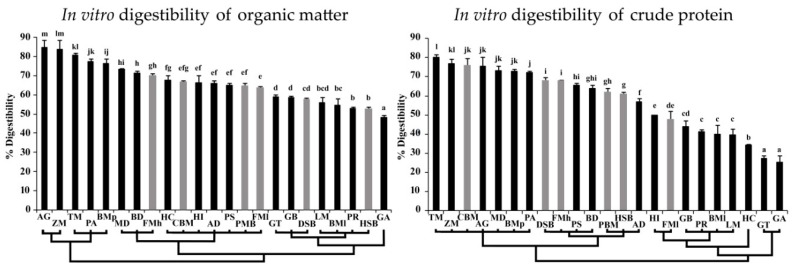
There has been a dramatic increase in duck meat consumption. As a result, ducks are an interesting alternative type of livestock. Animal-based proteins such as fishmeal and animal by-products are valuable nutrients with high digestibility, but they are associated with cost fluctuations, pathogen contamination, and environmental impacts. Therefore, plant-based proteins are used, but they have the disadvantages of inappropriate amino acid profiles, anti-nutritional factors, and mycotoxin contamination. Insect meal contains favorable nutrients and low production costs and is environmentally friendly; however, there is a large number of insect species. Therefore, the purpose of this investigation is to screen insects for their potential use as a protein source in the duck diet. Insect meal with a high proportion of low-digestible components was shown to have low digestibility. Yellow mealworm larvae, giant mealworm larvae, lesser wax moth larvae, house fly larvae, mulberry silkworm pupae, and American cockroach nymph have the potential to be alternative protein sources for ducks. Insect meal has been widely studied and is used in animal nutrition to replace common protein sources that have several disadvantages and to promote sustainability in animal production. Two-step in vitro digestibility using crude enzyme extracts from digestive tracts of meat-type ducks (Cherry Valley) was performed on general protein sources and insect meals to compare the in vitro digestibility of organic matter (OMd) and crude protein (CPd). Variation in chemical components between different types of insect meal was found. A positive correlation was found between OMd and the ether extract composition in insect meal, whereas a negative correlation was shown between crude fiber and acid detergent fiber. Contrasting relationships were found between CPd and crude fiber and acid detergent fiber in insect meal. In conclusion, the yellow mealworm larvae (), giant mealworm larvae (), lesser wax moth larvae (), house fly larvae (), mulberry silkworm pupae (), and American cockroach nymph () are potential protein sources for ducks based on OMd and CPd digestibility after screening with an in vitro digestibility technique.
鸭肉消费量急剧增加。因此,鸭子成为一种有趣的替代家畜类型。鱼粉和动物副产品等动物性蛋白质是消化率高的宝贵营养素,但它们与成本波动、病原体污染和环境影响有关。因此,人们使用植物性蛋白质,但它们存在氨基酸谱不合适、抗营养因子和霉菌毒素污染等缺点。昆虫粉含有良好的营养成分、生产成本低且环保;然而,昆虫种类繁多。因此,本研究的目的是筛选昆虫作为鸭日粮蛋白质来源的潜力。结果表明,低消化成分比例高的昆虫粉消化率低。黄粉虫幼虫、大麦虫幼虫、小蜡螟幼虫、家蝇幼虫、桑蚕蛹和美洲蟑螂若虫有潜力成为鸭的替代蛋白质来源。昆虫粉已得到广泛研究,并用于动物营养中,以替代具有多种缺点的常见蛋白质来源,并促进动物生产的可持续性。使用肉鸭(樱桃谷)消化道粗酶提取物进行两步体外消化率试验,以比较一般蛋白质来源和昆虫粉的体外有机物消化率(OMd)和粗蛋白消化率(CPd)。发现不同类型昆虫粉的化学成分存在差异。昆虫粉中OMd与醚提取物成分呈正相关,而粗纤维与酸性洗涤纤维呈负相关。昆虫粉中CPd与粗纤维和酸性洗涤纤维之间存在相反的关系。总之,通过体外消化率技术筛选后,基于OMd和CPd消化率,黄粉虫幼虫()、大麦虫幼虫()、小蜡螟幼虫()、家蝇幼虫()、桑蚕蛹()和美洲蟑螂若虫()是鸭的潜在蛋白质来源。