Immunology Programme, Department of Microbiology and Immunology, Life Science Institute, Yoon Loo Lin School of Medicine, National University of Singapore, Singapore, Singapore.
Department of Biochemistry, Life Science Institute, SLING-Singapore Lipidomics Incubator, Yoon Loo Lin School of Medicine, National University of Singapore, Singapore, Singapore.
Front Immunol. 2019 Mar 27;10:575. doi: 10.3389/fimmu.2019.00575. eCollection 2019.
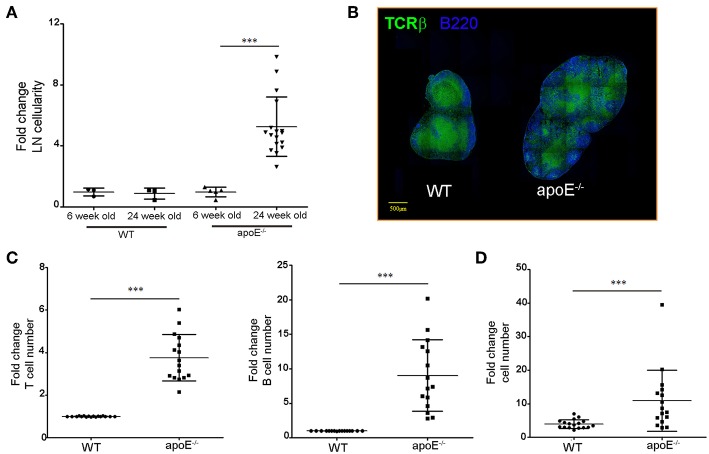
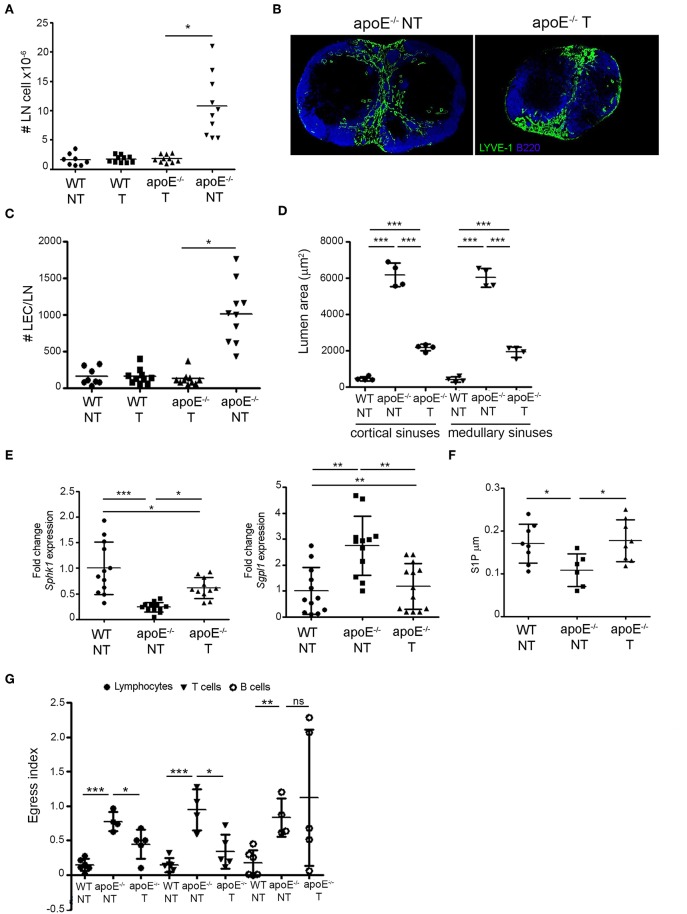
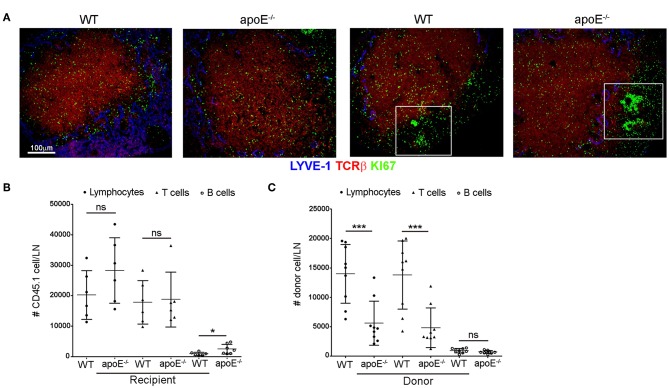
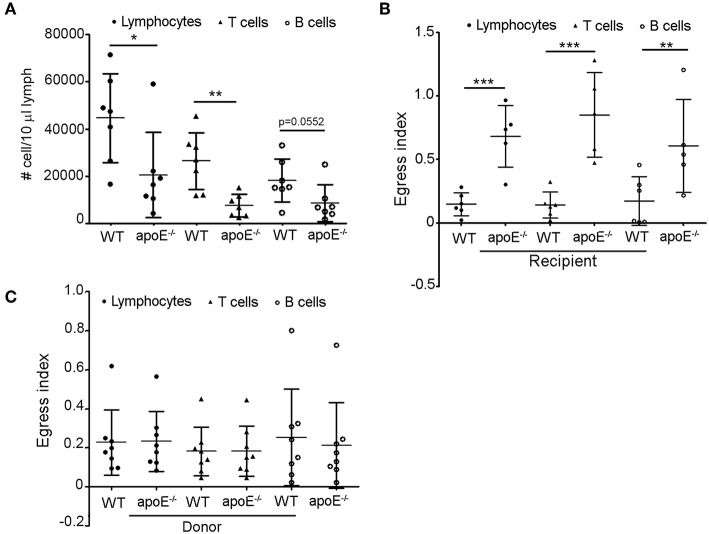
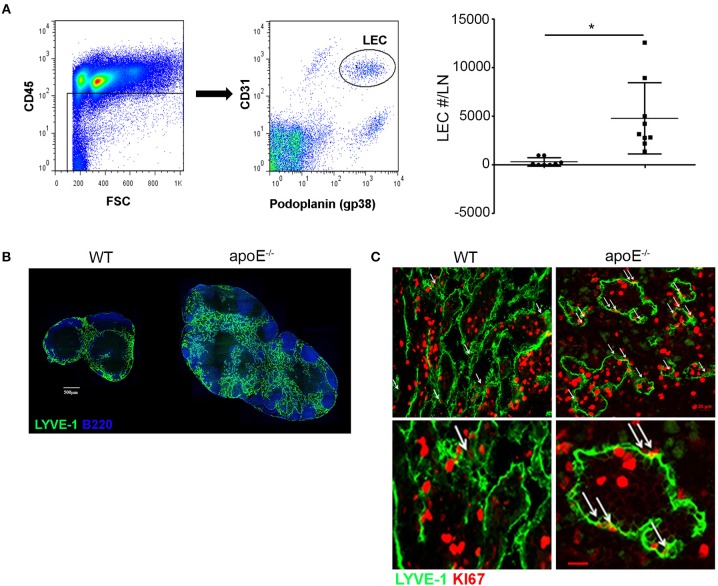
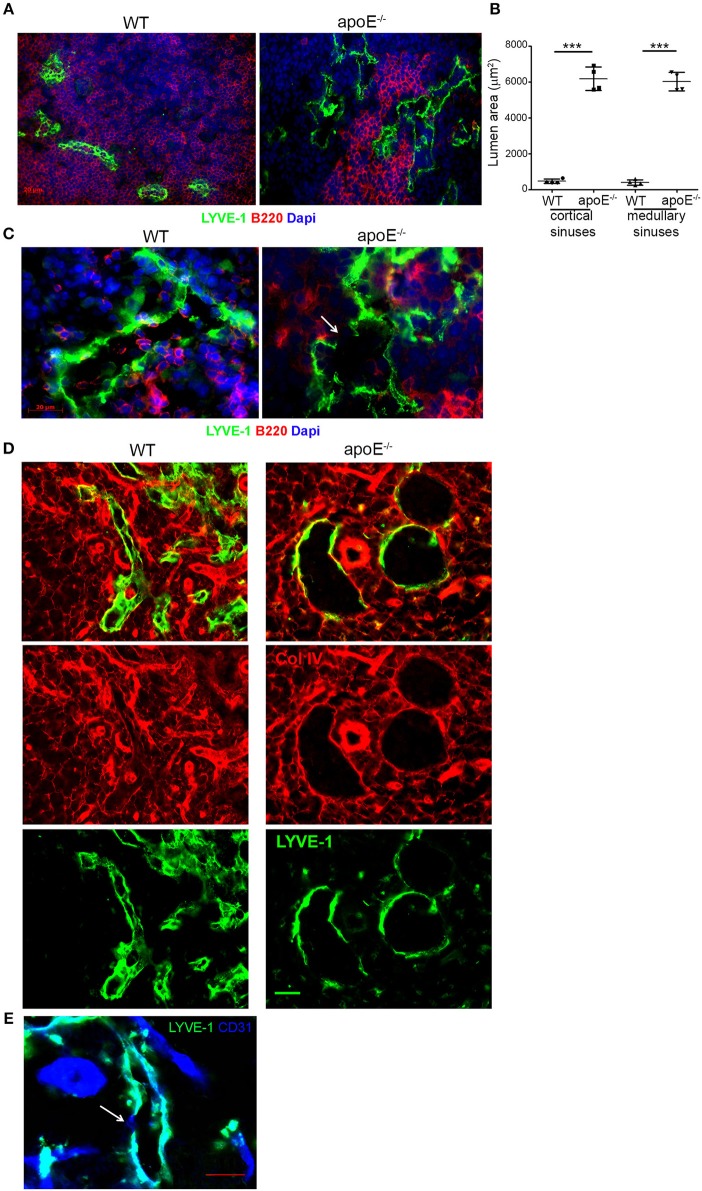
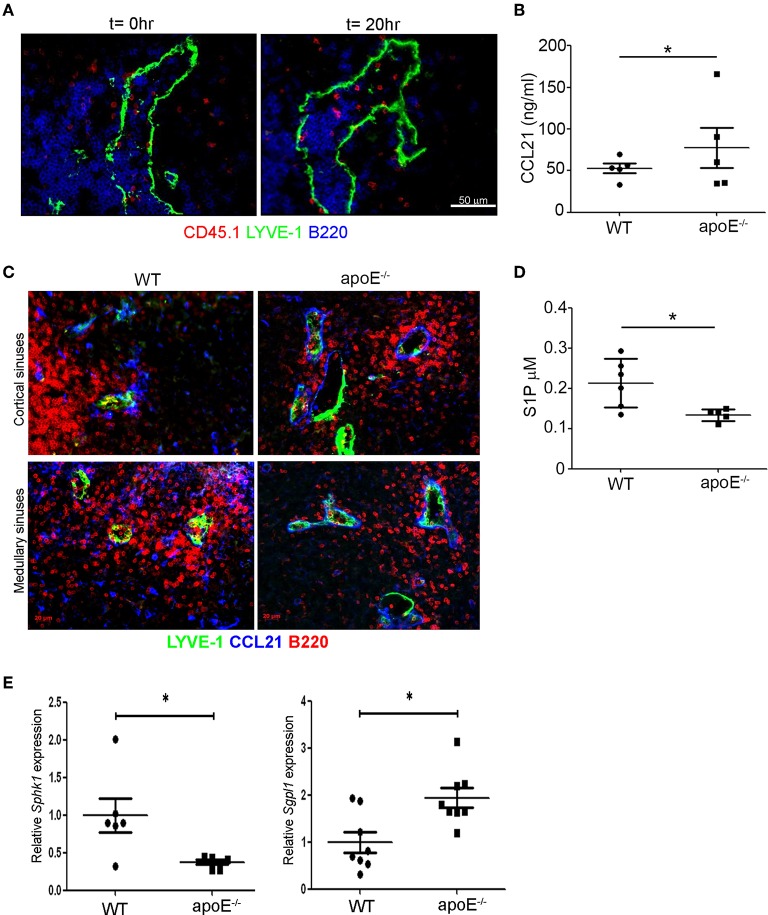
Dyslipidemia is a central component of atherosclerosis and metabolic syndrome linked to chronic inflammation and immune dysfunction. Previously, we showed that hypercholesterolemic apolipoprotein E knock out (apoE) mice exhibit systemic effects including skin inflammation and hypertrophic lymph nodes (LNs). However, the mechanisms accounting for LN hypertrophy in these mice remain unknown. Here, we show that hypercholesterolemia led to the accumulation of lymphocytes in LNs. We excluded that the increased number of lymphocytes in expanded LNs resulted from increased lymphocyte proliferation or entry into those LNs. Instead, we demonstrated that the egress of lymphocytes from the enlarged LN of apoE mice was markedly decreased. Impairment in efferent lymphatic emigration of lymphocytes from LNs resulted from an aberrant expansion of cortical and medullary sinuses that became hyperplastic. Moreover, CCL21 was more abundant on these enlarged sinuses whereas lymph levels of sphingosine 1 phosphate (S1P) were decreased in apoE mice. Normal LN size, lymphatic density and S1P levels were restored by reversing hypercholesterolemia. Thus, systemic changes in cholesterol can sequester lymphocytes in tissue draining LNs through the extensive remodeling of lymphatic sinuses and alteration of the balance between retention/egress signals leading to LN hypertrophy which subsequently may contribute to poor immunity. This study further illustrates the role of lymphatic vessels in immunity through the regulation of immune cell trafficking.
血脂异常是动脉粥样硬化和代谢综合征的核心组成部分,与慢性炎症和免疫功能障碍有关。以前,我们表明,高胆固醇血症的载脂蛋白 E 敲除(apoE)小鼠表现出全身性效应,包括皮肤炎症和肥大的淋巴结(LNs)。然而,这些小鼠中导致淋巴结肥大的机制尚不清楚。在这里,我们表明高胆固醇血症导致淋巴结中淋巴细胞的积累。我们排除了扩张的 LN 中淋巴细胞数量增加是由于淋巴细胞增殖或进入这些 LN 所致。相反,我们证明了 apoE 小鼠增大的 LN 中淋巴细胞的流出明显减少。从 LNs 中流出的淋巴细胞的流出受损是由于皮质和髓质窦的异常扩张而导致的增生。此外,apoE 小鼠中这些增大的窦中 CCL21 更为丰富,而 S1P 的淋巴水平降低。通过逆转高胆固醇血症,可恢复正常的 LN 大小、淋巴管密度和 S1P 水平。因此,胆固醇的全身变化可通过淋巴管窦的广泛重塑和滞留/流出信号之间平衡的改变,将淋巴细胞困在引流 LN 的组织中,导致淋巴结肥大,进而可能导致免疫功能下降。这项研究通过调节免疫细胞的迁移,进一步说明了淋巴管在免疫中的作用。