Zardad Az-Zamakhshariy, Choonara Yahya Essop, Du Toit Lisa Claire, Kumar Pradeep, Mabrouk Mostafa, Kondiah Pierre Pavan Demarco, Pillay Viness
Wits Advanced Drug Delivery Platform Research Unit, Department of Pharmacy and Pharmacology, School of Therapeutic Sciences, Faculty of Health Sciences, University of the Witwatersrand, Johannesburg, 7 York Road, Parktown 2193, South Africa.
Refractories, Ceramics and Building Materials, National Research Centre, 33 El-Bohouth St. (former El-Tahrir St.), Dokki, Giza P.O. 12622, Egypt.
Polymers (Basel). 2016 Oct 18;8(10):359. doi: 10.3390/polym8100359.
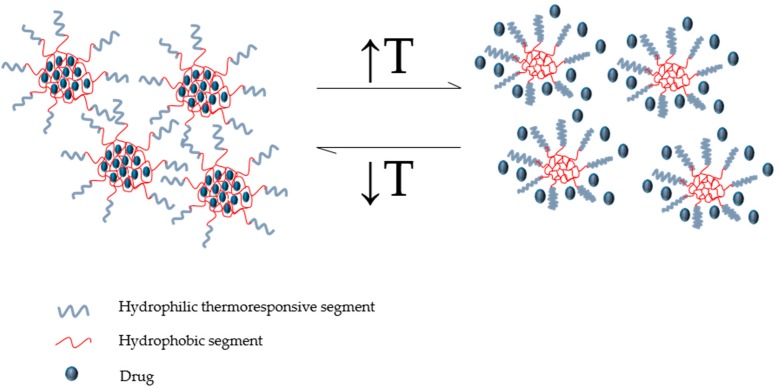
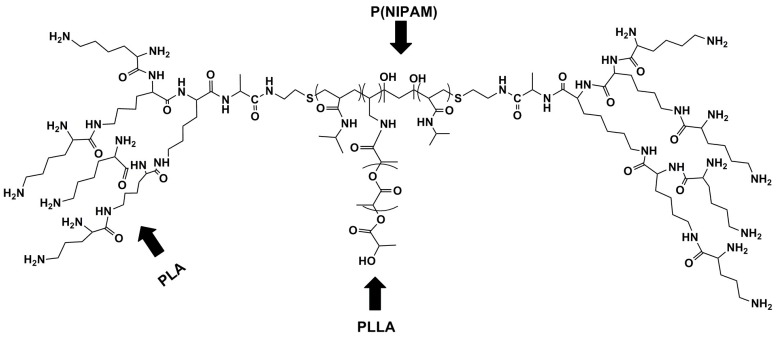
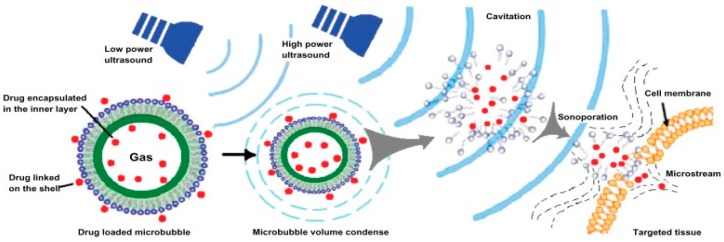
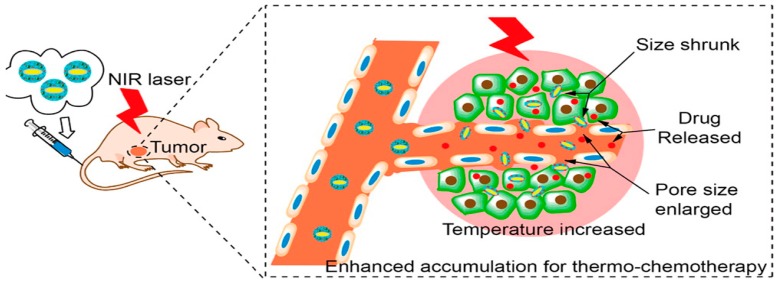
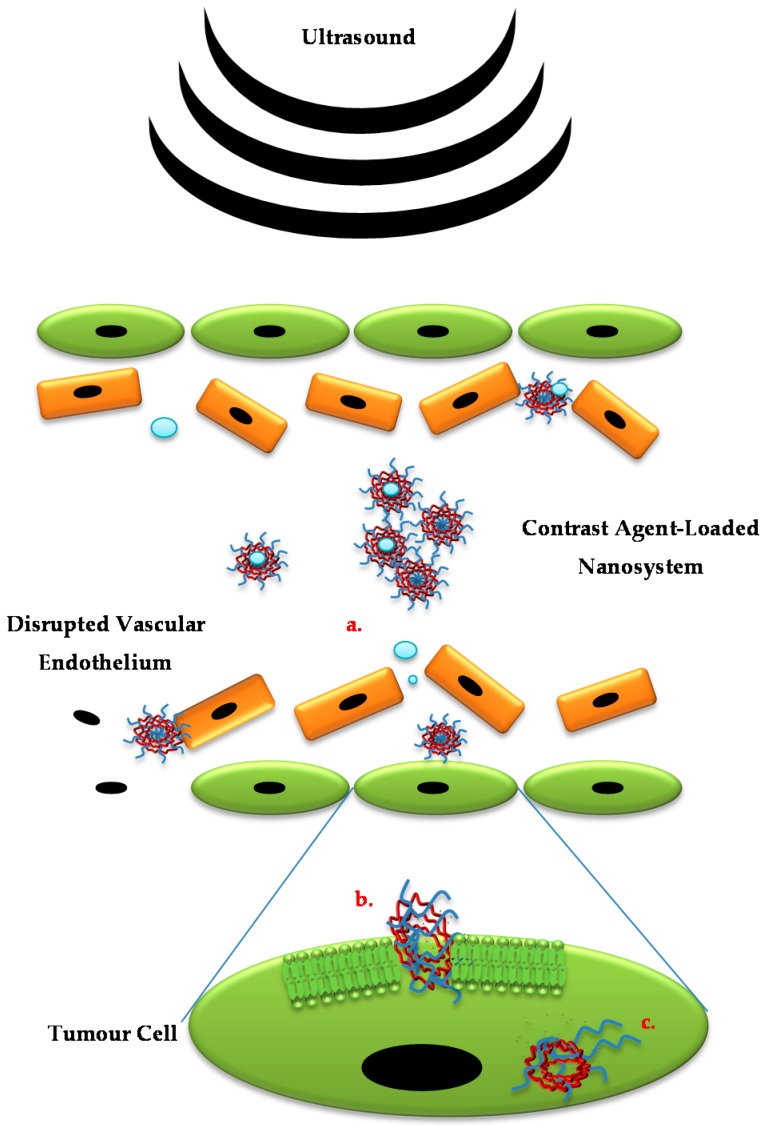
There has been an exponential increase in research into the development of thermal- and ultrasound-activated delivery systems for cancer therapy. The majority of researchers employ polymer technology that responds to environmental stimuli some of which are physiologically induced such as temperature, pH, as well as electrical impulses, which are considered as internal stimuli. External stimuli include ultrasound, light, laser, and magnetic induction. Biodegradable polymers may possess thermoresponsive and/or ultrasound-responsive properties that can complement cancer therapy through sonoporation and hyperthermia by means of High Intensity Focused Ultrasound (HIFU). Thermoresponsive and other stimuli-responsive polymers employed in drug delivery systems can be activated via ultrasound stimulation. Polyethylene oxide/polypropylene oxide co-block or triblock polymers and polymethacrylates are thermal- and pH-responsive polymer groups, respectively but both have proven to have successful activity and contribution in chemotherapy when exposed to ultrasound stimulation. This review focused on collating thermal- and ultrasound-responsive delivery systems, and combined thermo-ultrasonic responsive systems; and elaborating on the advantages, as well as shortcomings, of these systems in cancer chemotherapy. The mechanisms of these systems are explicated through their physical alteration when exposed to the corresponding stimuli. The properties they possess and the modifications that enhance the mechanism of chemotherapeutic drug delivery from systems are discussed, and the concept of pseudo-ultrasound responsive systems is introduced.
用于癌症治疗的热激活和超声激活递送系统的研究呈指数级增长。大多数研究人员采用对环境刺激有反应的聚合物技术,其中一些刺激是生理诱导的,如温度、pH值以及电脉冲,这些被视为内部刺激。外部刺激包括超声、光、激光和磁感应。可生物降解的聚合物可能具有热响应和/或超声响应特性,可通过高强度聚焦超声(HIFU)的声穿孔和热疗来辅助癌症治疗。药物递送系统中使用的热响应和其他刺激响应聚合物可通过超声刺激来激活。聚环氧乙烷/聚环氧丙烷共嵌段或三嵌段聚合物以及聚甲基丙烯酸酯分别是热响应和pH响应聚合物基团,但在受到超声刺激时,两者在化疗中均已证明具有成功的活性和作用。本综述重点整理了热响应和超声响应递送系统以及热超声联合响应系统;并阐述了这些系统在癌症化疗中的优点和缺点。这些系统的作用机制通过其在受到相应刺激时的物理变化来解释。讨论了它们所具有的特性以及增强系统化疗药物递送机制的修饰,并介绍了伪超声响应系统的概念。