Cancer Epidemiology Unit, Nuffield Department of Population Health, University of Oxford, Richard Doll Building, Old Road Campus, Oxford OX3 7LF, UK.
National Institute for Health Innovation, The University of Auckland, Auckland 1072, New Zealand.
Nutrients. 2019 Apr 11;11(4):824. doi: 10.3390/nu11040824.
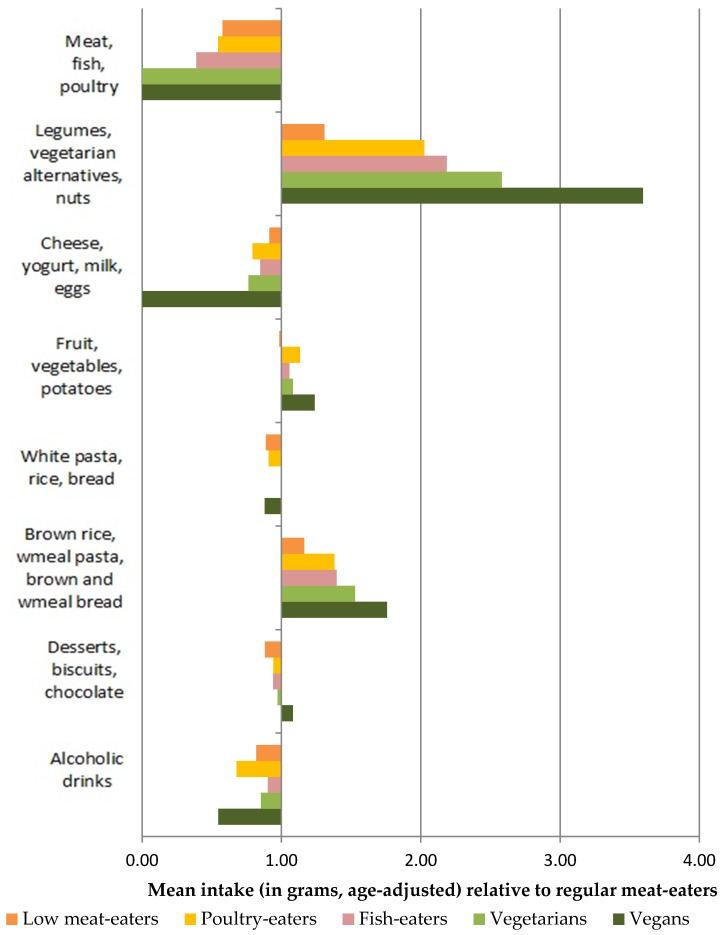
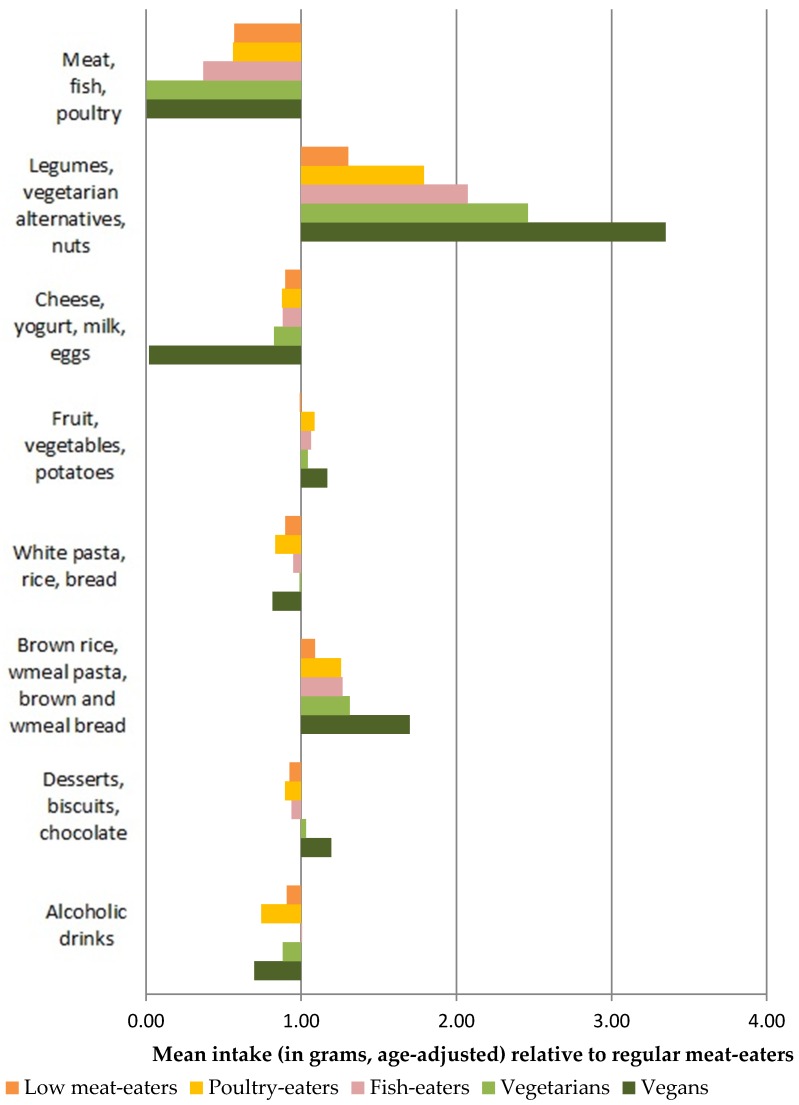
Differences in health outcomes between meat-eaters and non-meat-eaters might relate to differences in dietary intakes between these diet groups. We assessed intakes of major protein-source foods and other food groups in six groups of meat-eaters and non-meat-eaters participating in the European Prospective Investigation into Cancer and Nutrition (EPIC)-Oxford study. The data were from 30,239 participants who answered questions regarding their consumption of meat, fish, dairy or eggs and completed a food frequency questionnaire (FFQ) in 2010. Participants were categorized as regular meat-eaters, low meat-eaters, poultry-eaters, fish-eaters, vegetarians and vegans. FFQ foods were categorized into 45 food groups and analysis of variance was used to test for differences between age-adjusted mean intakes of each food group by diet group. Regular meat-eaters, vegetarians and vegans, respectively, consumed about a third, quarter and a fifth of their total energy intake from high protein-source foods. Compared with regular meat-eaters, low and non-meat-eaters consumed higher amounts of high-protein meat alternatives (soy, legumes, pulses, nuts, seeds) and other plant-based foods (whole grains, vegetables, fruits) and lower amounts of refined grains, fried foods, alcohol and sugar-sweetened beverages. These findings provide insight into potential nutritional explanations for differences in health outcomes between diet groups.
肉食者和非肉食者之间的健康结果差异可能与这些饮食群体之间的饮食摄入量差异有关。我们评估了参与欧洲癌症前瞻性调查和营养研究(EPIC-Oxford 研究)的六组肉食者和非肉食者的主要蛋白质来源食物和其他食物组的摄入量。这些数据来自于 30239 名参与者,他们回答了关于他们的肉类、鱼类、奶制品或蛋类消费的问题,并在 2010 年完成了一份食物频率问卷(FFQ)。参与者被分为常规肉食者、低肉食者、禽肉消费者、鱼类消费者、素食者和严格素食者。FFQ 食物被分为 45 个食物组,方差分析用于检验每个食物组的年龄调整后平均摄入量在不同饮食组之间的差异。常规肉食者、素食者和严格素食者分别从高蛋白源食物中摄入约三分之一、四分之一和五分之一的总能量。与常规肉食者相比,低肉食者和非肉食者摄入更多的高蛋白肉类替代品(大豆、豆类、豆类、坚果、种子)和其他植物性食物(全谷物、蔬菜、水果),而精制谷物、油炸食品、酒精和含糖饮料的摄入量则较低。这些发现为饮食组之间健康结果差异的潜在营养解释提供了一些线索。