Nguyen Duong Nguyen, Yoon Hyeonseok
Department of Polymer Engineering, Graduate School, Chonnam National University, 77 Yongbong-ro, Buk-gu, Gwangju 61186, Korea.
School of Polymer Science and Engineering, Chonnam National University, 77 Yongbong-ro, Buk-gu, Gwangju 61186, Korea.
Polymers (Basel). 2016 Mar 31;8(4):118. doi: 10.3390/polym8040118.
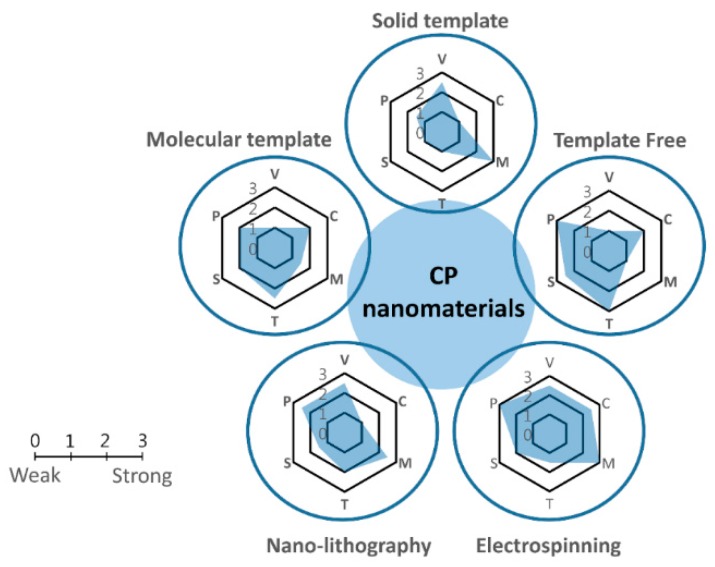
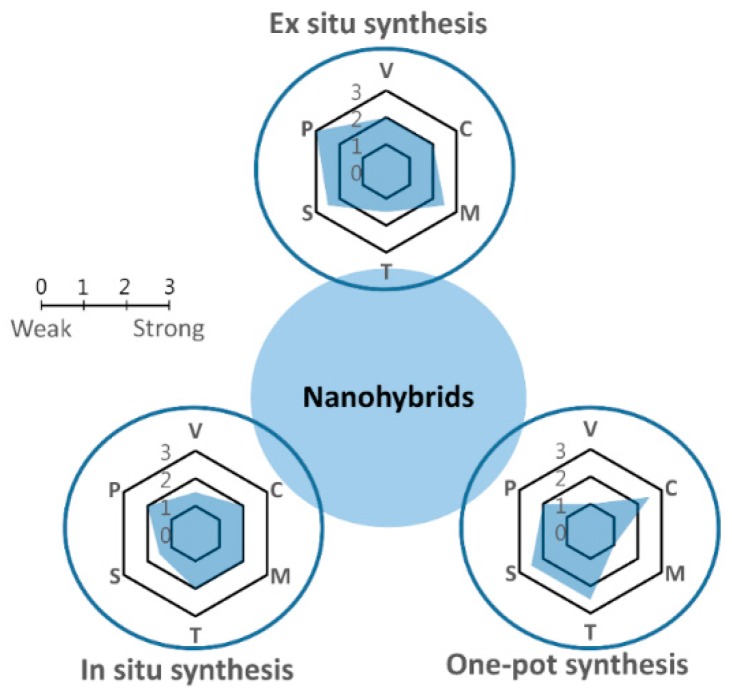
Conducting polymers (CPs) have been widely studied to realize advanced technologies in various areas such as chemical and biosensors, catalysts, photovoltaic cells, batteries, supercapacitors, and others. In particular, hybridization of CPs with inorganic species has allowed the production of promising functional materials with improved performance in various applications. Consequently, many important studies on CPs have been carried out over the last decade, and numerous researchers remain attracted to CPs from a technological perspective. In this review, we provide a theoretical classification of fabrication techniques and a brief summary of the most recent developments in synthesis methods. We evaluate the efficacy and benefits of these methods for the preparation of pure CP nanomaterials and nanohybrids, presenting the newest trends from around the world with 205 references, most of which are from the last three years. Furthermore, we also evaluate the effects of various factors on the structures and properties of CP nanomaterials, citing a large variety of publications.
导电聚合物(CPs)已得到广泛研究,以实现化学和生物传感器、催化剂、光伏电池、电池、超级电容器等各个领域的先进技术。特别是,CPs与无机物种的杂化使得能够生产出在各种应用中具有改进性能的有前景的功能材料。因此,在过去十年中对CPs进行了许多重要研究,并且从技术角度来看,众多研究人员仍然对CPs感兴趣。在本综述中,我们提供了制造技术的理论分类以及合成方法最新进展的简要总结。我们评估了这些方法用于制备纯CP纳米材料和纳米杂化物的功效和益处,列出了来自世界各地的最新趋势,并引用了205篇参考文献,其中大部分来自过去三年。此外,我们还评估了各种因素对CP纳米材料结构和性能的影响,并引用了大量出版物。