Department of Biomedical and Molecular Sciences, Queen's University, Kingston, ON, Canada.
Cancer Biology and Genetics, Queen's Cancer Research Institute, Kingston, ON, Canada.
Front Immunol. 2019 Mar 28;10:603. doi: 10.3389/fimmu.2019.00603. eCollection 2019.
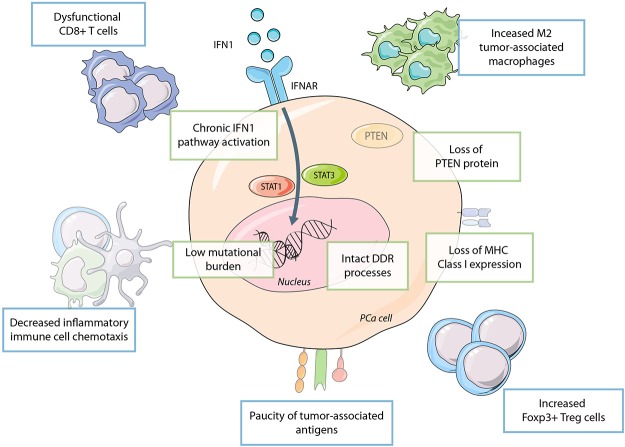
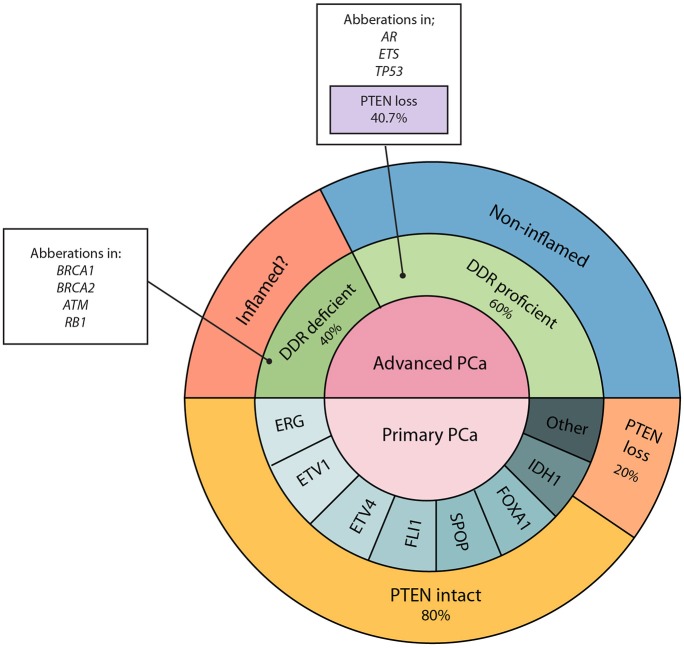
One in seven men in North America is expected to be diagnosed with prostate cancer (PCa) during their lifetime (1, 2). While a wide range of treatment options including surgery, radiation, androgen deprivation and chemotherapy have been in practice for the last few decades, there are limited treatment options for metastatic and treatment resistant disease. Immunotherapy targeting T-cell associated immune checkpoints such as CTLA-4, PD-L1, and PD-1 have not yet proven to be efficacious in PCa. Tumor mutational burden, mutations in DNA damage repair genes, immune cell composition and density in combination with their spatial organization, and expression of immune checkpoint proteins are some of the factors influencing the success of immune checkpoint inhibitor therapies. The paucity of these features in PCa potentially makes them unresponsive to contemporary immune checkpoint inhibition. In this review, we highlight the hallmark events in the PCa tumor immune microenvironment and provide insights into the current state of knowledge in this field with a focus on the role of tumor cell intrinsic events that potentially regulate immune related events and determine therapeutic outcomes. We surmise that the cumulative impact of factors such as the pre-treatment immune status, PTEN expression, DNA damage repair gene mutations, and the effects of conventionally used treatments on the anti-tumor immune response should be considered in immunotherapy trial design in PCa.
预计在北美,每七名男性中就有一人在其一生中会被诊断出患有前列腺癌 (PCa) (1, 2)。尽管过去几十年中已经有广泛的治疗选择,包括手术、放疗、雄激素剥夺和化疗,但对于转移性和治疗耐药性疾病的治疗选择有限。针对 T 细胞相关免疫检查点(如 CTLA-4、PD-L1 和 PD-1)的免疫疗法在 PCa 中尚未被证明有效。肿瘤突变负担、DNA 损伤修复基因的突变、免疫细胞组成和密度以及其空间组织,以及免疫检查点蛋白的表达,是影响免疫检查点抑制剂治疗成功的一些因素。PCa 中缺乏这些特征可能使它们对当代免疫检查点抑制无反应。在这篇综述中,我们强调了 PCa 肿瘤免疫微环境中的标志性事件,并提供了该领域当前知识状况的见解,重点介绍了潜在调节免疫相关事件并决定治疗结果的肿瘤细胞内在事件的作用。我们推测,在 PCa 的免疫治疗试验设计中,应该考虑诸如治疗前免疫状态、PTEN 表达、DNA 损伤修复基因突变以及常规治疗对抗肿瘤免疫反应的影响等因素的累积影响。