Department of Pathology, School of Medicine, Johns Hopkins University, Baltimore, MD, United States.
W. Harry Feinstone Department of Molecular Microbiology and Immunology, Bloomberg School of Public Health, Johns Hopkins University, Baltimore, MD, United States.
Front Immunol. 2019 Mar 29;10:634. doi: 10.3389/fimmu.2019.00634. eCollection 2019.
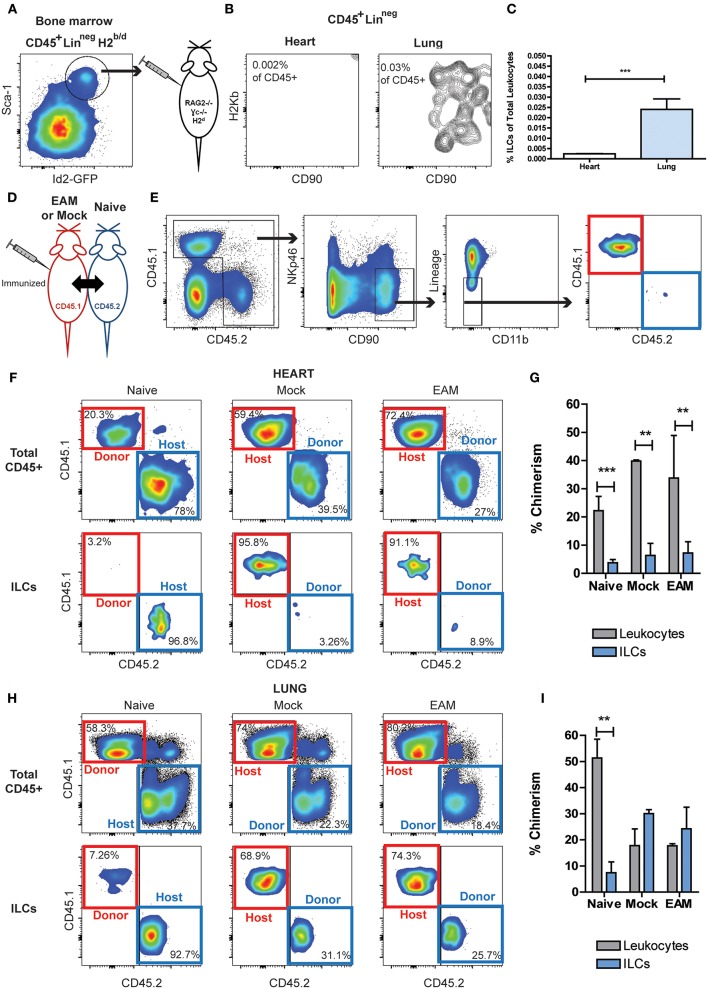
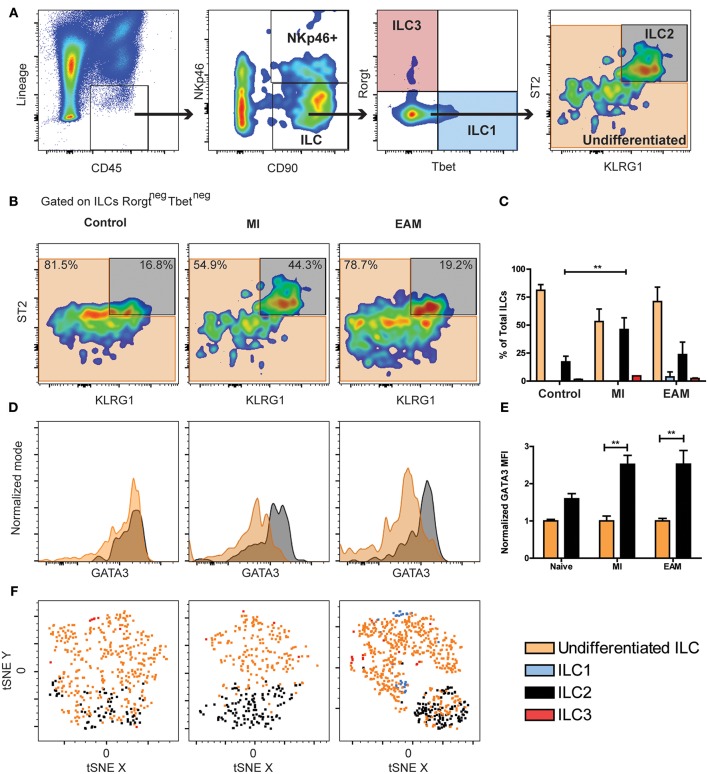
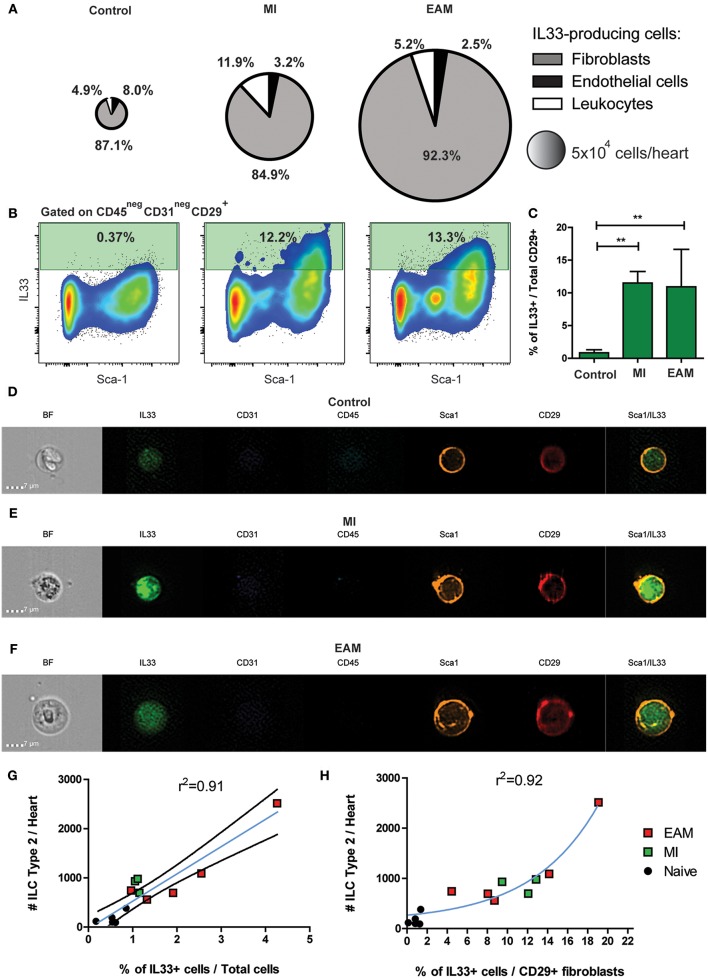
Innate lymphoid cells (ILC) are a subset of leukocytes with lymphoid properties that lack antigen specific receptors. They can be stimulated by and exert their effect via specific cytokine axes, whereas Natural Killers (NK) cells are the only known cytotoxic member of this family. ILCs are considered key in linking the innate and adaptive response in physiologic and pathologic environments. In this study, we investigated the properties of non-cytotoxic cardiac ILCs in physiologic, inflammatory, and ischemic conditions. We found that in healthy humans and mice, non-cytotoxic cardiac ILCs are predominantly a type 2-committed population with progenitor-like features, such as an absence of type-specific immunophenotype, intermediate GATA3 expression, and capacity to transiently express Pro-myelocytic Leukemia Zinc Finger protein (PLZF) upon activation. During myocarditis and ischemia, in both human and mice, cardiac ILCs differentiated into conventional ILC2s. We found that cardiac ILCs lack IL-25 receptor and cannot become inflammatory ILC2s. We found a strong correlation between IL-33 production in the heart and the ability of cardiac ILCs to become conventional ILC2s. The main producer of IL-33 was a subset of CD29+Sca-1+ cardiac fibroblasts. ILC2 expansion and fibroblast-derived IL-33 production were significantly increased in the heart in mouse models of infarction and myocarditis. Despite its progenitor-like status in healthy hearts, cardiac ILCs were unable to become ILC1 or ILC3 and . Using adoptive transfer and parabiosis, we demonstrated that the heart, unlike other organs such as lung, cannot be infiltrated by circulating ILCs in adulthood even during cardiac inflammation or ischemia. Thus, the ILC2s present during inflammatory conditions are derived from the heart-resident and quiescent steady-state population. Non-cytotoxic cardiac ILCs are a resident population of ILC2-commited cells, with undifferentiated progenitor-like features in steady-state conditions and an ability to expand and develop pro-inflammatory type 2 features during inflammation or ischemia.
先天淋巴细胞 (ILC) 是具有淋巴样特性但缺乏抗原特异性受体的白细胞亚群。它们可以通过特定的细胞因子轴被刺激并发挥作用,而自然杀伤 (NK) 细胞是该家族中唯一已知的细胞毒性成员。ILC 被认为是在生理和病理环境中连接先天和适应性反应的关键。在这项研究中,我们研究了生理、炎症和缺血条件下非细胞毒性心脏 ILC 的特性。我们发现,在健康的人类和小鼠中,非细胞毒性心脏 ILC 主要是一种 2 型定向的群体,具有祖细胞样特征,例如缺乏特定类型的免疫表型、中间 GATA3 表达和在激活时短暂表达 Pro-myelocytic Leukemia Zinc Finger protein (PLZF) 的能力。在心肌炎和缺血期间,在人和小鼠中,心脏 ILC 分化为常规 ILC2。我们发现心脏 ILC 缺乏 IL-25 受体,不能成为炎症性 ILC2。我们发现心脏 ILC 成为常规 ILC2 的能力与心脏中 IL-33 的产生之间存在很强的相关性。IL-33 的主要产生者是一组 CD29+Sca-1+心脏成纤维细胞。在心肌梗死和心肌炎的小鼠模型中,心脏 ILC2 的扩张和成纤维细胞衍生的 IL-33 产生显著增加。尽管在健康心脏中具有祖细胞样状态,但心脏 ILC 无法成为 ILC1 或 ILC3。通过过继转移和联体共生,我们证明,与其他器官(如肺)不同,即使在心脏炎症或缺血期间,成年心脏也不能被循环 ILC 浸润。因此,在炎症条件下存在的 ILC2 来自心脏驻留和静止的稳态群体。非细胞毒性心脏 ILC 是 ILC2 定向细胞的常驻群体,在稳态条件下具有未分化的祖细胞样特征,并且在炎症或缺血期间具有扩张和发展促炎 2 型特征的能力。