Sianati Setareh, Kurumlian Anie, Bailey Evan, Poole Kate
EMBL Australia Node in Single Molecule Science, School of Medical Sciences, University of New South Wales, Sydney, NSW, Australia.
Cellular and Systems Physiology, School of Medical Sciences, University of New South Wales, Sydney, NSW, Australia.
Front Bioeng Biotechnol. 2019 Mar 22;7:47. doi: 10.3389/fbioe.2019.00047. eCollection 2019.
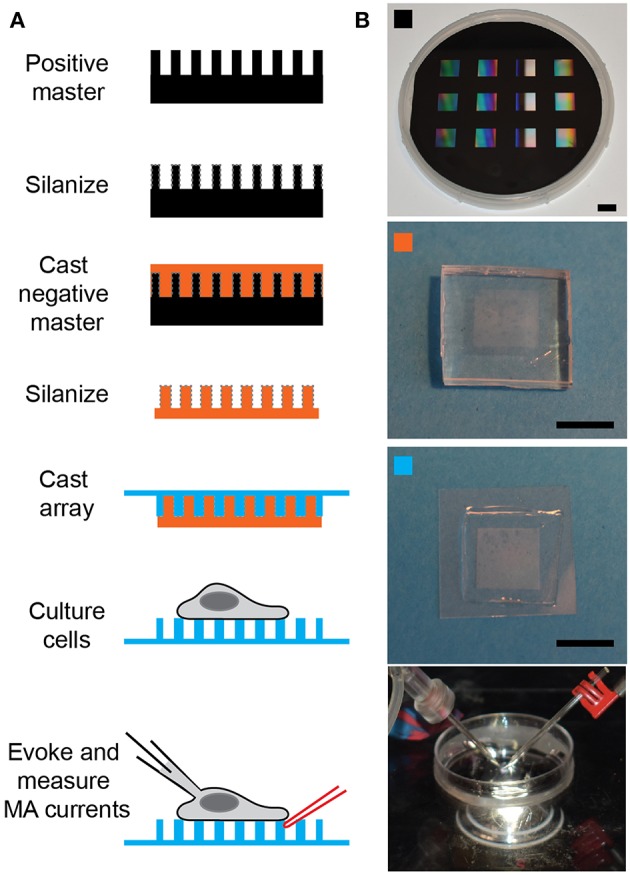
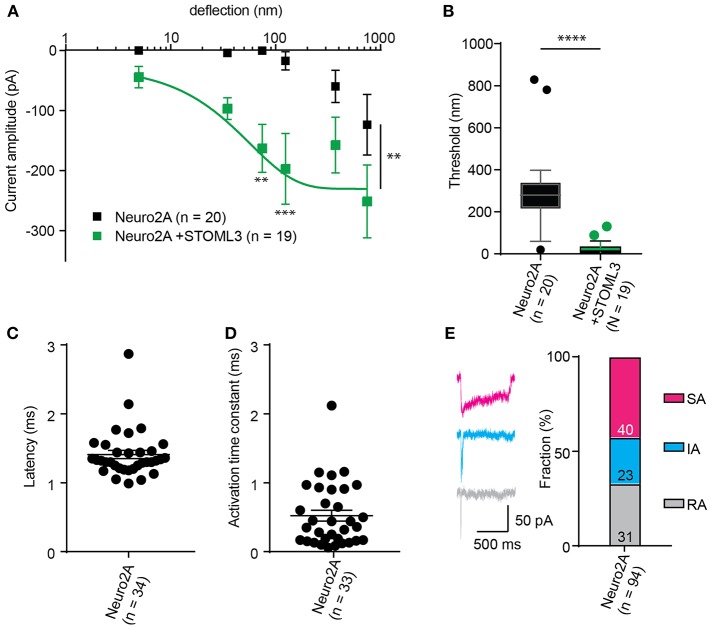
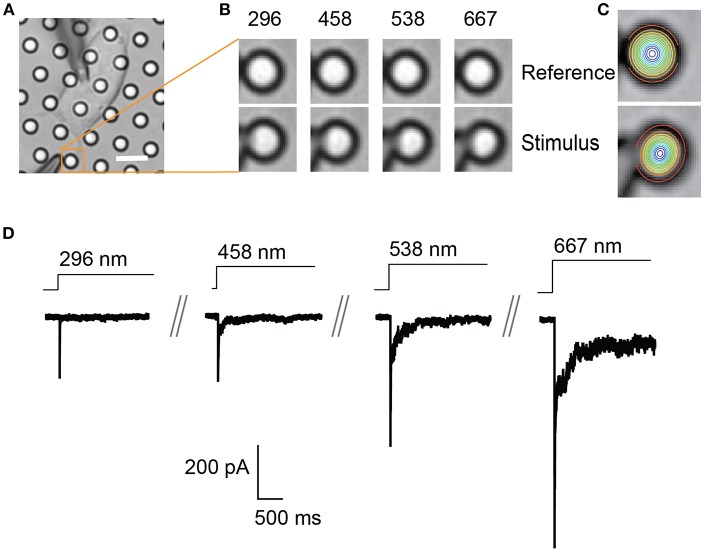
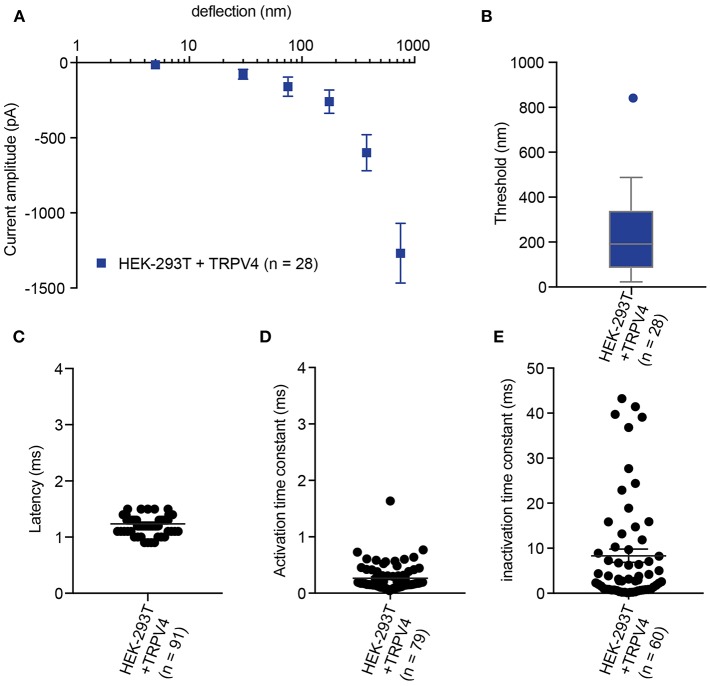
Ionic currents can be evoked by mechanical inputs applied directly at the cell-substrate interface. These ionic currents are mediated by mechanically activated ion channels, where the open probability increases with increasing mechanical input. In order to study mechanically activated ion channels directly at the interface between cells and their environment, we have developed a technique to simultaneously monitor ion channel activity whilst stimuli are applied via displacement of cell-substrate contacts. This technique utilizes whole-cell patch-clamp electrophysiology and elastomeric pillar arrays, it is quantitative and appropriate for studying channels that respond to stimuli that are propagated to an adherent cell via the physical substrate. The mammalian channels PIEZO1, PIEZO2 have been shown to be activated by substrate deflections, using this technique. In addition, TRPV4 mediated currents can be evoked by substrate deflections, in contrast to alternate stimulation methods such as membrane stretch or cellular indentation. The deflections applied at cell-substrate points mimic the magnitude of physical stimuli that impact cells .
离子电流可由直接施加于细胞与底物界面的机械输入诱发。这些离子电流由机械激活离子通道介导,其开放概率随机械输入的增加而增加。为了在细胞与其环境的界面直接研究机械激活离子通道,我们开发了一种技术,在通过细胞-底物接触的位移施加刺激时,同时监测离子通道活性。该技术利用全细胞膜片钳电生理学和弹性柱阵列,它是定量的,适用于研究通过物理底物传播到贴壁细胞的刺激所激活的通道。利用该技术已表明,哺乳动物通道PIEZO1、PIEZO2可被底物偏转激活。此外,与膜拉伸或细胞压痕等其他刺激方法不同,底物偏转可诱发TRPV4介导的电流。在细胞-底物点施加的偏转模拟了影响细胞的物理刺激的大小。